Vegan Kimbap Recipe with Bulgogi Mushrooms
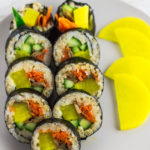
Learn how to make vegan kimbap with bulgogi mushrooms using a simple, customizable formula. A balanced Korean kimbap recipe with step-by-step tips.
- Prep Time: 30 minutes
- Cook Time: 10 minutes
- Total Time: 40 minutes
- Yield: 4 rolls 1x
- Category: Main course
- Method: Assemble
- Cuisine: Korean
- Diet: Vegan
Ingredients
For Rice
-
4 cups cooked short-grain or sushi rice
-
2 tablespoons sesame oil
-
2 teaspoons kosher salt
For Bulgogi Mushrooms
-
2 king oyster mushrooms, thinly sliced
-
1 tablespoon soy sauce
-
1 teaspoon sugar
-
½ teaspoon garlic powder
-
¼ teaspoon black pepper
For Kimbap
-
4 sheets plain roasted seaweed (gim/nori)
-
1 large carrot, cut into matchsticks
-
Neutral-tasting oil, for sautéing
-
Salt, to taste
-
2 Persian cucumbers, cut lengthwise into 8 strips (2 per roll)
-
4 strips danmuji (Korean pickled radish)
Instructions
Season the Rice
-
Cook the rice according to package instructions.
-
While the rice is still warm, add sesame oil and kosher salt. Gently mix until evenly seasoned, being careful not to mash the grains. Set aside and let cool until just warm to the touch.
Prepare the Fillings
-
Heat a small nonstick skillet with a little neutral-tasting oil over medium heat. Add the carrots, season with salt to taste, and sauté for 2–3 minutes until just tender but still vibrant. Remove from the pan and set aside.
-
In the same skillet, add the mushrooms. Cook until they release their moisture and begin to brown. Add soy sauce, sugar, garlic powder, and black pepper. Stir frequently and cook until the liquid evaporates and the mushrooms are well coated. Remove from heat and let cool slightly.
Assemble the Kimbap
-
Place a sheet of plain roasted seaweed on a bamboo mat, shiny side down. Spread about 1 cup of rice evenly over the seaweed, leaving about 1 inch uncovered at the top edge.
-
Arrange the bulgogi mushrooms, carrots, cucumber, and danmuji in a line across the lower third of the rice.
Roll and Slice
-
Starting from the bottom, roll the seaweed over the fillings, gently tucking them in as you roll. Lightly wet the uncovered edge of the seaweed with water to help seal the roll.
-
Place the roll seam-side down and repeat with the remaining ingredients.
-
Lightly oil or wet a sharp knife and slice the rolls into bite-sized pieces using a gentle sawing motion. Serve immediately.
Notes
-
Kimbap is best enjoyed fresh, as the rice firms up as it sits.
-
If you cannot find king oyster mushrooms, shiitake or white mushrooms can be used instead.
-
Leftover kimbap can be wrapped tightly and stored in the refrigerator. The rice will firm up. For reheating, you may microwave briefly or pan-fry sliced kimbap after dipping in a vegan egg wash.