
Sourdough starter maintenance doesn't have to involve frequent feedings or a lot of flour. I keep a small starter in the fridge, usually less than 80–90 grams, and feed it every 10–20 days.
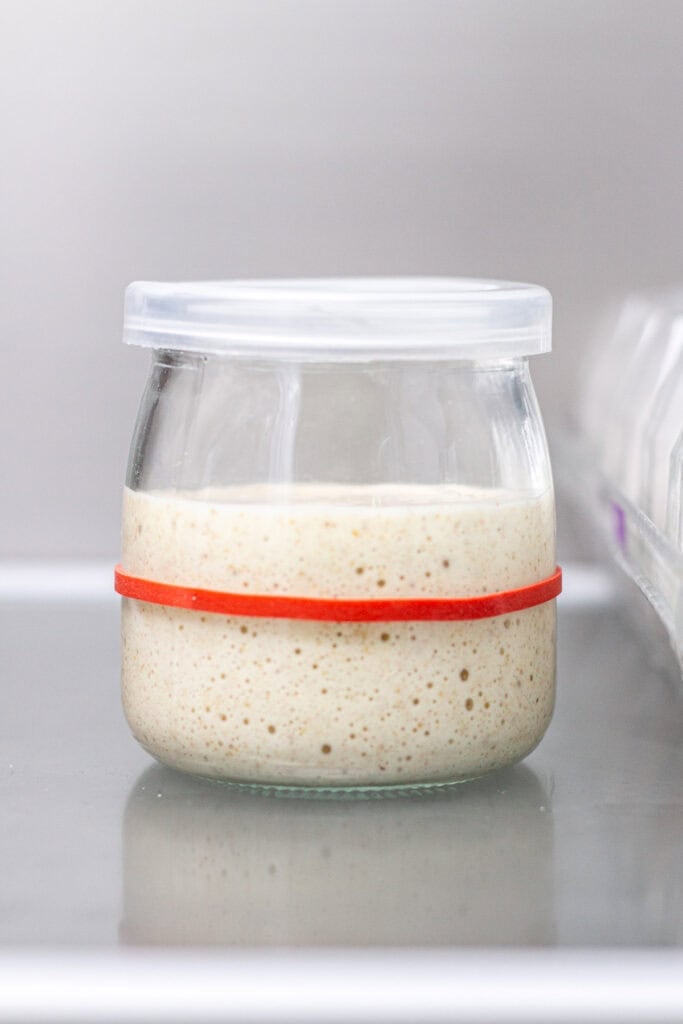
After more than a year of maintaining Joey, my sourdough starter, I've settled into a simple routine that works for my small household and occasional baking schedule.
In this post, I'll show you exactly how I maintain my small sourdough starter in the fridge with minimal effort and less flour waste.
Jump to:
At a Glance
- Best for: Occasional sourdough bakers.
- Starter size: Usually less than 80–90 grams.
- Feeding schedule: Every 10–20 days.
- Storage: In the refrigerator, usually immediately after feeding.
- Time required: Less than 10 minutes per feeding.
- Free guide: Download my one-page sourdough starter maintenance guide to save or print.
Why I Keep My Sourdough Starter Small
It's just my husband and me, and we don't eat a lot of bread. So I don't bake often, and when I do, I usually make smaller loaves. Keeping a small starter has several benefits:
- Takes up less fridge space: A small jar is all I need.
- Uses less flour: I don't have to use a lot of flour for regular feedings.
- Produces minimal discard: Less starter means less discard to use up or throw away.
- Easy to build up: Whenever I need more starter for baking, I can simply feed it to increase the amount.
I've been keeping a small sourdough starter for over a year now, and it works perfectly for my small household and baking habits.
What You'll Need
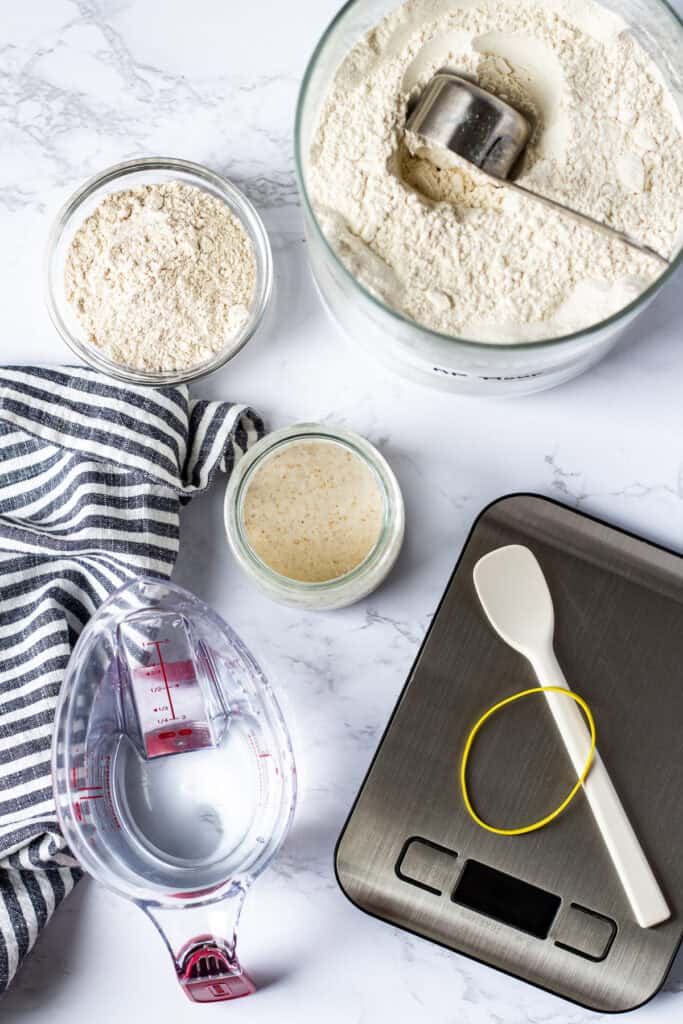
You don't need any fancy equipment to maintain a small sourdough starter. Here's what I use:
- A small glass jar: I use a 7-ounce glass jar for Joey (my sourdough starter), but an old jam or condiment jar works just as well. Just make sure there's enough room for your starter to expand.
- Kitchen scale: I no longer measure everything as precisely as I used to, but a scale is still a helpful guideline. Since I already use one for baking, I also use it when feeding my starter.
- Water: I use regular tap water and haven't had any issues. Although filtered water is often recommended, tap water works well for my starter.
- Flour: I primarily use all-purpose flour with a little whole wheat flour when feeding Joey. The whole wheat flour is completely optional.
- Small rubber spatula: I like using a rubber spatula because I can scrape down the sides of the jar and incorporate all the flour into the mixture. But a butter knife, chopstick, fork, or spoon works just as well. Use whatever you have!
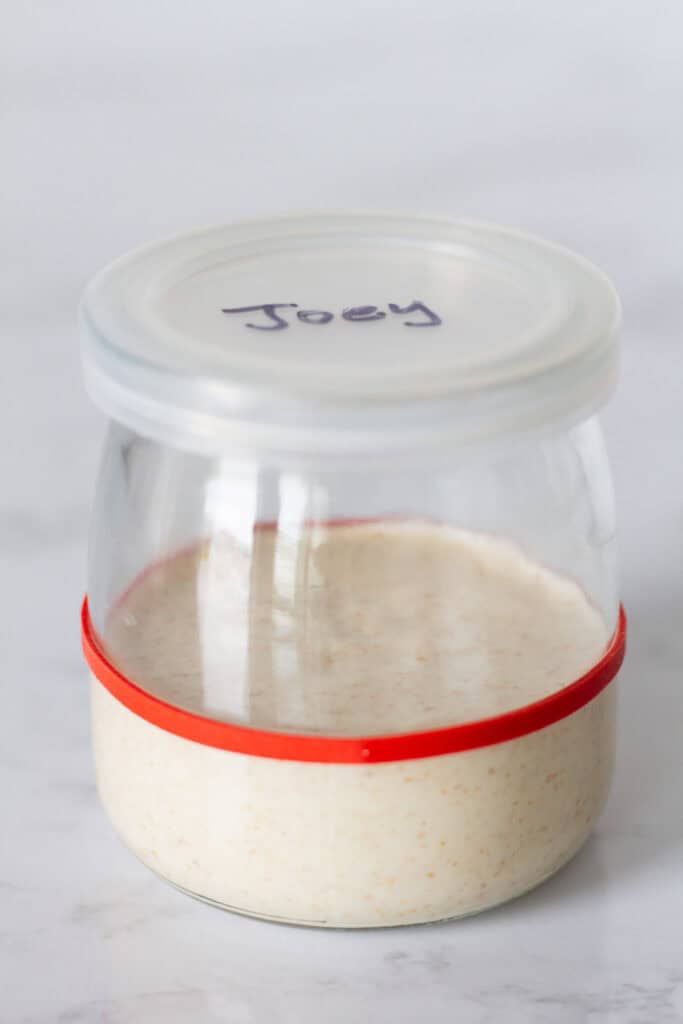
- Rubber band: I place one around the jar to mark the starter's level after feeding so I can easily see how much it grows. You can also use a marker, but I prefer a rubber band because it's reusable and easy to adjust without having to clean off old markings.
My Small Sourdough Starter Maintenance Routine
Here's how I maintain Joey, my sourdough starter. The whole process takes less than 10 minutes, and I repeat it approximately every 10–20 days.
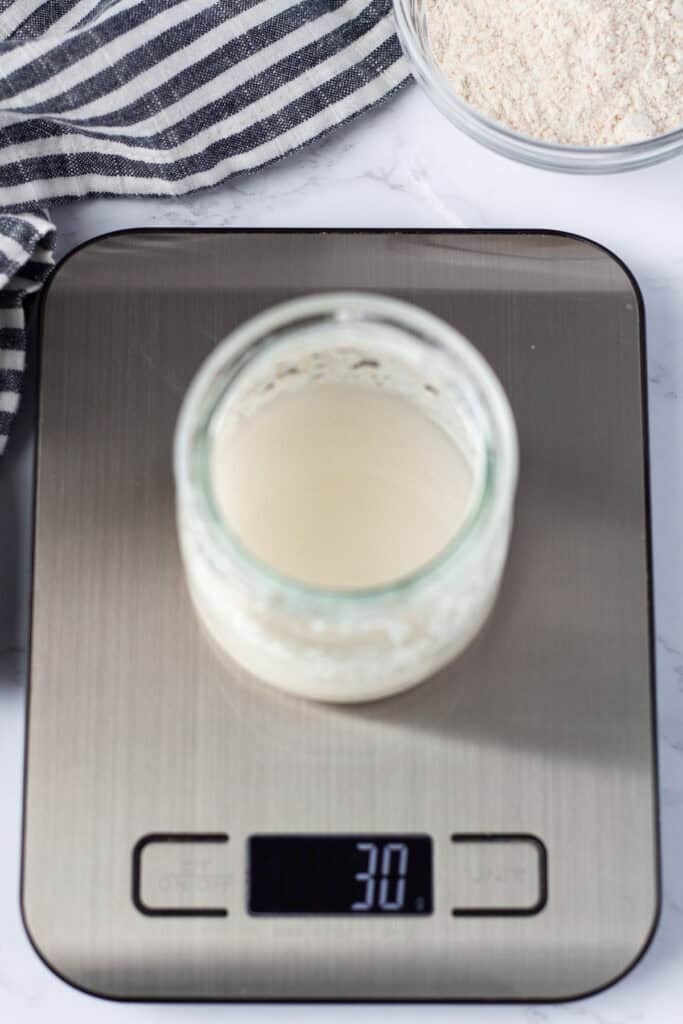
- Take your starter out of the fridge. I don't bother letting my starter come to room temperature, especially if I'm not planning to bake. I simply take it out of the fridge and get started.
- Remove the discard. Most of the time, I use my discard for baking, leaving anywhere between 5–20 grams of starter in the jar. I don't worry about measuring the exact amount anymore. As long as there's some starter left, I'm good to go! You can use the discard right away in your favorite sourdough discard recipes. If you're not ready to bake, transfer it to a clean, covered container and refrigerate it. I recommend using it within a week.
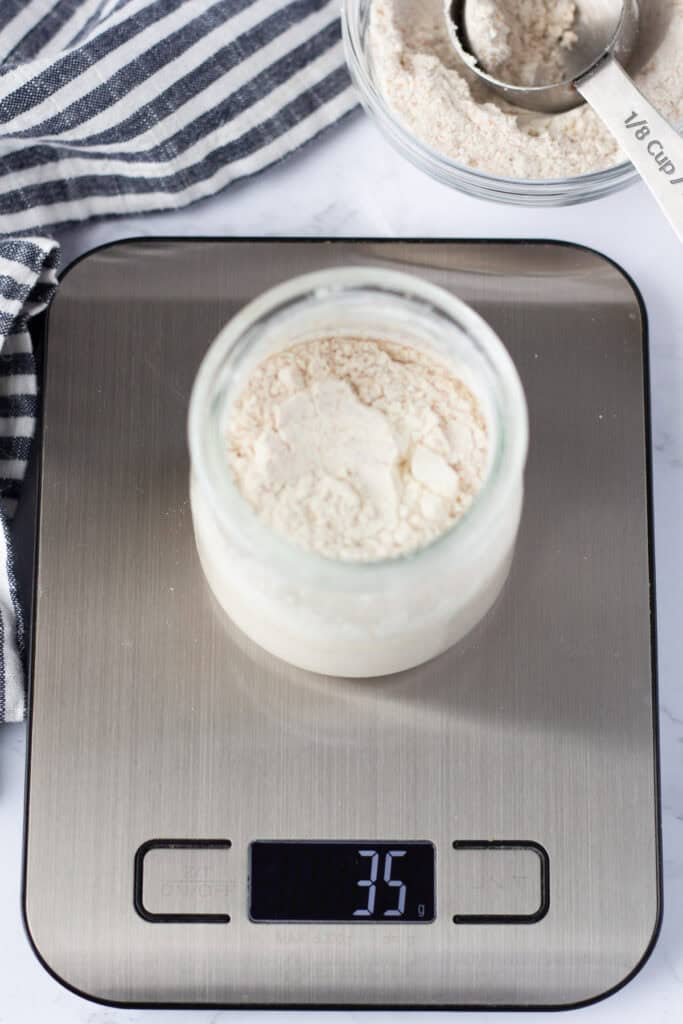
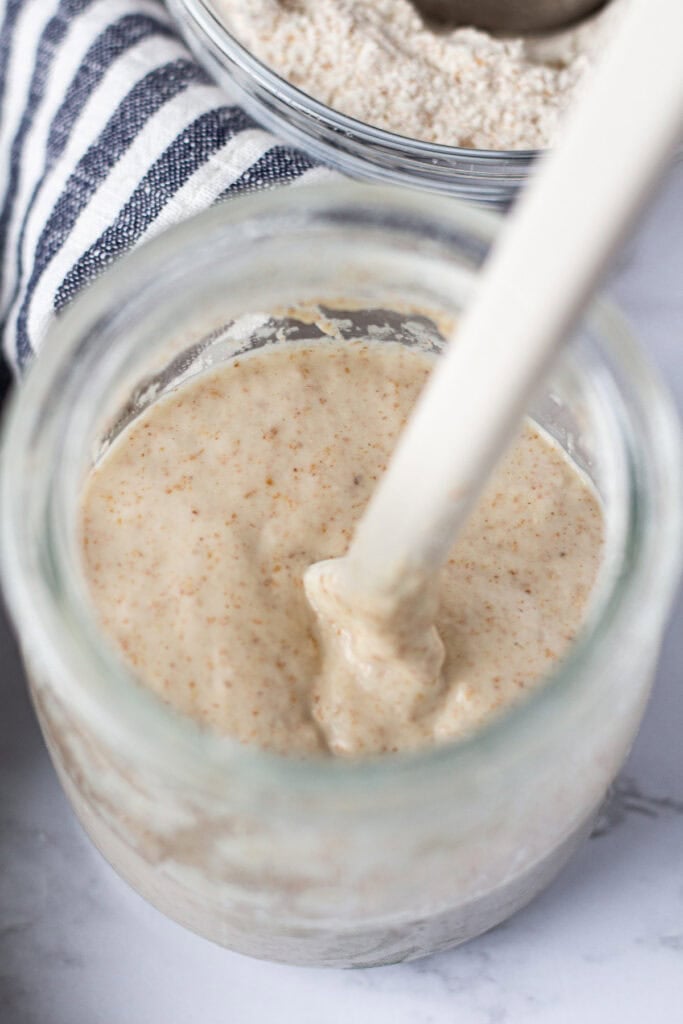
- Add water and flour. I typically add 25–30 grams of water and 30–35 grams of flour and . For Joey, I use approximately 10 grams of whole wheat flour, 20–25 grams of all-purpose flour, and 25–28 grams of water. It's close to a 1:1 flour-to-water ratio, but I prefer using slightly more flour to keep my starter a little thicker.
- Mix everything together. Stir until no dry flour remains. I like to scrape down the sides of the jar with my rubber spatula to incorporate all the flour. Then, I place a rubber band around the jar to mark the starter's level.
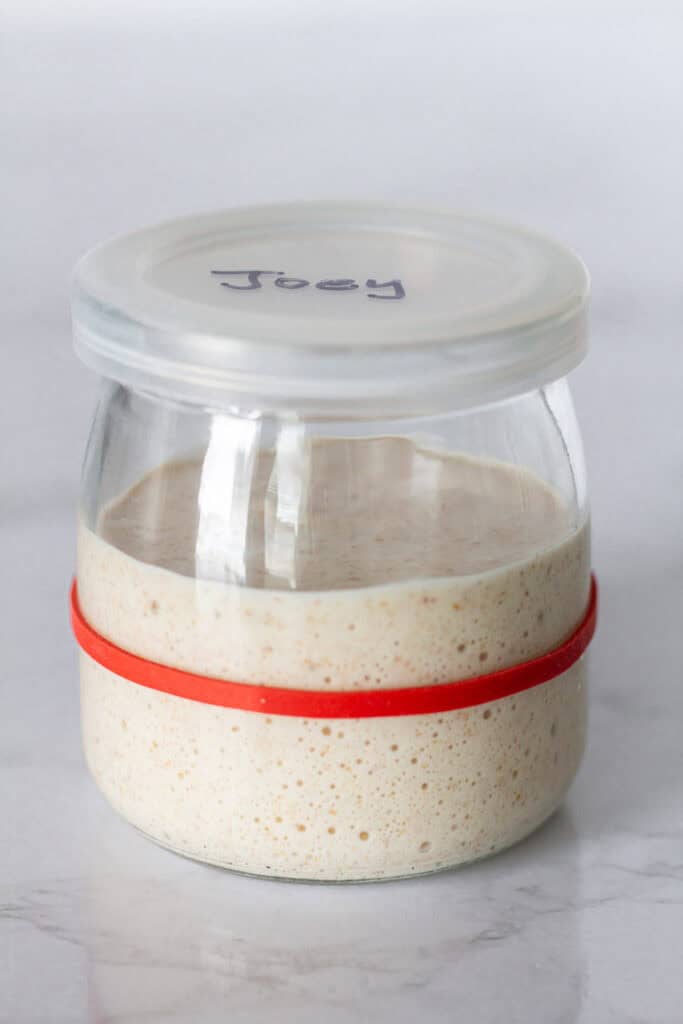
- Return your starter to the fridge. Most of the time, I put Joey right back in the refrigerator after feeding. After 2–3 days, I can usually see some growth. It's not a dramatic rise, but the starter's level is noticeably above the rubber band. Occasionally, I'll leave Joey on the counter for a couple of hours before refrigerating him to encourage a little more activity.
That's it! This simple routine takes me less than 10 minutes and keeps Joey ready for whenever I want to bake.
Expert Tips
- Don't stress over exact measurements. In my experience, a slightly thicker starter does better in the fridge. When I used a 1:1 flour-to-water ratio, Joey became acidic and developed a looser texture more quickly. Since I'm a little lazy about feeding him, I prefer using slightly more flour than water. This works well for my less frequent feeding schedule.
- Adjust your feeding schedule as needed. After 7–10 days, I take a quick look at Joey to see if he has developed a sharp, vinegar-like smell or a noticeably looser texture. If so, I'll feed him within the next couple of days. I've also gone three weeks without feeding him without any issues. Sourdough starters are more resilient than you might think!
- Add water before flour. I like to add water first and stir until the starter dissolves into it before adding the flour. Once everything is mixed, I aim for the consistency of very thick pancake batter. If it's too loose, I add a little more flour. If it's almost as thick as dough, I add a tiny bit more water.
- Go by consistency, not just the measurements. I aim for a very thick pancake batter consistency. If my starter is especially hungry or acidic, it tends to be looser and may need a little more flour than usual to reach the right consistency. If it’s too loose, I add a little more flour. If it’s almost as thick as dough, I add a tiny bit more water.
- Keep your jar clean. When adding water, I use my spatula to scrape down the sides of the jar and incorporate any leftover starter. After mixing, I like to wipe down the inside of the jar with a clean paper towel dampened with water. This step is optional, but I prefer keeping my jar nice and clean!
- Don't expect a dramatic rise in the fridge. Cold temperatures slow fermentation, so your starter may rise only slightly. I usually notice some growth after 2–3 days, with the starter rising above the rubber band. It will eventually deflate and may return to its original level. Don't be alarmed if it doesn't maintain its growth. This is completely normal!
Frequently Asked Questions
I usually feed Joey every 10–20 days, although I've occasionally gone three weeks without any issues. Every starter is different, so pay attention to how yours looks and smells rather than relying strictly on the calendar. If it starts showing signs that it's hungry, feed it sooner.
For regular maintenance, I usually put Joey straight back in the fridge after feeding without letting him rise.
However, if my starter is particularly hungry, has developed hooch, or has been neglected for a while, I'll feed it with a little extra flour and leave it at room temperature to encourage activity. Once I see that it's active and rising again, I return it to the refrigerator.
Hooch is a clear or grayish liquid that can collect on top of a hungry starter. Some people stir it back in, but I prefer to pour most of it off before feeding my starter with a little extra flour.
If you notice visible mold or pink or orange discoloration, discard the entire starter rather than trying to revive it. Always use clean utensils when feeding your starter to help prevent contamination.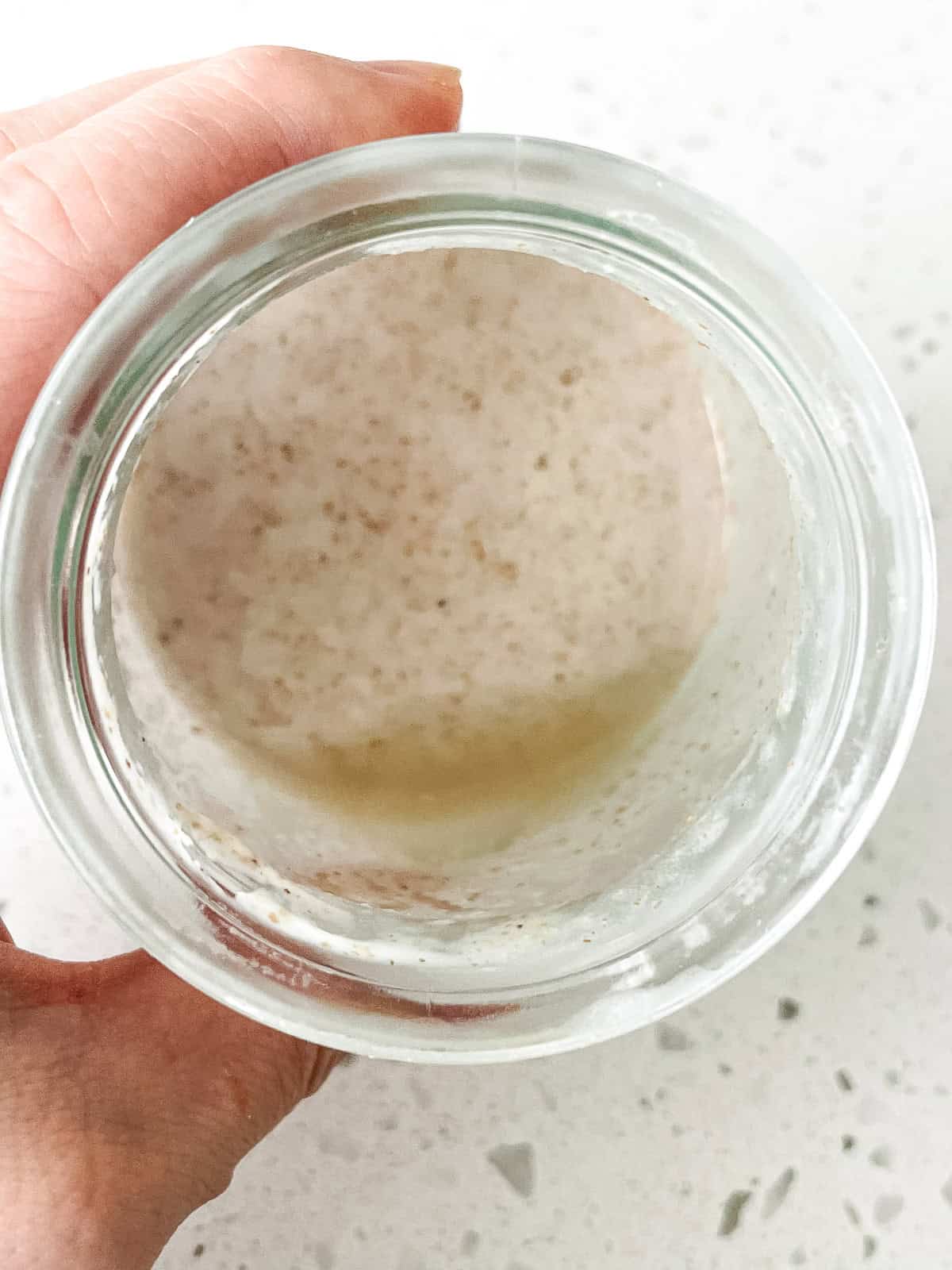
Don't panic! Sourdough starters can be more resilient than you might think. If you normally feed yours every two weeks but accidentally go three weeks, it may still be perfectly fine.
As long as there are no signs of contamination, I feed mine with a little extra flour and leave it at room temperature overnight to check for activity. If it rises and shows healthy fermentation, I return it to the fridge and check on it sooner than usual after reviving it.
If it doesn't show much activity, it may need additional room-temperature feedings before returning to its regular maintenance schedule.
This routine is specifically for maintaining a small starter in the refrigerator. Cold temperatures slow fermentation, so I don't use Joey straight from the fridge when making sourdough bread that relies on an active starter for rising.
However, refrigerated starter works well in many sourdough discard recipes that use commercial yeast, baking powder, or baking soda for leavening. In those recipes, the discard primarily adds flavor.
When I'm planning to bake sourdough bread, I first feed and build up my starter until it's active and ready to use.
My Favorite Sourdough Discard Recipes
Looking for ways to use up your sourdough discard? Here are three of my favorite recipes that I make regularly!
- Sourdough Discard Bread: A great place to start if you want to get comfortable with different bread-making techniques. It's also fun to experiment with different additions, such as olives or a cranberry-walnut combination.
- Small-Batch Sourdough Discard Focaccia: My go-to recipe for using up discard! I've tested it with anywhere from 60 to 120 grams of discard, so it's incredibly flexible depending on how much you have on hand.
- Sourdough Discard Pizza Dough for Two: A household favorite! I can adjust the amount of yeast and let the dough cold-ferment overnight in the fridge for an even more flavorful pizza the next day.
This simple sourdough starter maintenance routine has made sourdough baking much more manageable for me. And when I'm ready to bake, I simply build up Joey until he's active and I have enough starter for my recipe.
I'll share exactly how I prepare my small refrigerated starter for baking in my next post!
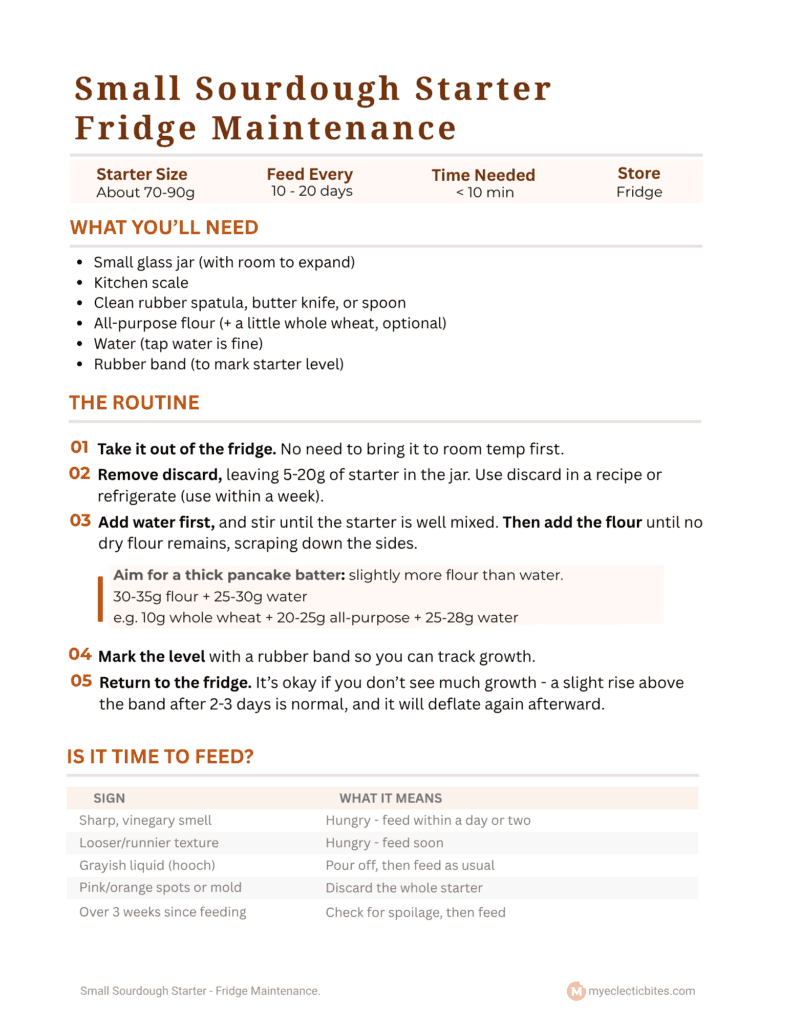
Free Sourdough Starter Maintenance Guide
Want a quick reference? I put my small sourdough starter maintenance routine into this one-page guide. Save it to your phone or print a copy to keep in your kitchen.
Small Sourdough Starter Maintenance in the Fridge
A simple fridge maintenance routine for keeping a small sourdough starter healthy with minimal feeding and discard. Perfect for occasional sourdough bakers.
- Prep Time: 10 minutes
- Total Time: 10 minutes
- Yield: Small Starter
- Category: Bread
- Method: Fermentation
- Cuisine: American
Ingredients
- 5 to 20g mature sourdough starter
- 25 to 30g water
30 to 35g flour
Instructions
- Take the starter out of the fridge.
- Remove the discard, leaving about 5 – 20g starter in the jar.
- Add 25 – 30g water and 30 – 35g flour.
- Mix well until no dry flour remains, then mark the starter level with a rubber band.
- Return it to the refrigerator. I usually refrigerate mine immediately after feeding.
Notes
- I usually feed my starter every 10–20 days, but use its smell and texture as a guide. A sharp, vinegar-like smell or noticeably looser texture tells me it may need feeding sooner.
- The flour and water amounts are guidelines. Aim for a very thick pancake batter consistency. A particularly hungry or acidic starter may be looser and need a little more flour than usual.
- I primarily use all-purpose flour with a little whole wheat flour, but the whole wheat flour is optional.
- For regular maintenance, I usually return my starter to the fridge immediately after feeding. Don't expect a dramatic rise in the refrigerator because cold temperatures slow fermentation.
- This routine is for maintaining an established starter, not building an active starter for sourdough bread. When I'm ready to bake, I feed and build up my starter separately.



Share your thoughts below!