
Small-batch sourdough olive bread made with active starter or discard. A tangy, flavorful loaf perfectly sized for two.
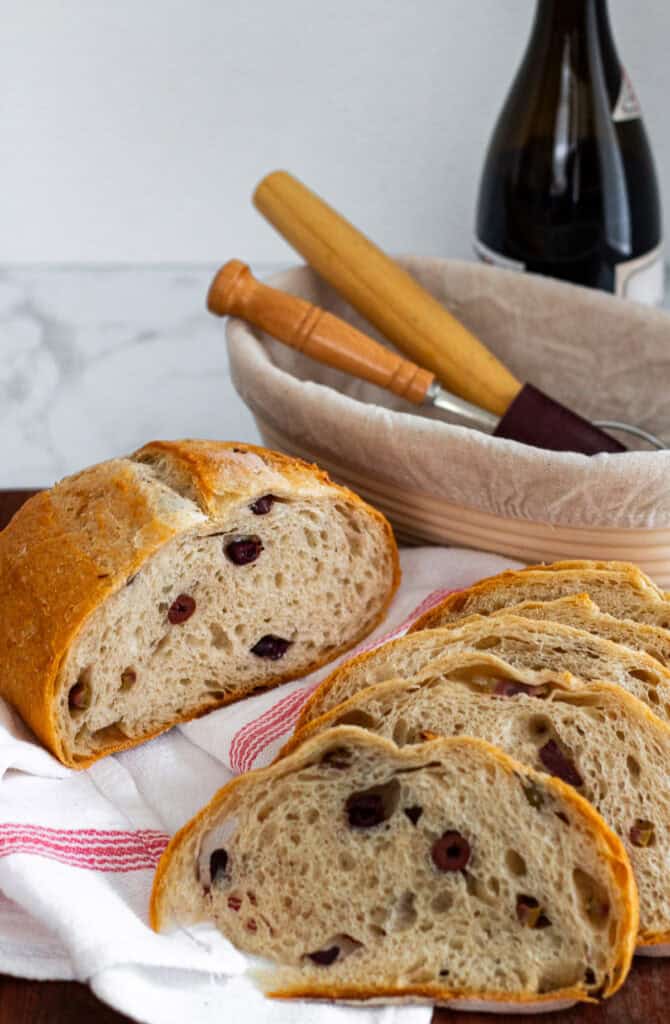
Once I felt confident with my small-batch sourdough discard bread and a few successful true sourdough loaves, I was ready to try a loaf with inclusions. Olive bread has always been one of my favorites because the briny, savory olives bring so much flavor and make the best sandwiches. This small 8–10 slice loaf fits perfectly into our cooking-for-two lifestyle, and the method stays simple. You can use sourdough discard for a quicker one-day version or an active starter for a traditional, naturally leavened loaf.
Jump to:
Why You’ll Love This Sourdough Olive Bread
- Two easy versions. Choose true sourdough for deeper flavor or the discard-plus-yeast method for a quicker one-day loaf.
- Perfect small loaf. Makes 8 to 10 slices, ideal for sandwiches, soup nights, or a simple snack board for two.
- Beginner-friendly folding. The bowl fold method keeps the dough easy to handle and removes the need for tricky lamination.
- Beautiful olive flavor. Green olives add a meaty, savory bite while kalamata brings bright, briny richness to every slice.
Ingredients You’ll Need
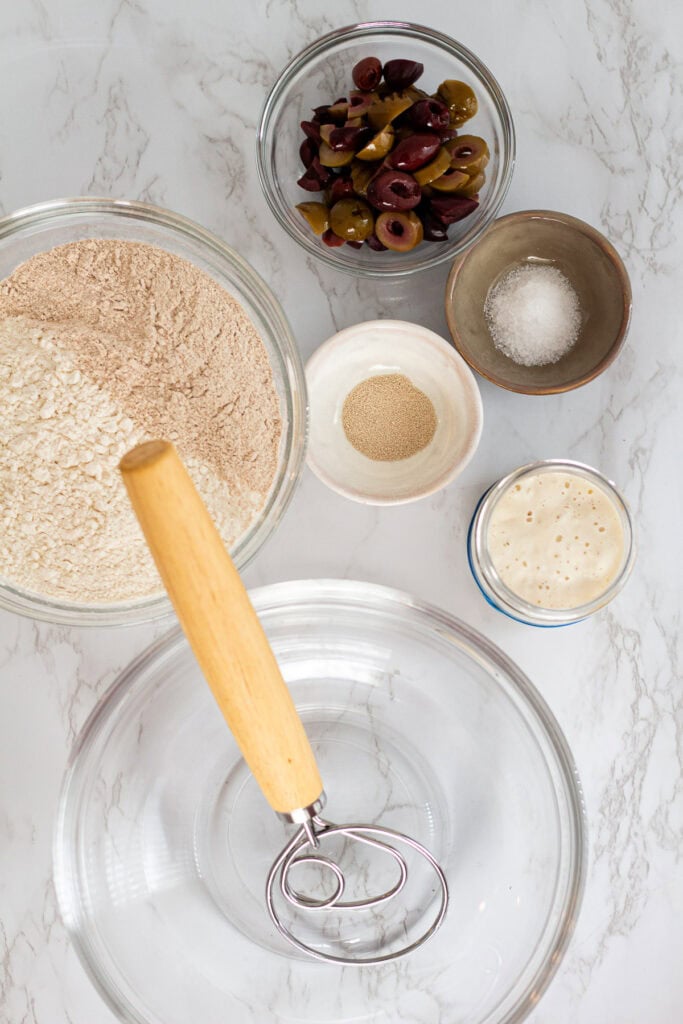
- Bread flour. Gives the dough a strong structure so it can hold the olives without collapsing.
- Whole wheat flour. Adds a little flavor and color. If you don’t have it or prefer a lighter loaf, simply swap it for more bread flour.
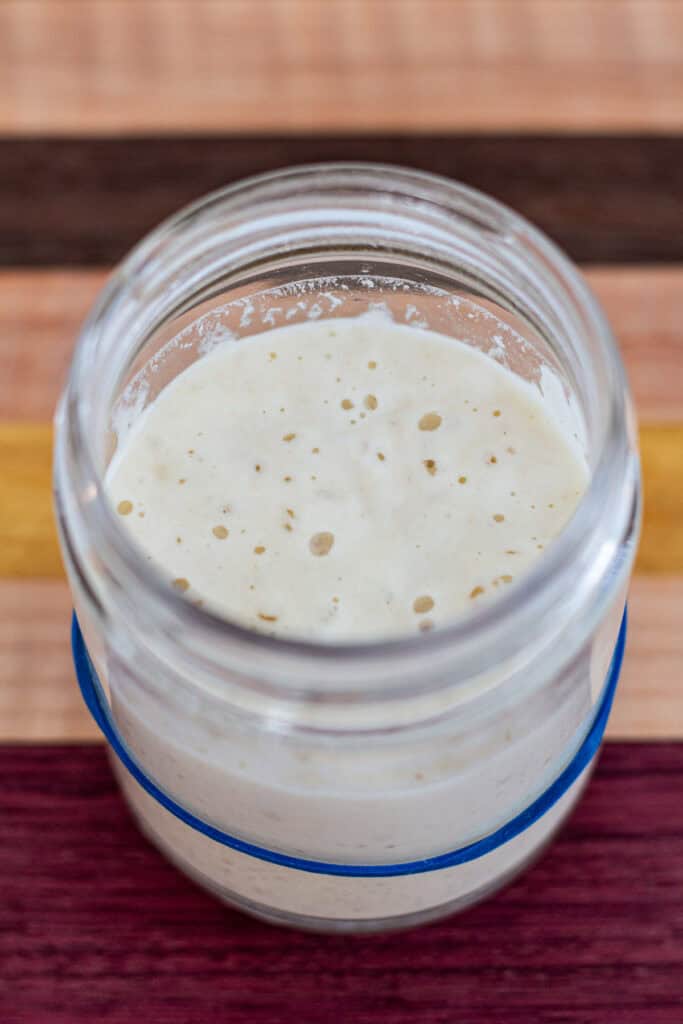
- Active sourdough starter or sourdough discard. Use active starter for the true sourdough version, or discard it if you’re making the quicker one-day loaf.
- Instant yeast. Only needed when using discard to help the dough rise reliably.
- Water. Hydrates the dough and helps gluten develop.
- Salt. Strengthens gluten structure and keeps the dough balanced. It also enhances the olive flavor naturally.
- Olives. Use green olives for a meaty, savory bite and kalamata for bright, briny flavor. Pat them dry with a paper towel to remove excess moisture, which helps prevent wet pockets in the crumb.
- Optional rosemary. One teaspoon of freshly minced rosemary pairs perfectly with olives. Since this is a small loaf, a little goes a long way. I’m skipping it today because I didn’t have any on hand, but it’s amazingly fragrant when you do use it.
True Sourdough vs Discard + Instant Yeast
Both versions bake up beautifully, so choose the one that fits your schedule. The true sourdough method gives you deeper flavor and a chewier crust, while the discard version is perfect when you want a quicker same-day loaf.
| True Sourdough | Discard + Yeast | |
|---|---|---|
| Leavening | 60g active starter | 60g discard + ½ teaspoon instant yeast |
| Flavor Profile | Pronounced tang with deeper complexity | Mild and clean flavor (primarily yeasty) |
| Gluten Development | Same folding and shaping | Same folding and shaping |
| Bulk Fermentation Time | 4–8 hours depending on temperature and dough activity | 1–2 hours with a quick, consistent rise |
| Cold Proof | 10–18 hours for flavor development | 30–60 minutes for easier scoring, no flavor development |
| Pre-Bake Appearance | May look flatter before baking; strong oven spring expected | Slightly taller before baking; gentler oven spring |
| Bake Time | Same | Same |
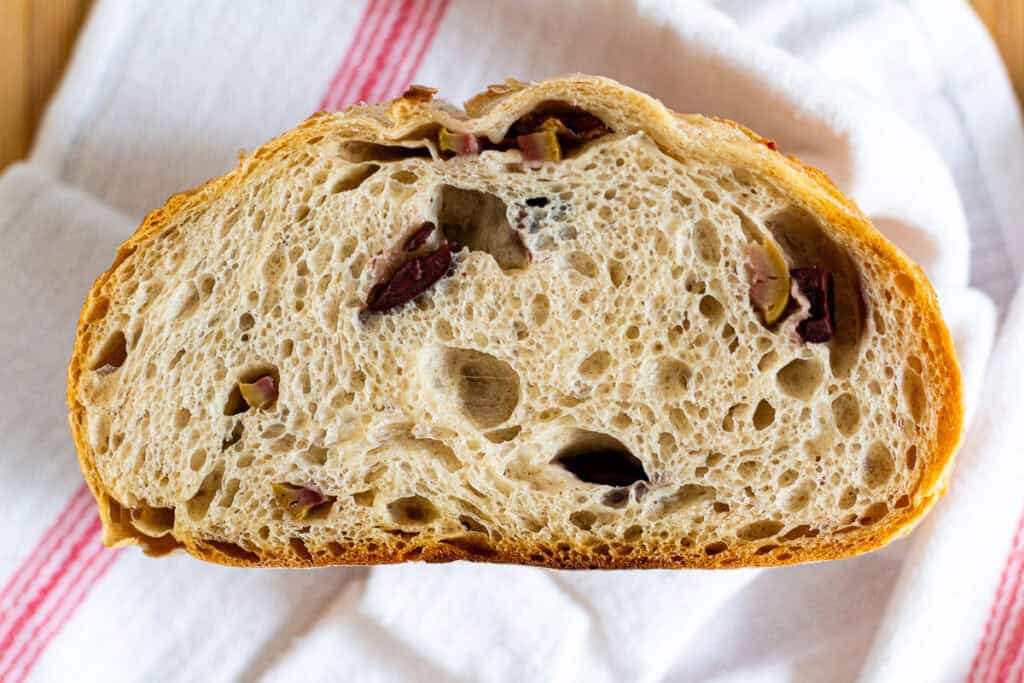
| Crumb Structure | Irregular open crumb with mixed bubble sizes | Tighter, more uniform crumb with small even holes |
| Crust | Thicker crust with more blistering and chew | Softer crust with fewer blisters |
| Best For | Flavor, digestibility, traditional slow fermentation | Quick and convenient same-day loaf with mild flavor |
How to Make Sourdough Olive Bread
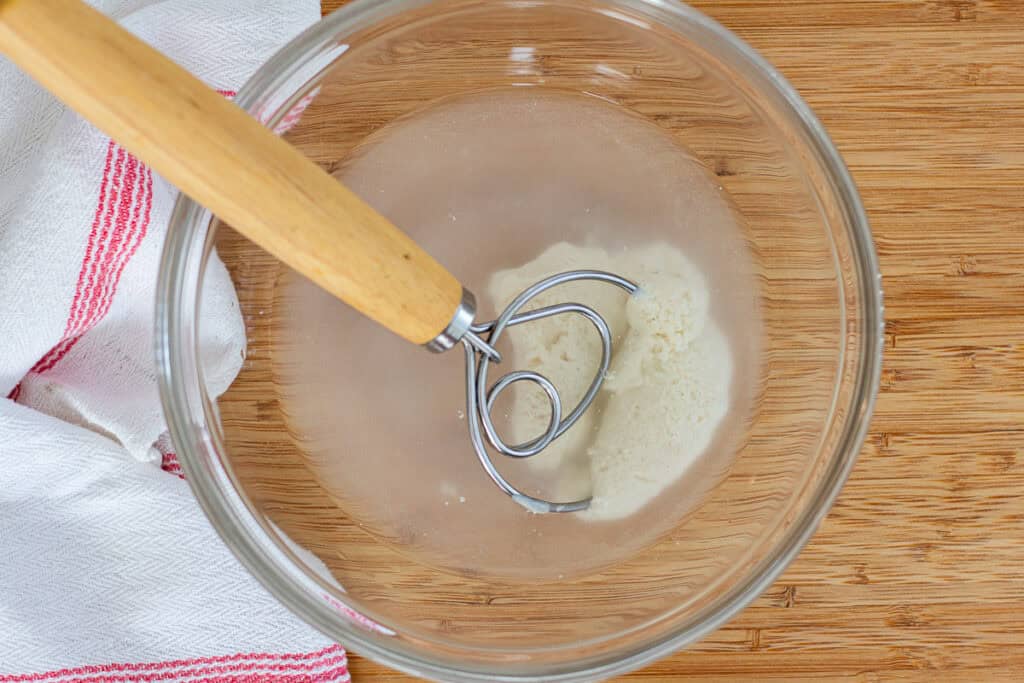
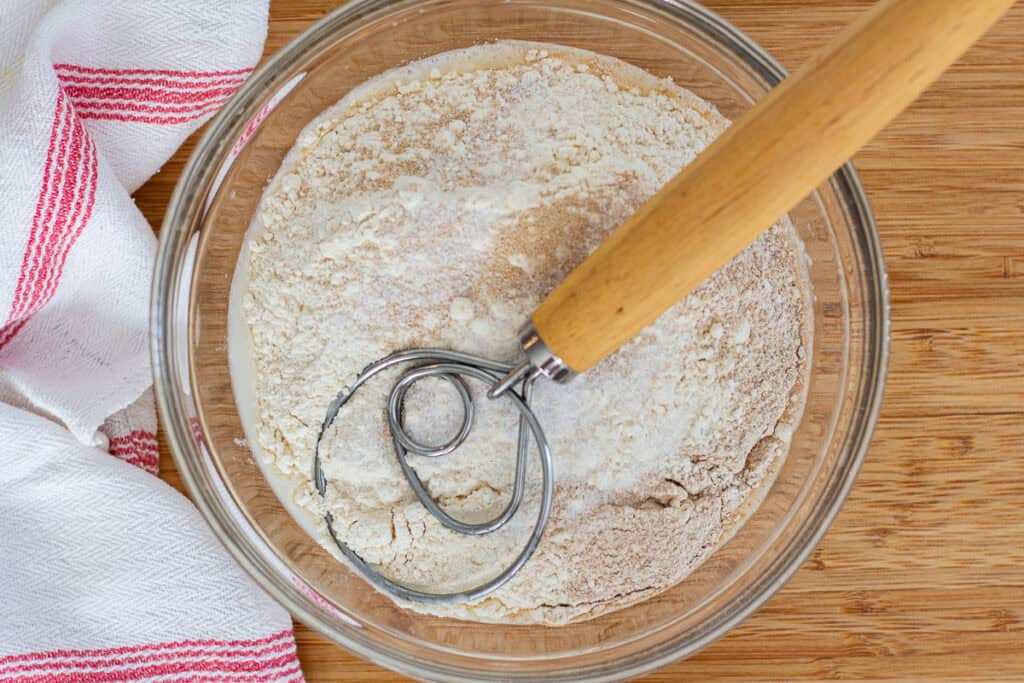
1.Mix the dough.
Dissolve your active starter or discard plus yeast in the water first. Add the flour and salt, then mix until there are no dry bits. The dough will feel a little sticky at this stage, which is normal.
2. Let the dough rest for 20 to 30 minutes.
This hydration rest lets the flour absorb water, makes the dough easier to handle, and begins gentle gluten development.
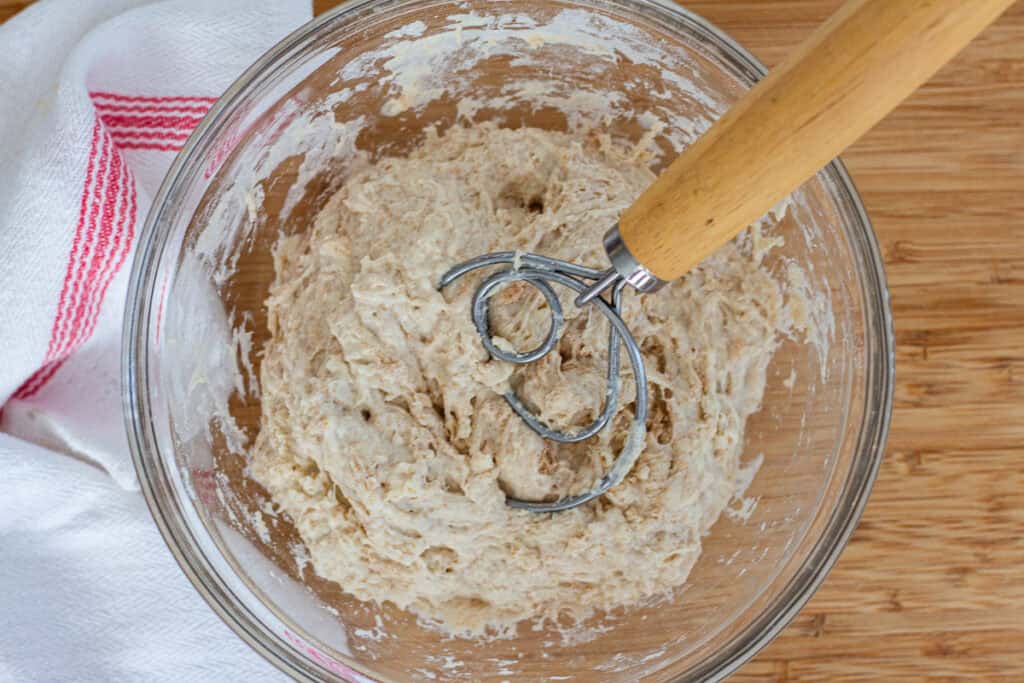
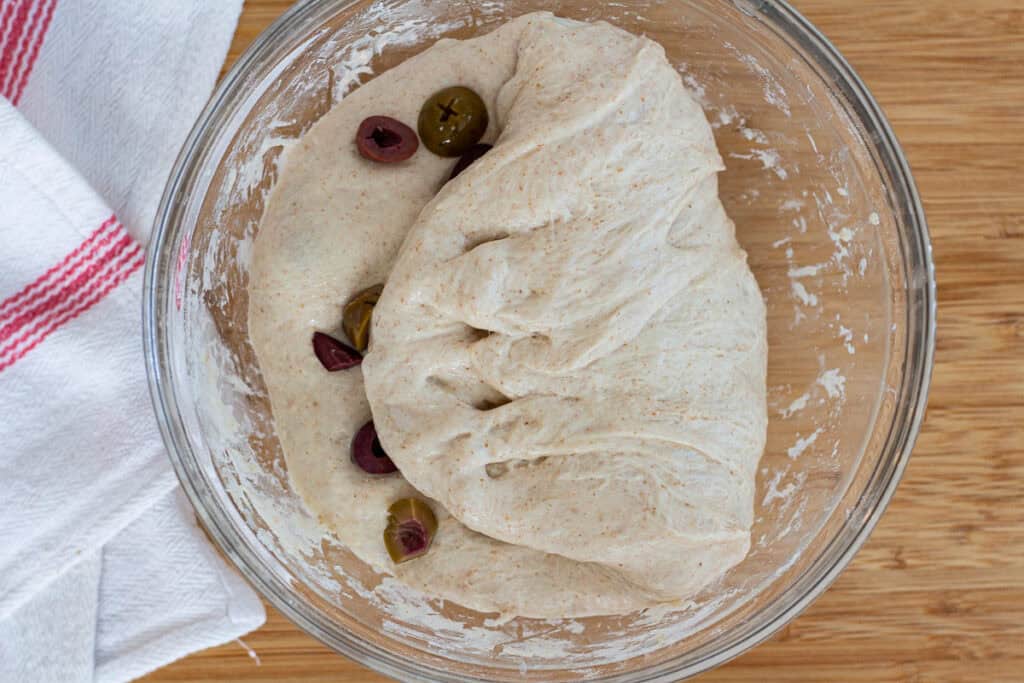
3. Do the first two bowl folds.
Perform two sets of bowl folds with 20 to 30 minutes of rest between each fold. These folds strengthen the dough and help it build enough structure to hold the olive pieces later on.
4. Add the olives on the third bowl fold.
Divide the olives into three portions. For the first fold, sprinkle one portion over the dough and gently press them in so they stay in place. Do a bowl fold, rotate your bowl, and add the second portion. Fold again, rotate, and add the final portion. Give it one more fold and let the dough rest for another 20 to 30 minutes so the olives settle evenly.
5. Do the final bowl fold.
Perform one last gentle set of bowl folds to finish strengthening the dough. If any olives spill out, tuck them back into the dough.
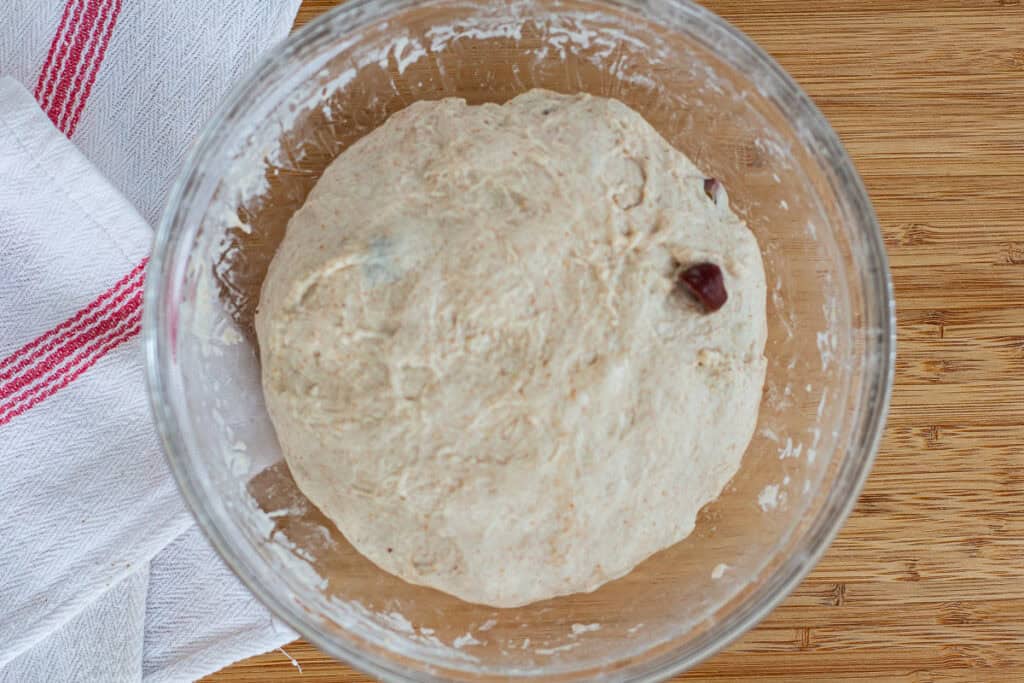
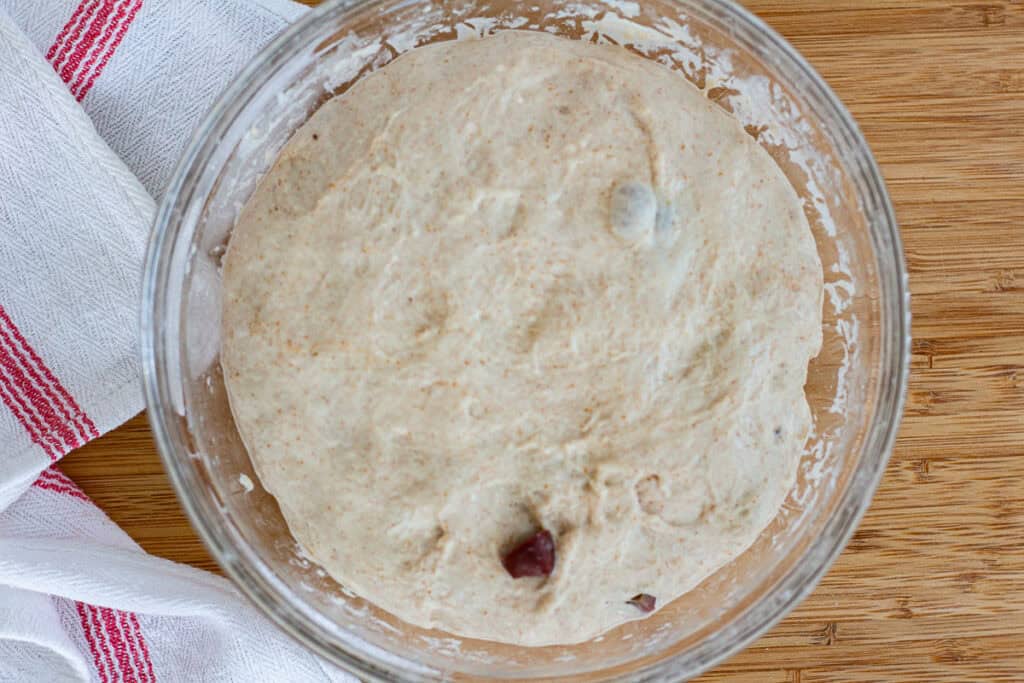
6. Let the dough rise.
Allow the dough to rise until it grows about 70 percent, looks slightly domed on top, jiggles softly when you move the bowl, and begins pulling away from the sides.
- True sourdough usually takes 4 to 8 hours.
- Discard plus yeast rises faster, in about 30 minutes to 2 hours.
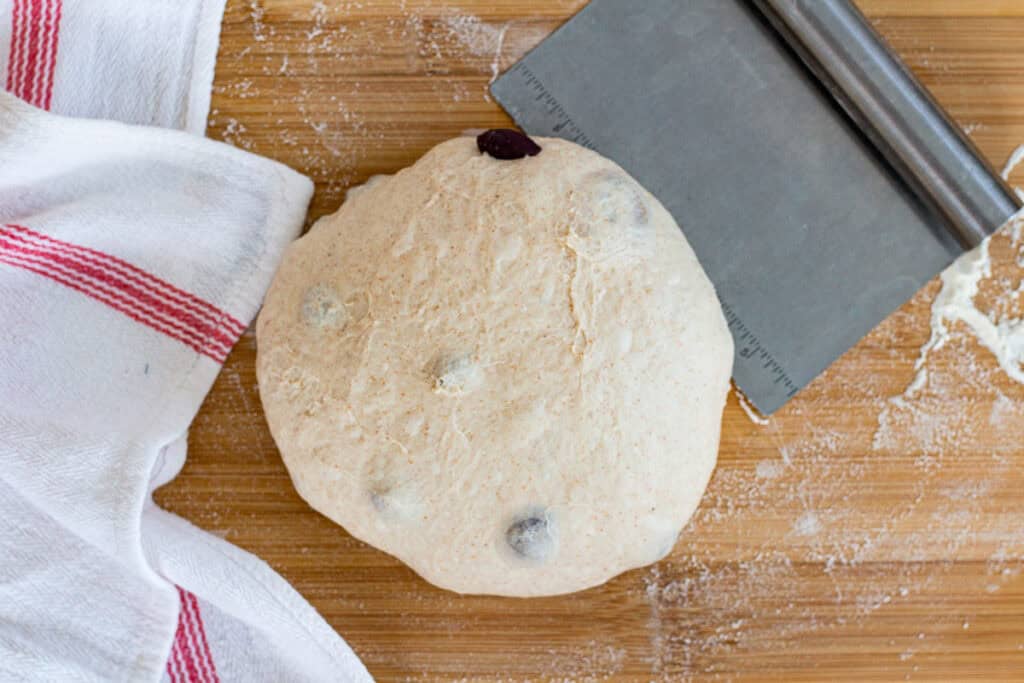
7. Preshape the dough.
Preshaping helps tighten the dough and sets it up for easier final shaping. Turn the dough out gently, tuck it into a loose round, flip it seam side down, and let it rest for 15 to 20 minutes.
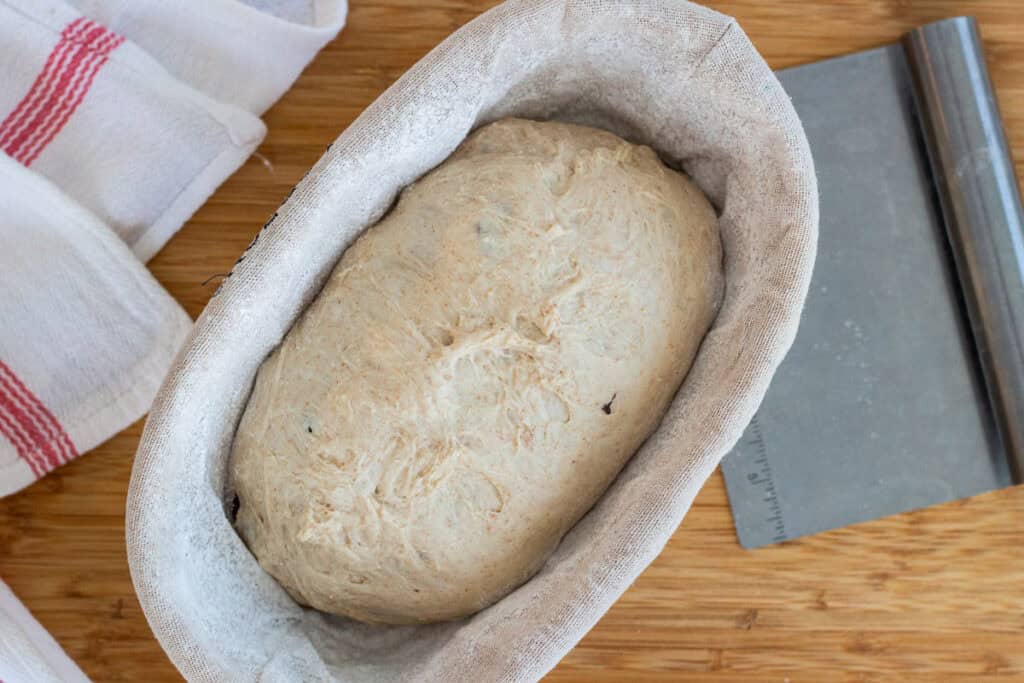
8. Shape the loaf.
Shape the dough into a small round or oval, keeping your touch light so you do not crush the olives. Transfer the shaped dough into a prepared banneton that has been dusted with rice flour.
For detailed photos of bowl folds, preshaping, and shaping both a boule and a batard, you can check out my sourdough discard bread post.
9. Cold proof or chill the dough.
Place the banneton in the refrigerator.
- True sourdough benefits from 10 to 18 hours in the fridge for deeper flavor.
- Discard plus yeast dough only needs 30 to 60 minutes, which firms the dough for easier scoring.
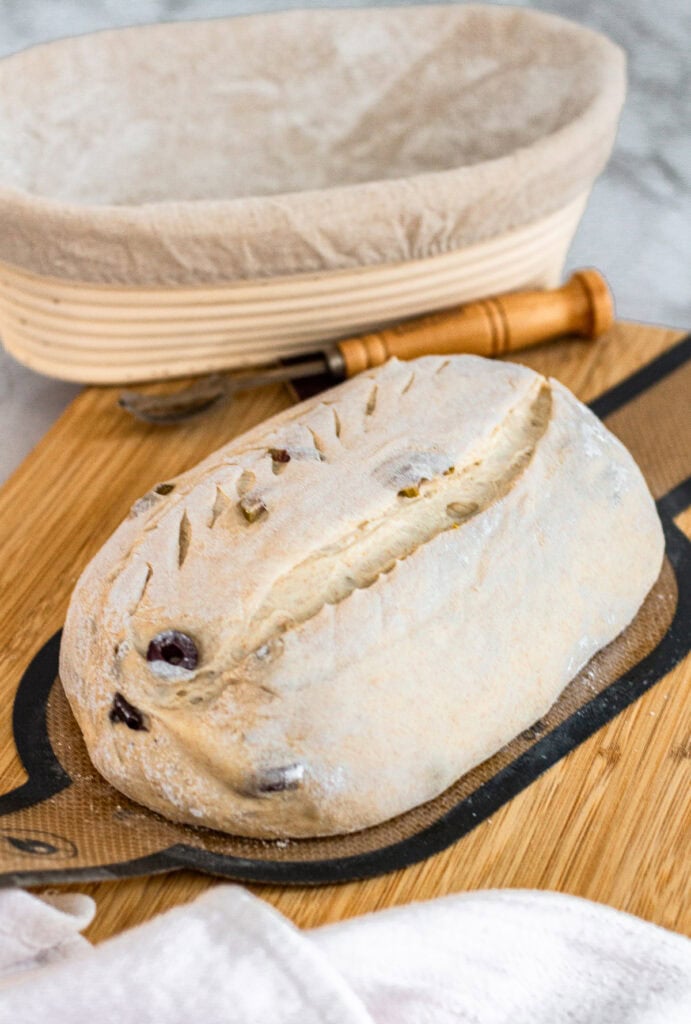
10. Score and bake.
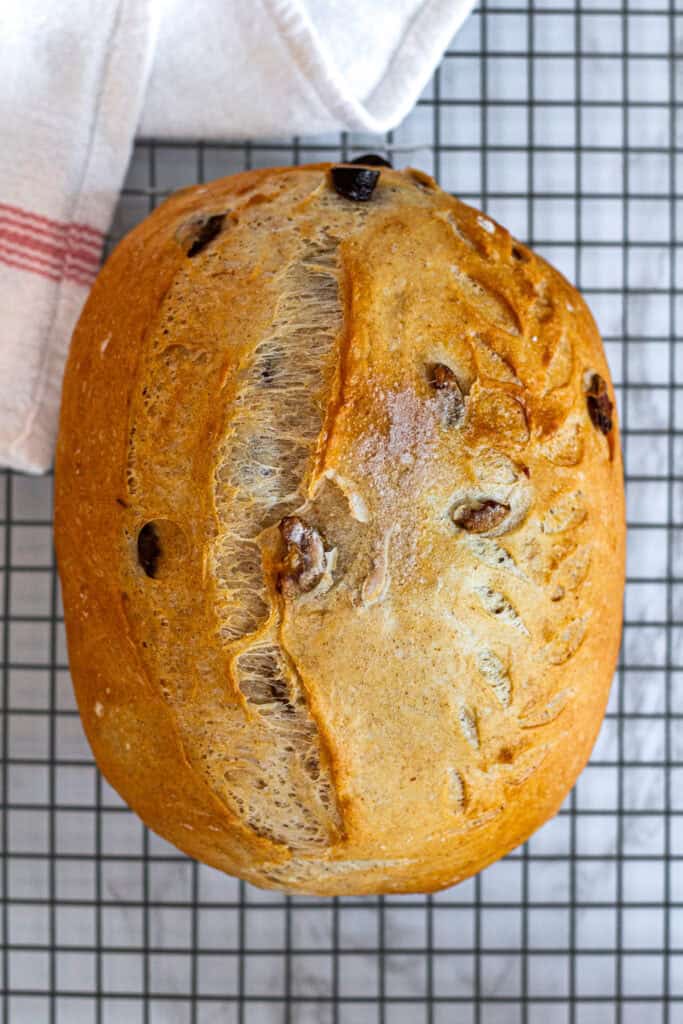
Preheat your Dutch oven. Score the chilled dough with a simple cut to avoid hitting olive pieces, then bake until the crust is deeply golden and the loaf feels light for its size.
Storage and Freezing
Olive bread tastes its very best on the day you bake it, and it’s still wonderful the next day. Keep the loaf wrapped in a clean kitchen towel, a partially opened paper bag, or a reusable bread bag at room temperature. The crust will soften a little overnight, but the flavor stays delicious.
For anything longer than a day, slice the bread and freeze it. Wrap each slice once in plastic wrap or aluminum foil to help prevent freezer burn, then place the wrapped slices in a freezer-safe bag. Freeze for up to one month. Toast slices straight from the freezer when you are ready to enjoy them. There is no need to thaw first.
Helpful Tips for Solving Common Olive Sourdough Bread Problems
Olives add extra moisture, so a slightly sticky dough is normal. Pat the olives dry before adding them, and use damp hands or a damp bench scraper when folding and shaping. Wet hands prevent sticking without throwing off the dough’s hydration.
This usually happens when olives are added too early or all at once. Add them during the third bowl fold in three small portions. If your olives are large, halve or quarter them so they blend into the dough more easily. Oil-packed olives should also be well-drained and patted dry.
Add the olives after the dough has built some strength, usually on the third bowl fold. Incorporating them gradually helps distribute them evenly, and using bowl folds instead of kneading keeps the dough intact and prevents tearing.
This often means the dough rose past 70 percent or didn’t have enough surface tension. A gentle but tight preshape helps the dough hold its structure, especially since olives add weight. A cold proof also firms the dough and improves oven spring.
Chill the dough before scoring to firm it up. Use a very sharp razor and hold it at a slight angle for a clean cut that glides around the olives.
Gummy patches usually come from olives that were not fully dried before mixing into the dough. Always drain and pat them dry well. Overproofing or slicing the loaf before it has cooled can also cause gumminess, so let the bread cool completely before cutting.
Serving Ideas
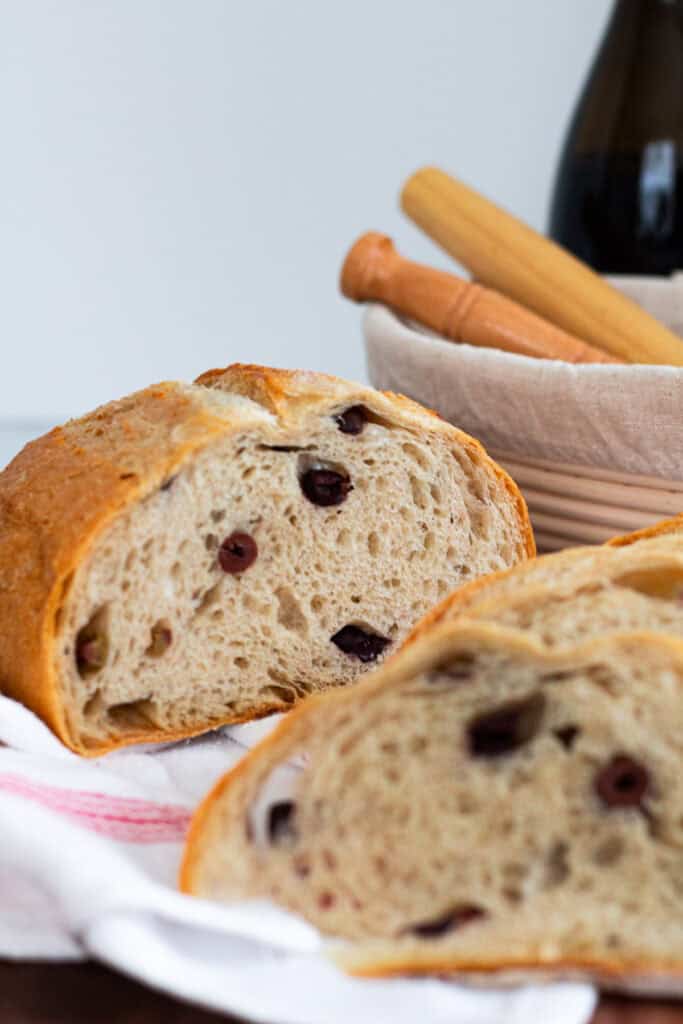
This small-batch olive loaf pairs beautifully with cozy meals for two. Here are some of my favorite ways to turn it into a complete meal:
- Light Lunch
- Mediterranean Dinner
- Serve alongside my Greek chicken meatballs for a simple Mediterranean dinner for two
- Pair with a Roasted eggplant and halloumi sandwich for a cozy vegetarian option
- Sandwich Ideas
- Fresh and light chickpea salad
- Air-fried “grilled” veggie sandwich
More Sourdough Resources
If you want to explore more small-batch sourdough baking alongside Joey (my sourdough starter), here are a few helpful guides and loaves to explore next:
- How I Started My Sourdough Starter
A personal look at how I began my sourdough journey, what encouraged me, and the helpful resources I leaned on when everything felt very new. - Daily Starter Log and Maintenance Guide
A detailed day-by-day log of how I created Joey from scratch, plus how I feed, store, and maintain my starter now. - Sourdough Discard Bread for Two
My foundational technique post with step-by-step photos of bowl folds, preshaping, shaping, and baking a reliable small loaf for two. This is the method I used to build confidence before adding inclusions like olives. - Small-Batch Cranberry Walnut Bread
Inspired by the beloved Costco cranberry walnut loaf, this cozy small-batch version is perfect for cooler weather and the holiday season. It follows the same method as this olive bread, with warm flavors and a festive feel.
I hope this little olive loaf brings as much joy to your kitchen as it does to mine. It’s simple, flavorful, and such a lovely way to practice your sourdough skills while baking something cozy for two. If you make it, I’d love to hear how it turned out or what you paired it with. Happy baking!
PrintSmall-Batch Sourdough Olive Bread for Two
Artisan-style small batch sourdough olive bread using active starter or discard. A tangy, flavorful loaf sized perfectly for two.
- Prep Time: 20 minutes
- Cook Time: 40 minutes
- Total Time: 1 hour
- Yield: 1 small loaf 1x
- Category: Bread
- Method: Oven
- Cuisine: American
- Diet: Vegan
Ingredients
-
60 g active sourdough starter or 60 g sourdough discard
-
210 g water (room temperature)
-
270 g bread flour
-
30 g whole wheat flour
-
4 g salt (about 1 ½ teaspoons kosher salt)
-
½ teaspoon instant yeast (use only if baking with discard)
-
90 g pitted olives, chopped (a mix of green + kalamata works best; pat very dry to remove excess brine or oil)
- Rice flour (for dusting banneton)
Instructions
1. Mix the dough.
Stir the water with your active starter or discard + yeast. Add the flours and salt, and mix until a sticky dough forms.
2. Rest (20–30 minutes).
Cover and let the dough hydrate so it becomes easier to handle.
3. Perform the first set of bowl folds.
With damp hands, lift one side of the dough and fold it over the center. Rotate the bowl and repeat until you’ve folded all the way around.
Rest 20–30 minutes.
4. Perform the second set of bowl folds.
Repeat the same folding motion to continue strengthening the dough.
Rest 20–30 minutes.
5. Add the olives.
Divide the olives into three portions. Sprinkle the first portion over the dough and gently press them in so they stay in place. Do a bowl fold. Turn the bowl, add the second portion, and fold again. Add the final portion, fold once more, and let the dough rest for 20–30 minutes so the olives settle evenly.
6. Final bowl fold.
Do one last gentle set of folds to tighten the dough and distribute the olives evenly.
7. Let the dough rise.
Allow the dough to rise about 70 percent.
-
True sourdough: 4–8 hours
-
Discard + yeast: 30 minutes to 2 hours
8. Preshape.
Gently form the dough into a loose round and rest 15–20 minutes.
9. Shape.
Shape into a round or oval and place it in a rice-flour–dusted banneton.
10. Preheat the oven.
Place your Dutch oven inside and preheat to 450°F for at least 30 minutes.
11. Cold proof.
Refrigerate the dough until firm.
-
True sourdough: 10–18 hours
-
Discard + yeast: 30–60 minutes
12. Score and bake.
Transfer the chilled dough onto a bread sling or parchment paper. Score with a simple cut to avoid olives, then lower into the hot Dutch oven. Add a few ice cubes for steam. Bake 20 minutes covered, then 20 to 25 minutes uncovered until golden and crisp (internal temperature 200 - 205'F).
13. Cool completely.
Let the loaf cool fully so the crumb sets before slicing.
Notes
-
Total Time:
-
Discard + yeast version: about 20 minutes prep, 40 minutes bake, and 30 minutes to 2 hours rise time.
-
True sourdough version: about 20 minutes prep, 40 minutes bake, plus 12–18 hours combined rising and cold-proof time.
-
-
Whole wheat flour: If you don’t have whole wheat flour or prefer a lighter loaf, replace it with the same amount of bread flour.
-
Salt type: This recipe uses 4 g salt. If you’re using table salt instead of kosher salt, weigh it. Table salt is finer, so the teaspoon measurement will be different.
-
Active dry yeast option: If using active dry yeast instead of instant, bloom it first in warm water (100–110°F), then add the discard and continue as usual.
-
Prep the olives well: Drain and pat the olives very dry before chopping. Removing excess brine/oil prevents gummy spots and keeps the dough from becoming too wet.
-
Optional rosemary: If adding rosemary, toss it with the chopped olives and add them together during the third bowl fold for even distribution.
-
Shaping choice: Shape as a small boule or batard, depending on what fits your Dutch oven best.
Share your thoughts below!