
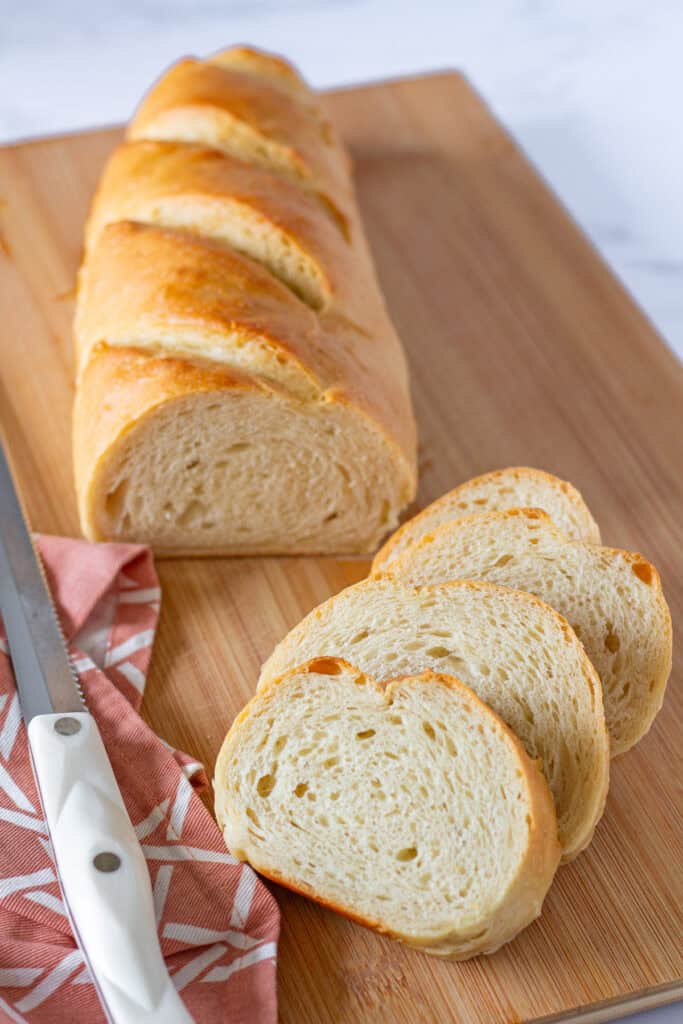
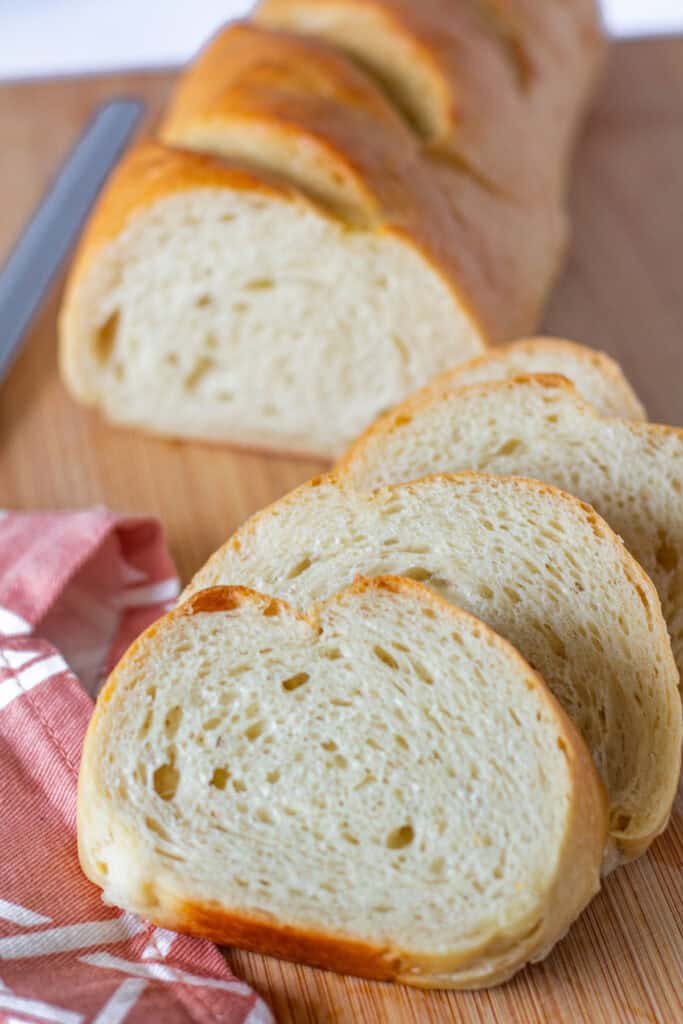
This American-style sourdough discard French bread has a soft, tender crumb and a lightly golden crust, with an easy same-day method that puts your sourdough discard to good use.
At a Glance
- What it is: An American-style sourdough discard French bread with a soft, tender crumb and lightly golden crust. It’s a softer, wider loaf rather than a crusty baguette.
- When to make it: Make it when you have sourdough discard to use and want a versatile homemade bread.
- What to serve with it: Serve it with soups and pasta, use it for sandwiches, or turn it into homemade garlic bread.
- Time: About 3½ to 4 hours total, including two rises and about 25 minutes of baking.
- Cooking for two: This recipe makes one manageable loaf, and any extra bread freezes well for later.
- Skill level: Easy. The dough is soft and easy to handle, making this an approachable recipe even if you’re newer to bread baking.
Jump to:
Ingredients
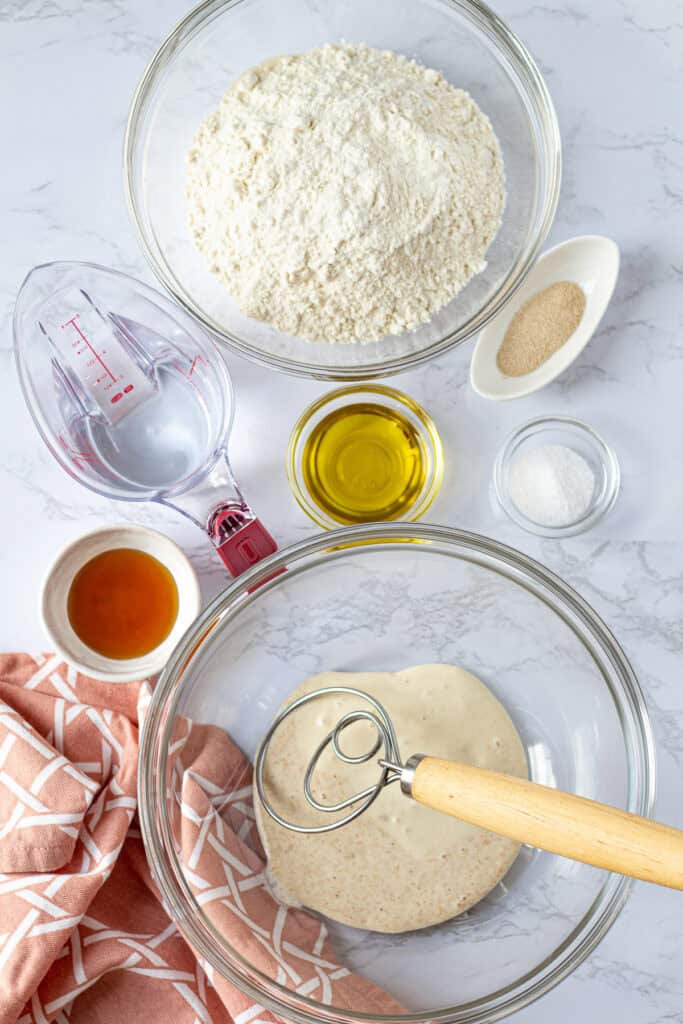
You’ll find exact measurements in the recipe card below.
- Sourdough discard: Use 100% hydration sourdough discard. It adds sourdough flavor while putting your extra discard to good use.
- Warm water: Helps create a soft dough and encourages the yeast to get to work.
- Honey: Adds a touch of sweetness and helps give the bread its soft, American-style character.
- Olive oil: Adds fat to the dough, helping create a soft, tender crumb and an easy-to-handle dough.
- Instant yeast: Gives the bread a reliable, same-day rise rather than relying on the discard for leavening.
- Bread flour: Provides enough structure for the loaf while still giving you a soft interior.
- Salt: Seasons the dough and balances the slight sweetness from the honey. I use Diamond Crystal kosher salt. If using table salt or another type of salt, measure by weight for the most accurate result.
- Melted butter: Brushed over the freshly baked loaf to soften the crust as it cools.
How to Make Sourdough Discard French Bread
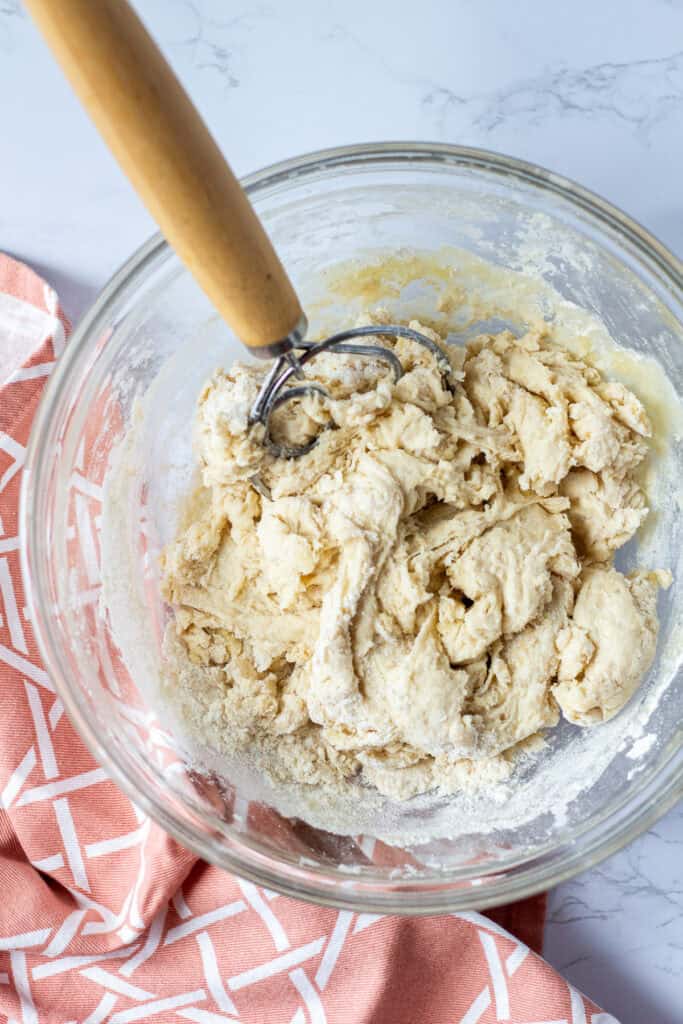
- Mix the dough. Combine the warm water, sourdough discard, honey, olive oil, and instant yeast. Add the bread flour and salt, then mix until it comes together and there is no more dry flour.
- Knead the dough. Knead for 5 to 7 minutes in a stand mixer on low to medium speed or 6 to 8 minutes by hand, until the dough is smooth and elastic. It should feel soft and supple without being overly sticky.
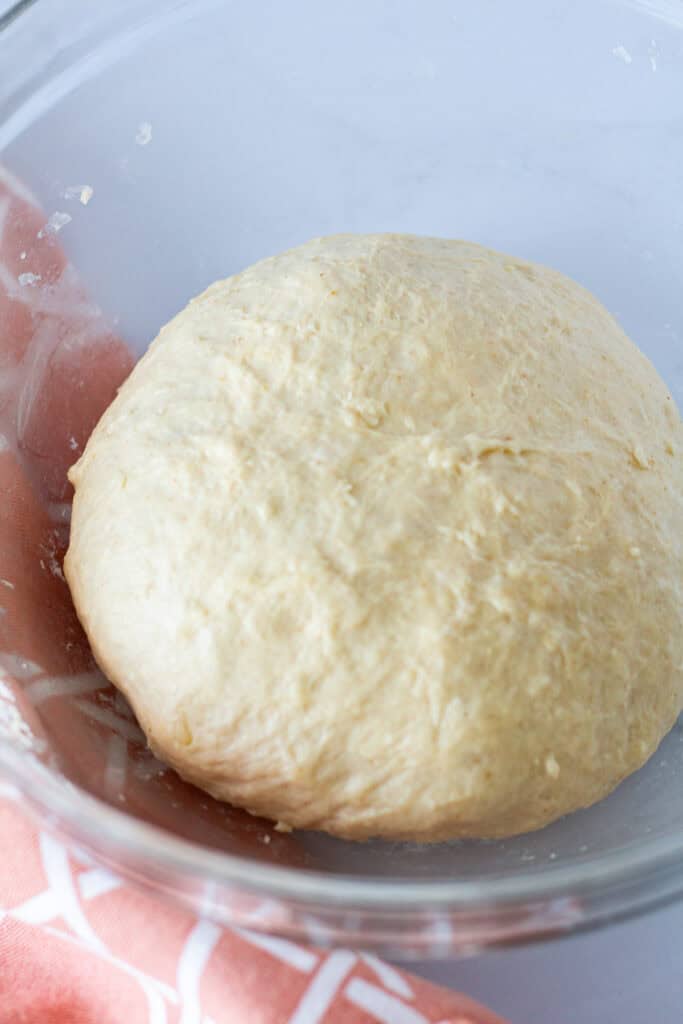
- First rise. Place the dough in a bowl, cover, and let it rise until roughly doubled in size. Watch the dough rather than the clock, as the rise time will vary depending on the temperature of your kitchen.
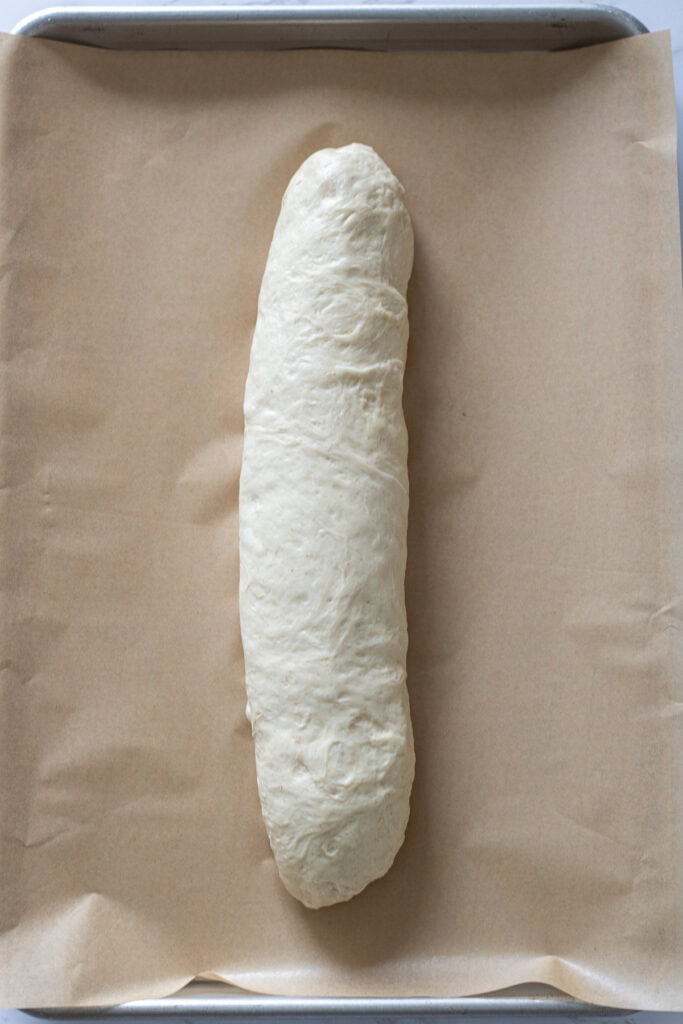
- Shape the loaf. Gently deflate the dough and shape it into a rectangle. Gently roll it into a log without pulling the dough too tightly, pinch the seam closed, and place the loaf seam-side down on a parchment-lined baking sheet.
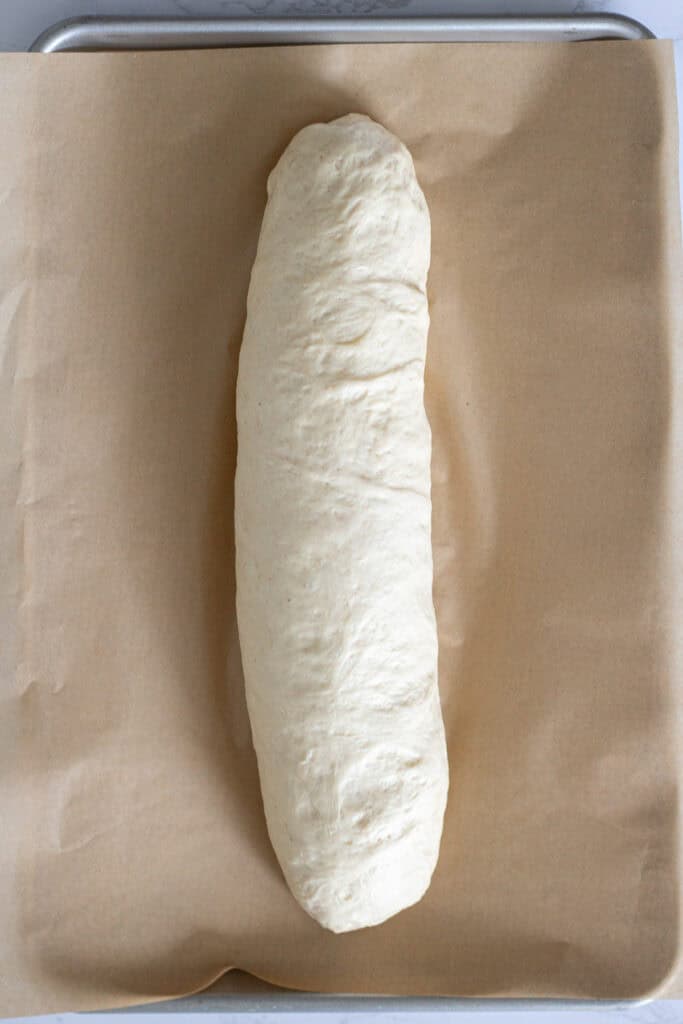
- Second rise. Loosely cover the shaped loaf and let it rise until roughly doubled in size and noticeably puffy. Again, watch the dough rather than the clock.
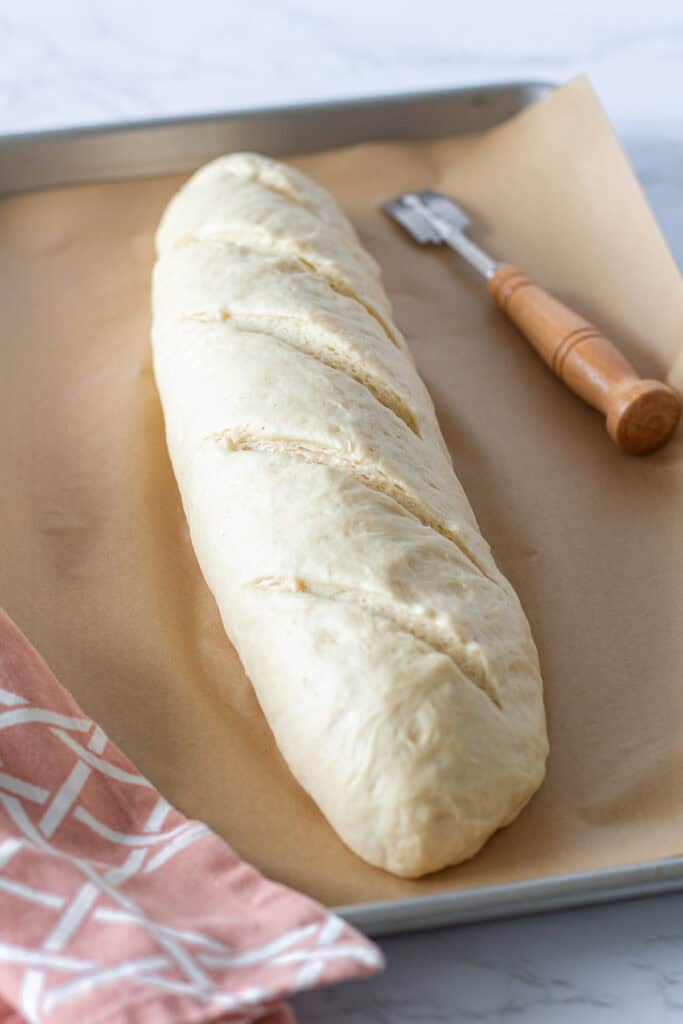
- Score and bake. Toward the end of the second rise, preheat the oven to 375°F. Make several slightly diagonal, almost vertical slashes across the top. Bake for about 25 minutes, until golden brown and the center reaches approximately 195–200°F.
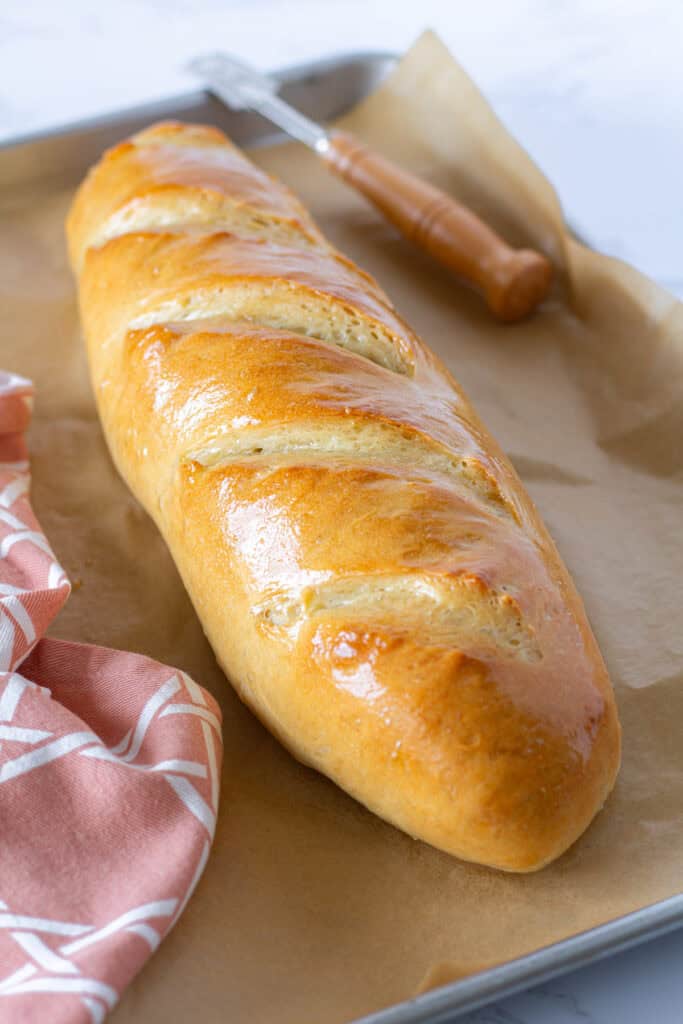
- Brush and cool. Lightly brush the top and sides with melted butter as soon as the loaf comes out of the oven. Transfer it to a wire rack and let it cool completely before slicing.
Expert Tips
- Watch the dough, not the clock. Every kitchen is different. For both rises, use the size and appearance of the dough as your guide rather than relying on a set time.
- Rest sticky dough before adding flour. If the dough feels stickier than expected after initial mixing, let it rest for 10 to 15 minutes, then knead it again. Add extra flour only if it is still too sticky to handle.
- Shape the loaf for how you plan to use it. Roll the dough into a longer log for a thinner loaf. Keep it shorter for a wider loaf with larger slices.
- Use your baking sheet as a guide. If you shape the loaf to about the length of your baking sheet, place it diagonally on the pan. This gives the dough more room to proof and expand as it bakes.
- Brush with butter for a softer crust. Lightly brush the loaf with melted butter immediately after baking to help soften the crust as it cools.
- Cool completely before slicing. It can be tempting to slice into freshly baked bread, but let the loaf cool completely first. Cutting it while it’s still warm can make the inside gummy and cause the soft center to squish or sink.
Common questions
No. This recipe uses sourdough discard, which is not active enough to raise the bread on its own. The instant yeast provides the leavening needed for the dough to rise.
Gently press the dough with your fingertip. If it springs back immediately, it needs more time to rise. If it springs back slowly and leaves a slight indentation, it’s ready to score and bake.
A loaf can split if it is underproofed or shaped too tightly, leaving the expanding dough with nowhere to go in the oven. Make sure the loaf is noticeably puffy before baking, and when shaping, roll it up snugly but not overly tight. Pinch the final seam closed, place it seam-side down, and score the top to give the dough room to expand.
How to Serve
This soft French bread is versatile enough to serve in several ways:
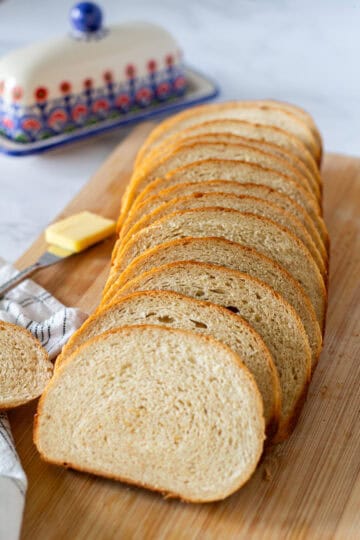
- Make a sandwich: Slice it lengthwise for your favorite deli sandwich, or fill it with my air-fried vegetables for an easy veggie sandwich.
- Serve it with soup: Pair thick slices with vegetable orzo soup or creamy butternut squash bisque for dipping.
- Add it to pasta night: Serve it alongside one-pan Boursin chicken pasta to round out the meal.
- Turn it into garlic bread: The loaf is perfect for my make-ahead freezer garlic bread.
Storage & Freezing
- Room temperature: Store the completely cooled bread in an airtight container or bag at room temperature for up to 2 to 3 days.
- Freezing: Freeze the whole loaf or individual slices in a freezer-safe bag for up to 3 months. Slicing before freezing makes it easy to take out only what you need.
- Thawing: Thaw the loaf or individual slices at room temperature.
- Reheating: Warm the bread in a 350°F oven for a few minutes, or toast individual slices until warmed to your liking.
Got a Jar of Discard to Clear Out?
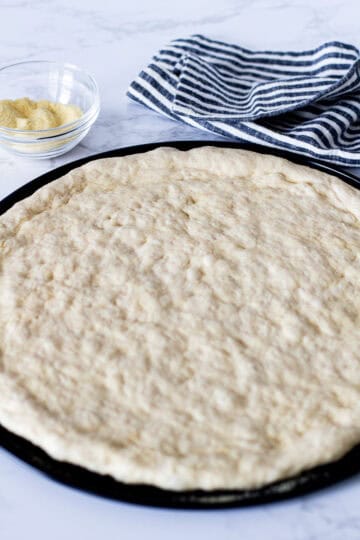
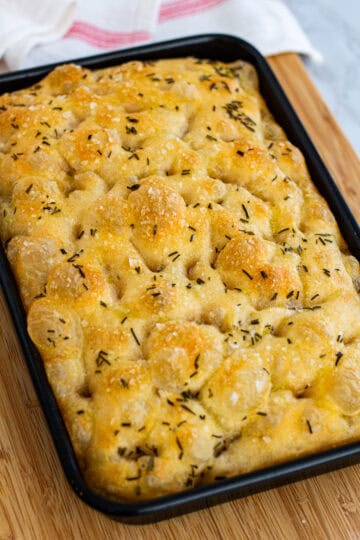
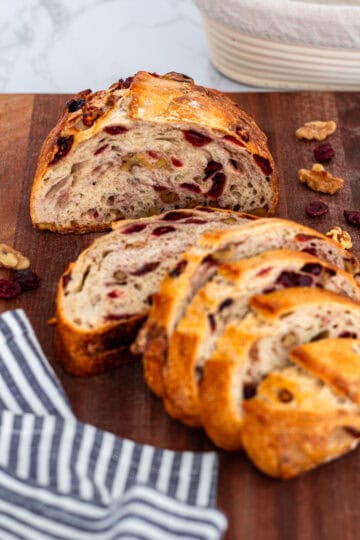
If you’re looking to use up excess starter today, this soft French bread is one of the easiest same-day bakes you can make. If you have extra discard left over, try my reader-favorite Sourdough Discard Focaccia, make Sourdough Discard Pizza Dough for Two, or dive into an Artisan-Style Sourdough Discard Bread.
PrintSourdough Discard French Bread
This easy American-style sourdough discard French bread makes one soft, tender crumb and a lightly golden crust. Instant yeast gives it a reliable same-day rise and puts your extra starter to good use.
- Prep Time: 20 minutes
- Rise time: 2 to 3 hours
- Cook Time: 25 minutes
- Total Time: 3 to 4 hours
- Yield: 1 loaf 1x
- Category: Bread
- Method: Baking
- Cuisine: American
- Diet: Vegetarian
Ingredients
- 145 g warm water
- 90 g sourdough discard, 100% hydration
- 1 tablespoon honey (about 20g)
- 2 tablespoons olive oil (about 27g)
- 1 teaspoon instant yeast
- 300 g bread flour
- 6 g salt (about 2 teaspoons Diamond Crystal kosher salt)
- Melted butter, for brushing
Instructions
- Mix the wet ingredients. Combine the warm water, sourdough discard, honey, olive oil, and instant yeast.
- Make the dough. Add the bread flour and salt. Mix until a dough forms and no dry flour remains.

- Knead. Knead for 5 to 7 minutes in a stand mixer on low to medium speed or 6 to 8 minutes by hand, until the dough is smooth and elastic. It should feel soft and supple without being overly sticky.
- First rise. Place the dough in a bowl and cover. Let it rise until roughly doubled in size. Watch the dough rather than the clock, as rise time will vary depending on the temperature of your kitchen.
- Shape. Gently deflate the dough and shape it into a rectangle. Roll it into a log, gently tapering the ends to create a French bread shape. Pinch the seam tightly closed and place the loaf seam-side down on a parchment-lined baking sheet.
- Second rise. Loosely cover the shaped loaf and let it rise until roughly doubled in size and noticeably puffy.
- Preheat the oven. Toward the end of the second rise, preheat the oven to 375°F.
- Score. Using a sharp knife or bread lame, make several slightly diagonal, almost vertical slashes across the top of the loaf.
- Bake. Bake for about 25 minutes, until golden brown and the center reaches approximately 195–200°F.
- Brush with butter. As soon as the loaf comes out of the oven, lightly brush the top and sides with melted butter.
- Cool. Transfer the loaf to a wire rack and let it cool completely before slicing.
Notes
- Using active dry yeast: Active dry yeast can be used instead of instant yeast. Combine the warm water, sourdough discard, honey, and olive oil, then stir in the yeast. Let it sit for 5 to 10 minutes, until foamy, before adding the bread flour and salt.
- Watch the dough, not the clock: Kitchen temperature affects how quickly bread rises. Use the size and appearance of the dough to judge both rises.
- If the dough feels sticky: Let it rest for 10 to 15 minutes, then knead again before adding additional flour.
- For a softer crust: Lightly brush the loaf with melted butter immediately after baking.
- Cool before slicing: Let the bread cool completely. Slicing while it’s still warm can make the inside gummy and cause the soft center to squish or sink.
Share your thoughts below!