
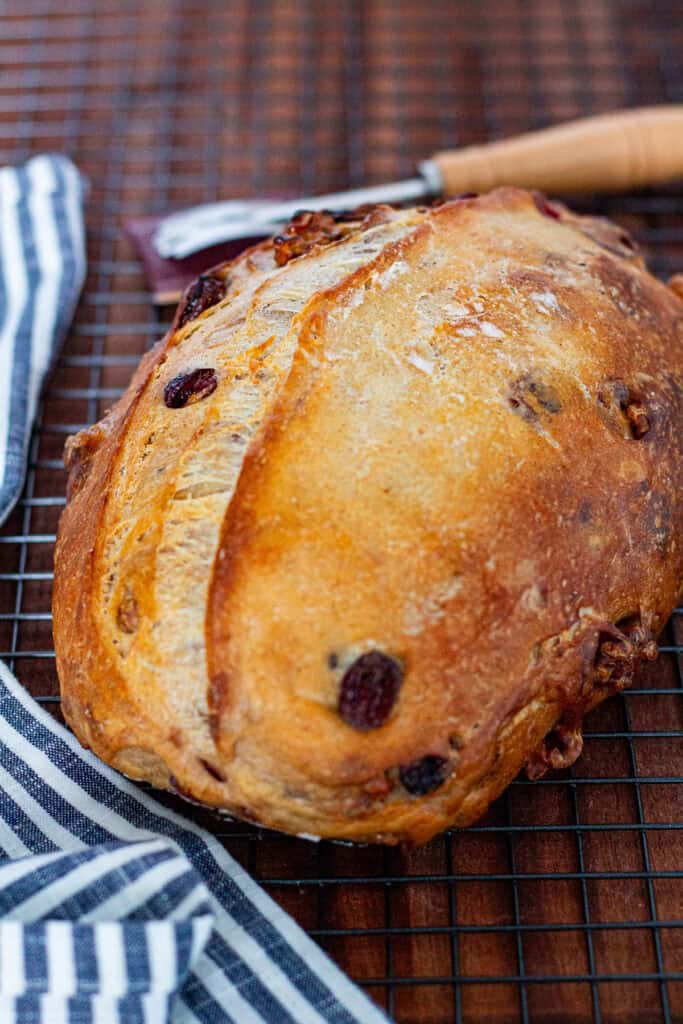
Small-batch cranberry walnut bread made with sourdough discard. A perfectly sized loaf for two with sweet cranberries and toasted walnuts.
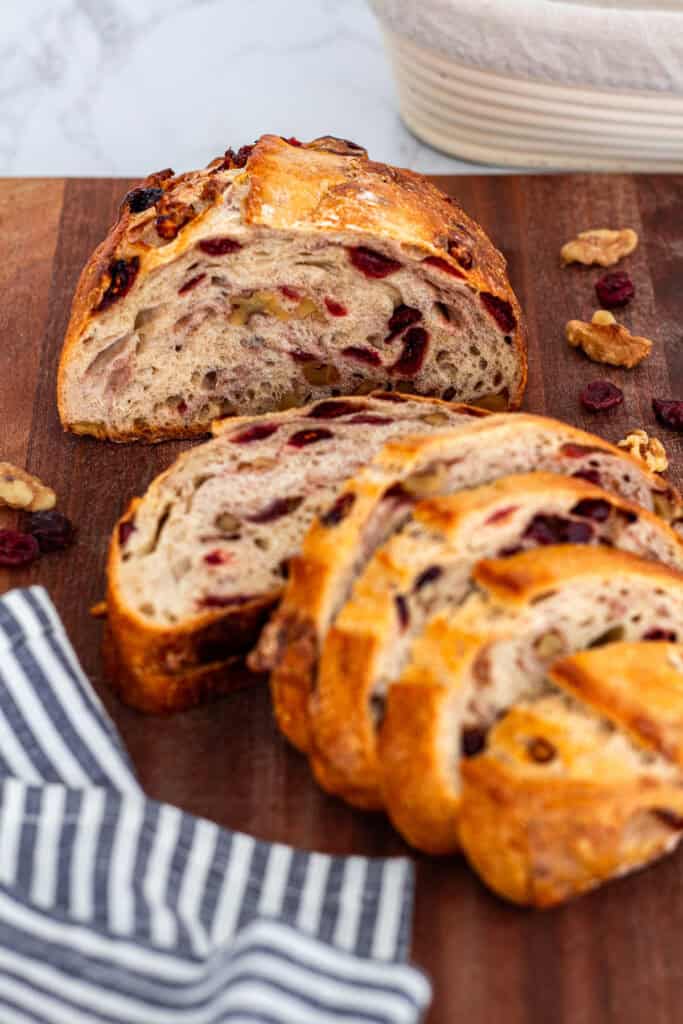
This small-batch cranberry walnut bread was inspired by the one I used to buy from Costco, with sweet tart cranberries, nutty walnuts, and a soft, cozy crumb. Unlike a full-size bakery loaf, this version is perfectly sized for two or a small household.
Since starting my sourdough journey, I’ve been experimenting with simple inclusions, and after making my olive bread, this was the next loaf I had to try. It uses sourdough discard with a touch of yeast for a reliable same-day bake, and every slice is packed with flavor.
Jump to:
Why You’ll Love This Cranberry Walnut Bread
- Perfect small loaf: A cozy, flavorful artisan bread sized just right for two.
- Simple same day method: Sourdough discard with a touch of yeast makes the process quick and beginner friendly.
- Cranberry and walnut in every bite: The loaf is filled with sweet tart cranberries and toasty walnuts throughout.
- Easy bowl folds: Gentle folding builds structure without kneading or complicated techniques.
Ingredients You’ll Need
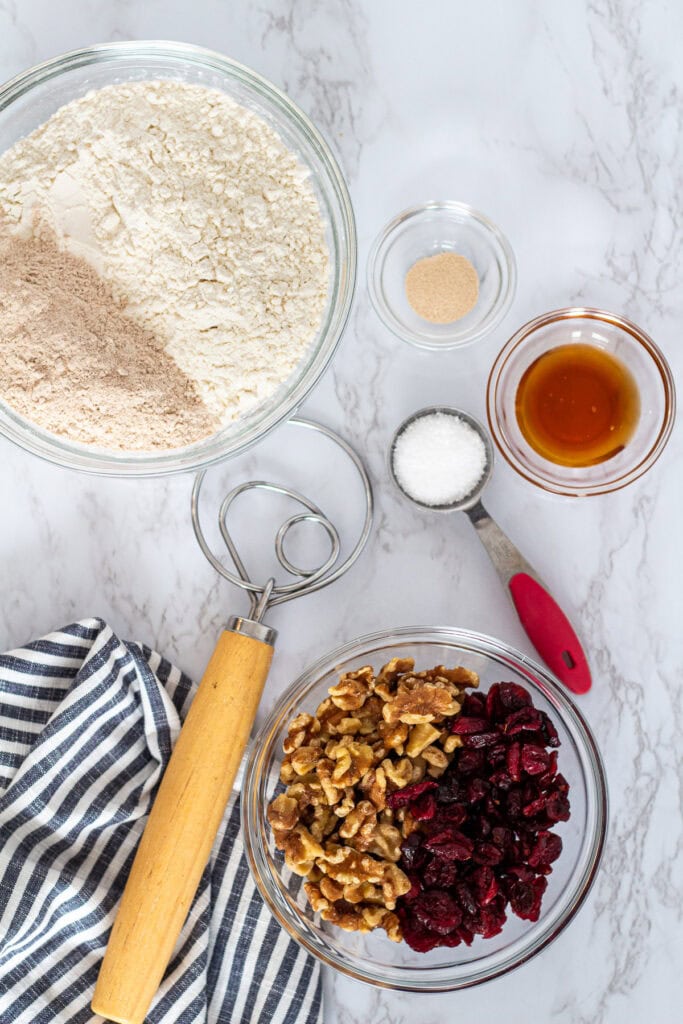
- Bread flour: Gives the dough strength so it can hold the cranberries and walnuts.
- Whole wheat flour: Adds a light nutty flavor and warm color. You can substitute with more bread flour if you prefer.
- Sourdough discard: Adds extra flavor and depth to the loaf.
- Instant yeast: Helps the dough rise reliably when using discard.
- Water: Hydrates the dough and brings everything together.
- Honey: Adds sweetness that pairs well with cranberries and helps the crust brown. Maple syrup works too.
- Dried cranberries: Sweet and tart, and they soften naturally as the bread bakes.
- Walnuts: Toasted and cooled so they fold in easily without tearing the dough.
- Salt: Strengthens the dough and balances the flavors.
How to Make Cranberry Walnut Bread
1. Mix the dough
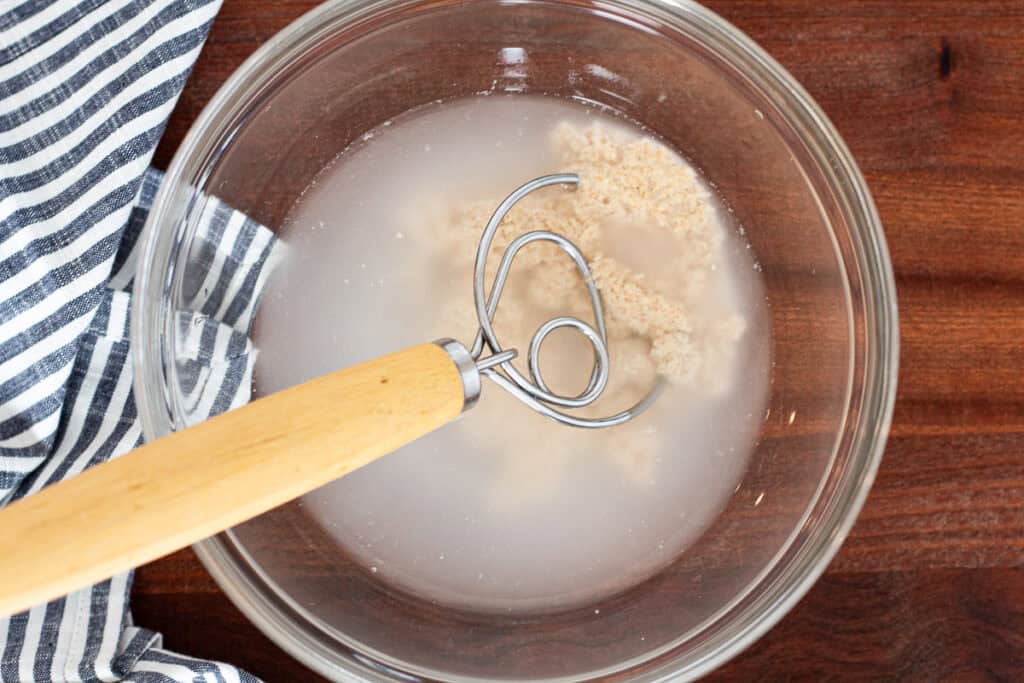
Stir together the water, sourdough discard, honey, salt, and yeast until mostly dissolved. Add the flours and mix until no dry bits remain. The dough will feel sticky at this stage, which is normal.
2. Let the dough rest
Cover the bowl and let the dough sit for 20 to 30 minutes so the flour hydrates and becomes easier to fold.
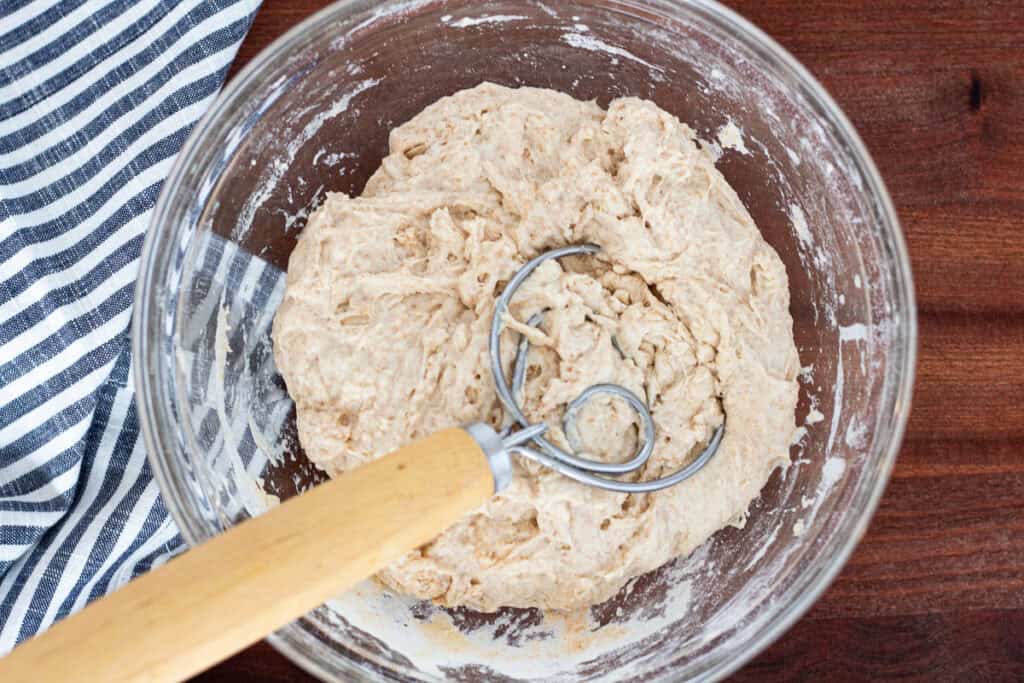
3. Build strength with bowl folds
Do two sets of bowl folds with about 30 minutes between each set. Lift, stretch, and fold the dough over itself while turning the bowl. Cover the bowl each time you let the dough rest.
If you want detailed photos or a refresher, you can refer to my sourdough discard bread post for a full step by step visual guide.
4. Add the cranberries and walnuts
Use the same method as my olive bread and add the inclusions during the folds so they stay evenly distributed. Divide the cranberry walnut mixture into three portions. Add one portion during each of the next bowl folds, gently pressing the inclusions into the dough before folding. After the third addition, do one more gentle set of folds to finish strengthening the dough and make sure everything is evenly incorporated.
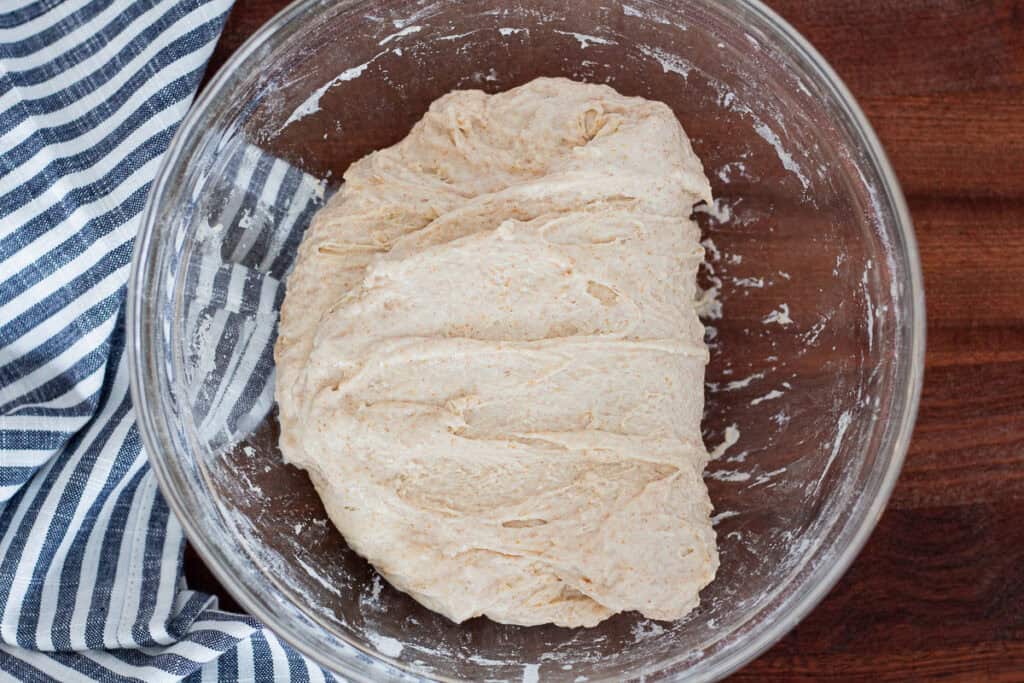
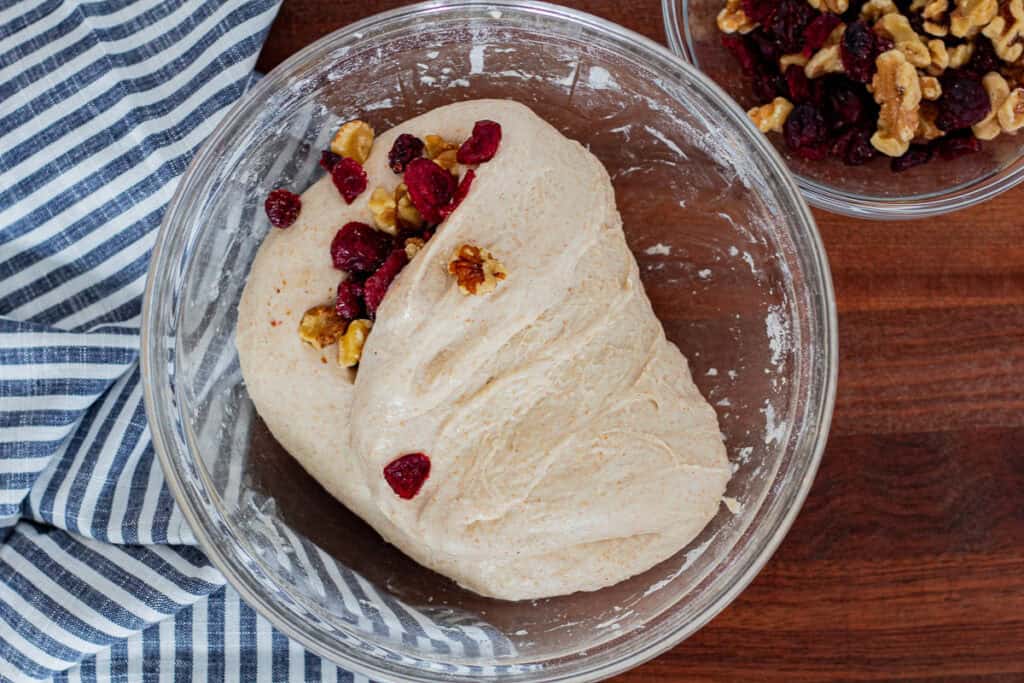
5. Bulk rise
Cover and let the dough rise until puffy and almost doubled. The top should look slightly domed, and the dough should have a soft jiggle when you move the bowl. This usually takes 30 minutes to 1 hour depending on your room temperature.
6. Preshape and rest
Turn the dough out gently and pull it into a loose round. Let it rest for 15 to 20 minutes. This helps relax the dough and makes final shaping easier. For detailed shaping photos, you can visit my sourdough discard bread recipe.
7. Shape the loaf
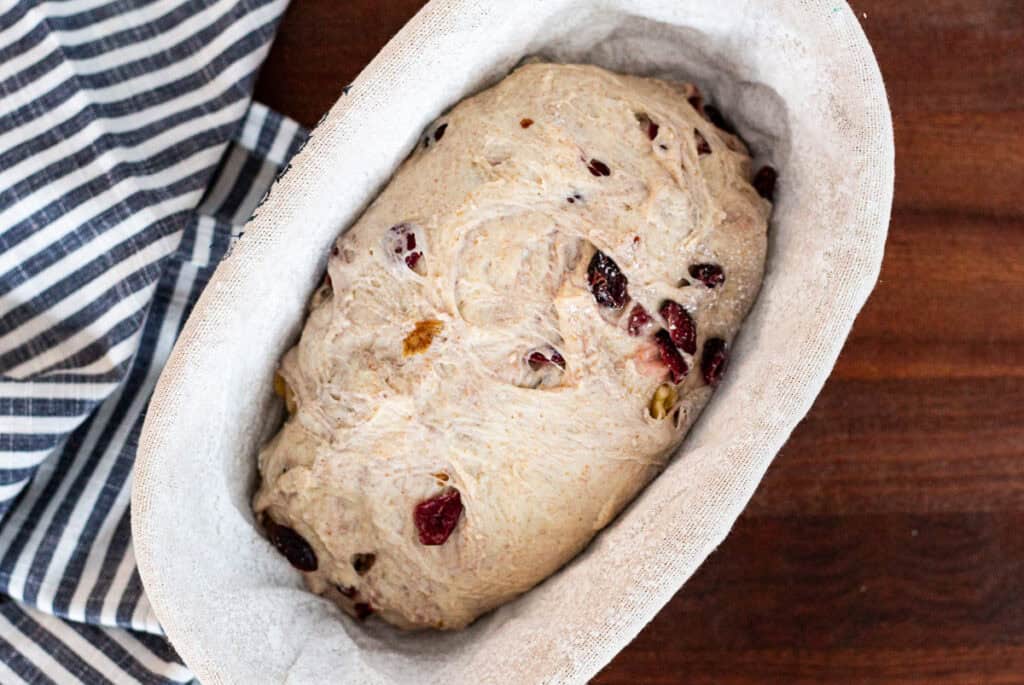
Shape into a small round or oval while keeping a light touch so the cranberries and walnuts stay tucked inside. Place the loaf seam side up in a floured banneton.
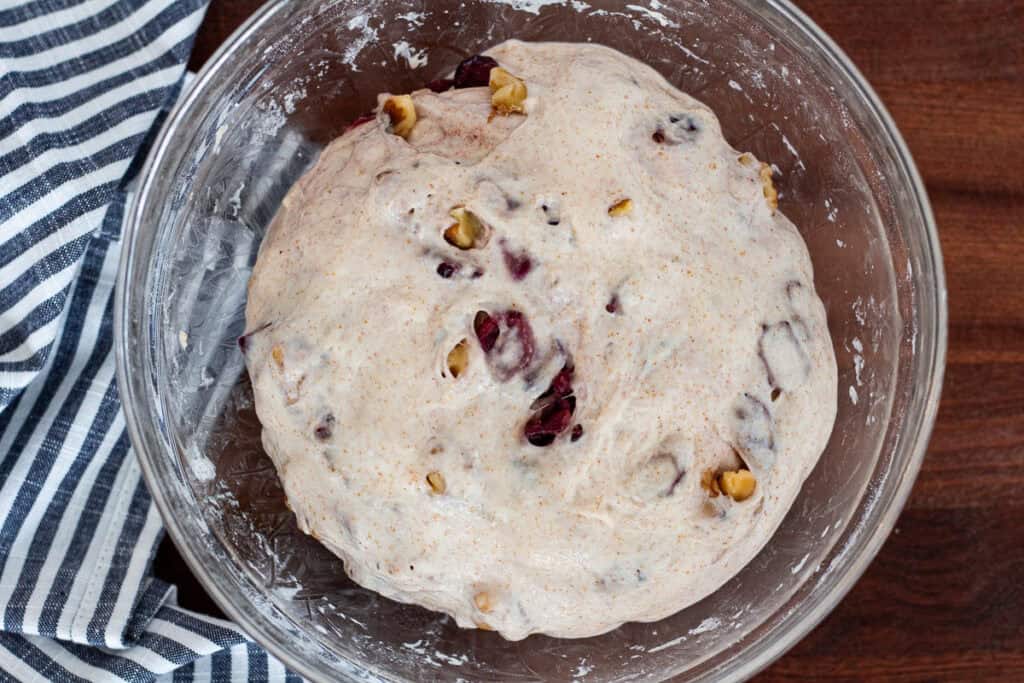
8. Chill the dough
Cover and refrigerate the dough for 30 to 60 minutes. This chill time helps firm the dough so it is easier to score. It is not for flavor development.
9. Preheat the oven
Preheat your Dutch oven at 450°F for at least 30 minutes so it is fully heated.
10. Score and bake
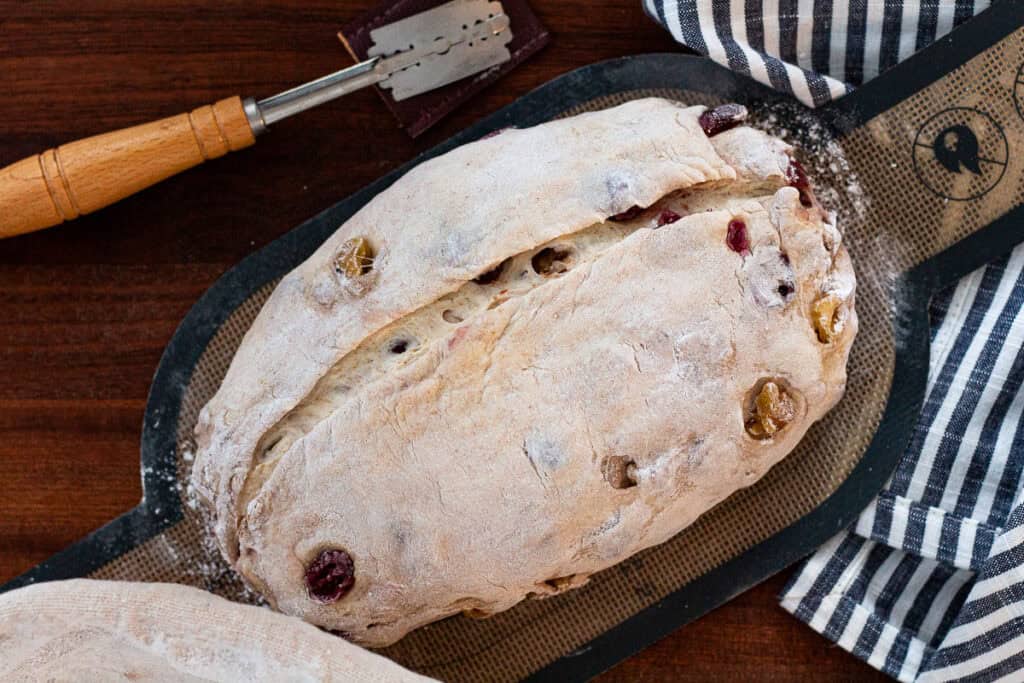
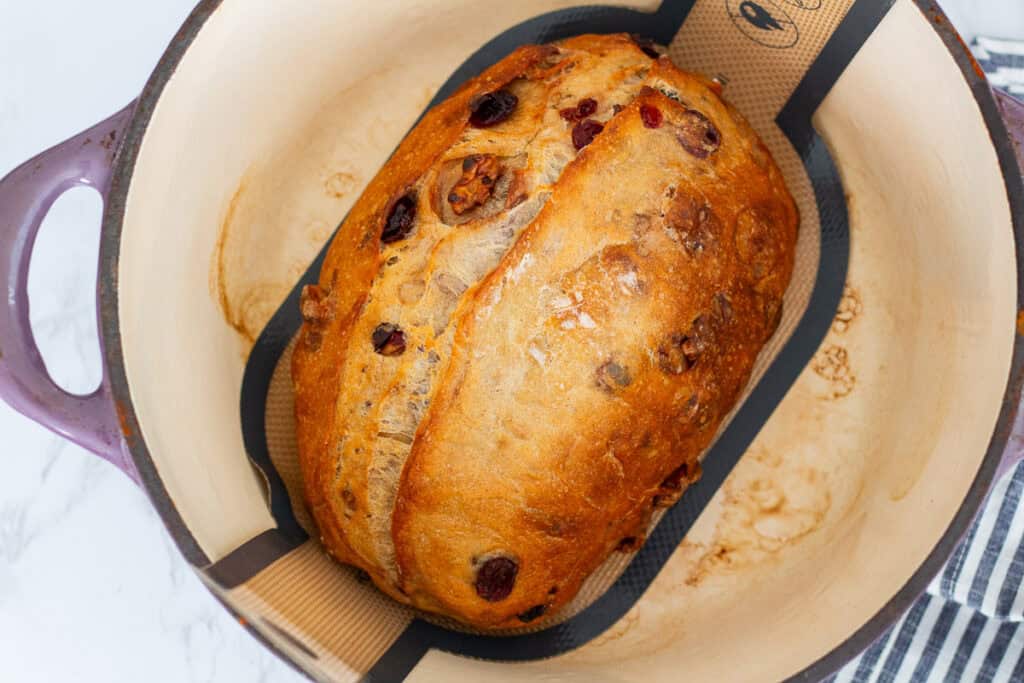
Place the chilled dough onto a bread sling or parchment paper. Score the top while the dough is still on the counter so you can make a clean cut. Lower the dough gently into the preheated Dutch oven, add a couple of ice cubes beside the dough for steam, and bake for 20 minutes covered, then 20 to 25 minutes uncovered until deep golden brown.
11. Cool completely
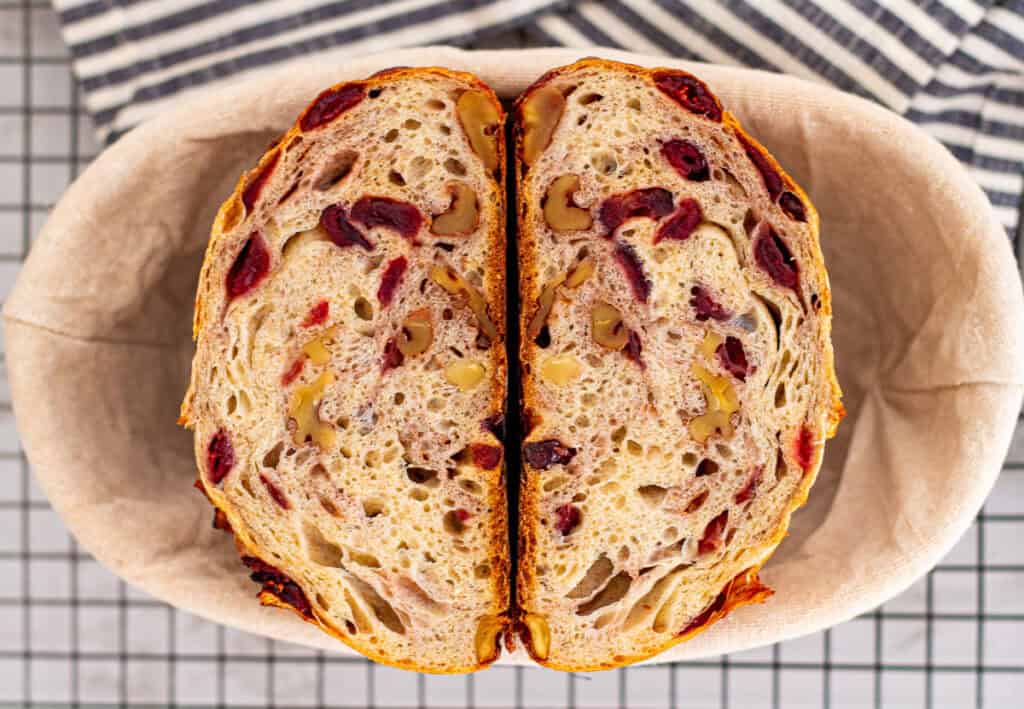
Cool the loaf on a rack for at least 1.5 to 2 hours to avoid gumminess in the crumb. I have sliced into it after about an hour and it was still very good, but a longer cooling time gives the best texture.
Storage and Freezing
Cranberry walnut bread tastes its best on the day you bake it and stays delicious the next day. Keep the loaf wrapped in a clean kitchen towel, a partially opened paper bag, or a reusable bread bag at room temperature. The crust will soften a little overnight, but the flavor stays wonderful.
For longer storage, slice the bread and wrap the whole stack in plastic wrap or foil. You can place a small piece of parchment paper between slices if you want them to separate easily later, but it is optional. Place the wrapped slices in a freezer-safe bag and freeze for up to one month. Toast slices straight from the freezer when you are ready to enjoy them.
Troubleshooting and Common Questions
Cranberries add a touch of extra moisture, so some stickiness is normal. Use damp hands or a damp bench scraper when folding and shaping, and make sure the walnuts are fully cooled before adding them.
This is usually a sign of over-fermentation. I recommend moving to preshape when the dough reaches about a 70 percent rise so it still has enough strength for shaping.
Gummy spots usually come from slicing too early. Let the loaf cool for at least 1.5 to 2 hours for the best texture. Also, be sure to use dried cranberries rather than fresh ones, since fresh cranberries release too much moisture.
Add the inclusions during the later bowl folds when the dough already has strength, and add them in small portions. Gentle repeated folding keeps everything tucked inside.
Some of the color comes from the cranberries, but walnuts can also react slightly with the dough and tint it purple. It is completely normal and part of the character of this loaf.
More Sourdough Resources
- How I Started My Sourdough Starter
A personal look at how I began my sourdough journey, what encouraged me, and the helpful resources I leaned on when everything felt very new. - Daily Starter Log and Maintenance Guide
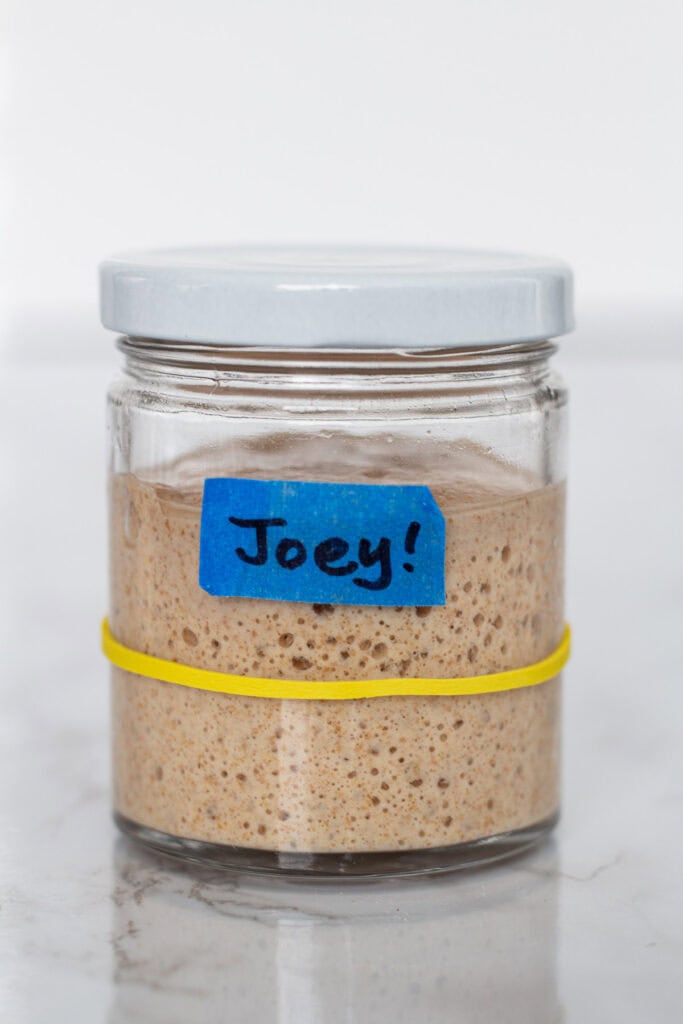
A detailed day-by-day log of how I created Joey (my sourdough starter) from scratch, plus how I feed, store, and maintain my starter now. - Small-Batch Sourdough Discard Bread
My foundational small-loaf technique post with step-by-step photos of bowl folds, preshaping, shaping, and baking a reliable small loaf. Start with this method to build confidence before adding inclusions like olives or cranberries. - Sourdough Olive Bread for Two
A small-batch loaf filled with briny olives and baked using the same gentle bowl fold method. This was the loaf I experimented with right before creating this cranberry walnut version.
All of my sourdough recipes are designed with smaller households in mind, so you can bake fresh bread without ending up with too much.
This cozy little cranberry walnut loaf has become one of my favorite small-batch bakes, especially during the cooler months or holiday season. It is wonderful toasted with butter, tucked into a turkey or chicken sandwich, or paired with a warm bowl of soup. The cranberries and walnuts make it feel naturally festive, and the size is perfect for two. If you make it, I would love to hear how it turned out and what you enjoyed it with.
PrintCranberry Walnut Sourdough (Small-Batch with Discard)

Small, artisan-style cranberry walnut bread made with sourdough discard. Bright cranberries and toasted walnuts make it perfect for winter baking.
- Prep Time: 20 minutes
- Rise and Chill Time: 4 hours
- Cook Time: 40 minutes
- Total Time: 5 hours
- Yield: 1 small artisan loaf 1x
- Category: Bread
- Method: Oven
- Cuisine: American
Ingredients
-
270 g bread flour
-
30 g whole wheat flour
-
210 g water (room temperature)
-
60 g sourdough discard (unfed, stirred)
-
15 g honey (about 1 Tbsp)
-
6 g salt (about 2 teaspoon kosher salt, or 1¼ teaspoon table salt)
-
½ teaspoon instant yeast
-
75 g toasted and cooled walnuts, chopped
-
75 g dried cranberries (not fresh)
Instructions
-
Mix the dough
In a large bowl, mix water, sourdough discard, honey, salt, and yeast. Add both flours and stir until no dry bits remain. The dough will be sticky. -
Rest 20 to 30 minutes
Cover the bowl and let the dough hydrate. -
Build strength (first folds)
Do two bowl folds, 30 minutes apart. Cover between folds. -
Add the cranberries and walnuts
Divide the inclusions into three portions. Add one portion during each of the next folds, then do one more gentle fold to finish strengthening the dough. -
Bulk rise
Cover the bowl and rise until puffy and about 70 percent larger, 30 minutes to 1 hour depending on room temperature. -
Preshape and rest
Turn the dough out gently, shape into a loose round, and rest for 15 to 20 minutes. -
Final shape
Shape into a small round or oval, keeping the inclusions tucked inside. Place seam side up in a floured banneton. -
Chill the dough
Cover and refrigerate for 30 to 60 minutes to firm the dough for easier scoring. -
Preheat the oven
Place your Dutch oven inside and preheat to 450°F for at least 30 minutes. -
Score and bake
Transfer the chilled dough onto a bread sling or parchment paper. Score on the counter, then lower into the hot Dutch oven. Add a few ice cubes for steam.
Bake 20 minutes covered, then 20 to 25 minutes uncovered until deep golden brown (internal temperature 200–205°F). -
Cool completely
Transfer to a rack and cool for 1.5 to 2 hours before slicing to avoid a gummy crumb.
Notes
-
Substitute whole wheat flour with more bread flour if you prefer a lighter loaf.
-
Maple syrup can be used instead of honey.
-
Use dried cranberries, not fresh, for best texture.
-
Toast walnuts ahead of time and let them cool completely before folding into the dough.
-
If using active dry yeast instead of instant yeast, bloom it in the water with the honey first, then proceed with the recipe.
Share your thoughts below!