
Follow my sourdough starter day by day through this 15-day beginner log, including what I fed it, what I observed, and what I learned.
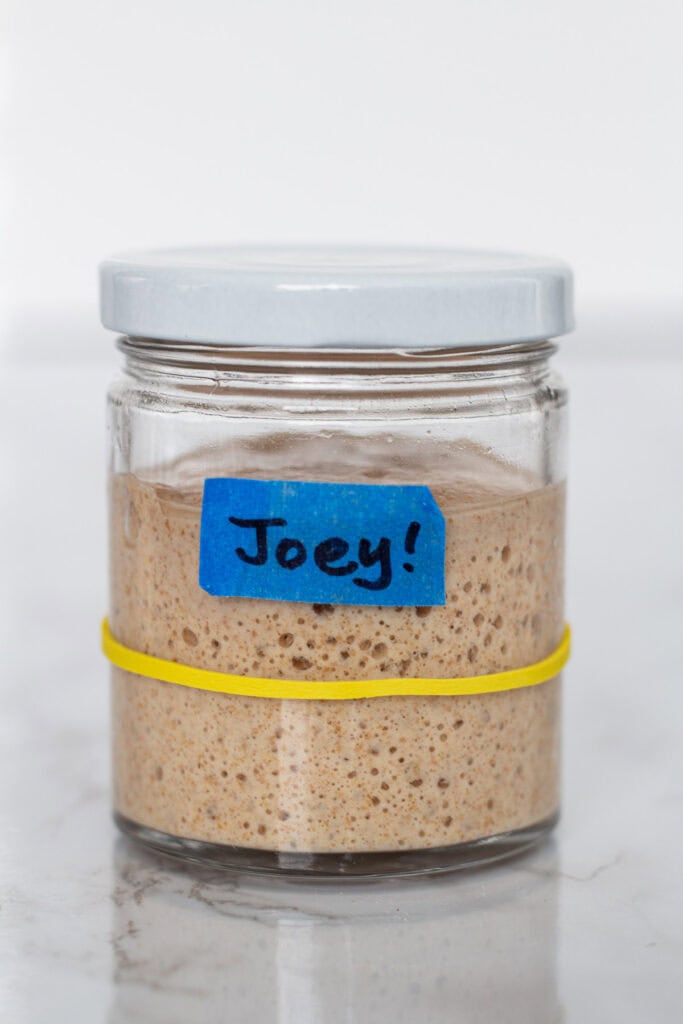
I created my starter, Joey, from scratch. After I almost "killed" a friend's starter (read my full story here), I began this sourdough starter day-by-day log to track every change, making it easier to notice patterns and troubleshoot. This log is the result.
While I started with The Sourdough Whisperer's method, I quickly learned to adjust and follow my intuition. This log isn't a rigid guide. It's a resource to comfort you, show you what a real process looks like, and help you troubleshoot your own journey.
Jump to:
- How to Make Your Own Starter
- How to Read This Log
- Active Growth Phase of My Sourdough Starter (Day 1 - 15)
- Early Activity Phase (Day 1 to Day 5)
- Strength Building Phase (Day 6 to Day 10)
- Consistent Growth Phase (Day 11 to Day 15)
- How to Know When Your Starter Is Ready
- What I Learned
- What Happens Next?
- How to Make a Sourdough Starter
How to Make Your Own Starter
I originally planned to follow the method from The Sourdough Whisperer, which walks you through a simple eight-day process. I did follow this as a starting point, but I also leaned on my intuition and adjusted as I went. This is the foundation I began with, and it’s a great place for any beginner to start.
| Day | Feed / Action |
|---|---|
| Day 1 | 50g flour + 50g water (room temp, 24 hours) |
| Day 2 | Add 30g flour + 30g water (room temp, 24 hours) |
| Day 3 | Add 30g flour + 30g water (room temp, 24 hours) |
| Day 4 | Remove half, add 30g flour + 30g water (room temp, 24 hours) |
| Day 5 | Add 30g flour + 30g water (room temp, 24 hours) |
| Day 6 | Remove half, add 30g flour + 30g water (room temp, 24 hours) |
| Day 7 | Add 30g flour + 30g water (room temp, 24 hours) |
| Day 8 | Check if starter is ready. If not, repeat from Day 4 |
How to Read This Log
Every starter is different. Starters have their own personality, their own pace, and their own way of telling you what they need. This log is here to help you notice patterns, stay curious, and understand the small shifts that happen along the way.
- Feed: What I added to Joey (for clarity: BF = bread flour, WWF = whole wheat flour).
- Height: How much he grew after a feeding.
- Smell: Something easy to notice and helpful when things feel off.
- Texture: Another simple visual cue that made tracking his changes easier.
- Notes: Anything I adjusted or wanted to remember for later.
Active Growth Phase of My Sourdough Starter (Day 1 - 15)
This is the period where Joey came to life. I like to think of it in three parts: the early activity stage from Day 1 to Day 5, the strength-building stage from Day 6 to Day 10, and the consistent growth stage from Day 11 to Day 15. Each one felt very different, so I’ve broken them into their own sections below for easy reading.
Early Activity Phase (Day 1 to Day 5)
- Activity felt very unpredictable. In the beginning, nothing happened, and then all of a sudden it rose and collapsed. I later learned this is often called the “false start,” when non-yeast bacteria bloom for a moment and make it seem like your starter is ready. The false start was also the culprit for that unpleasant sour smell.
- The smells and textures were hard to read. It was floury, tangy, and eventually became sour in a way that did not feel pleasant.
- I sometimes saw a bit of liquid forming. I read that I could either pour out the liquid or stir it back in, but since Joey already looked very liquidy at the time, I chose to pour it out.
- Reset: Reducing the amount of starter back to a small portion so it can get a stronger, more effective feed
- Note on Day 5: Joey doubled in four hours and held that height for about an hour. I thought he was ready to bake, so I moved him to the fridge.
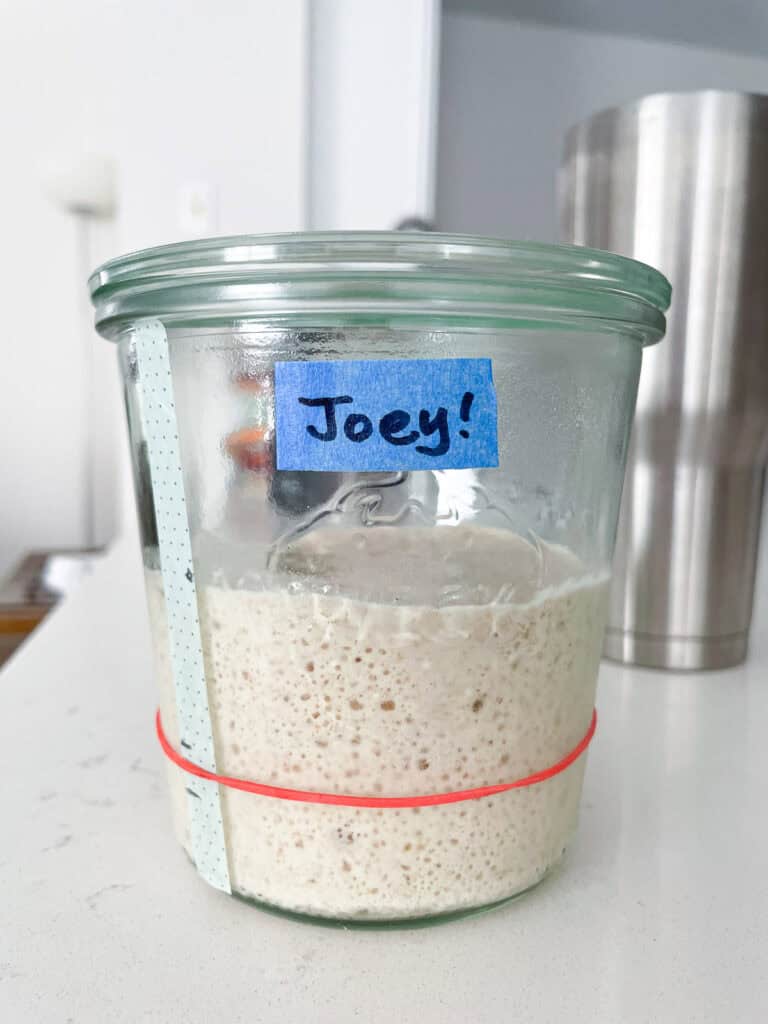
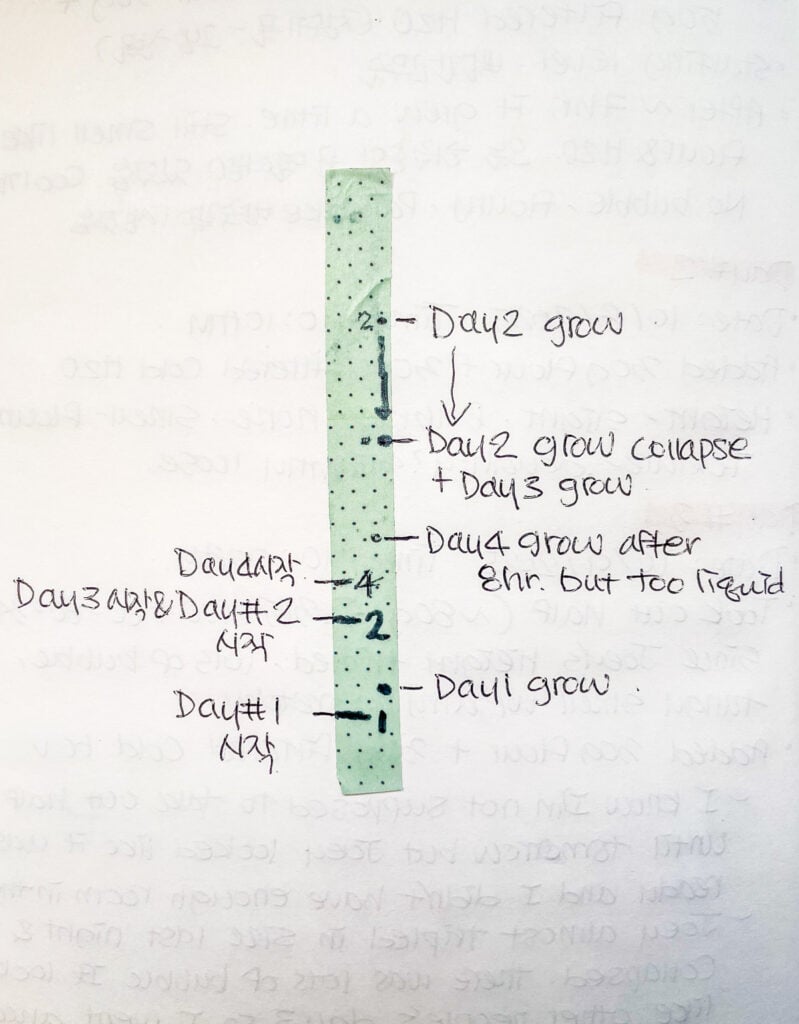
| Day | Time | Feed | Height | Smell | Texutre | Notes |
|---|---|---|---|---|---|---|
| 1 | 11 am | 50g BF + 50g water | None | Floury | Pancake-batter like | - |
| 2 | 10 am | 30g BF + 30g water | Slight dome | Floury | Batter-like, no bubbles | - |
| 3 | 10 am | Removed half, 30g BF + 30g water | Tripled | Tangy | Airy and stretchy, many bubbles | Tripled overnight then collapsed |
| 4 | 9 am | 30g BF + 25g water | 50% growth | Sour & tangy | Airy with many bubbles | Some liquid separation in the middle, Poured out liquid |
| 5 pm | 25g Joey + 30g BF +10g WWF + 30g water | Slight | Sour | Small bubbles, very thin | Became too liquidy/thin so reset to 25g | |
| 5 | 8 am | 40g BF + 10g WWF + 45g water | Tripled | Tangy & sour | Bubbles throughout, airy and stretchy | No sign of liquid |
| 1 pm | - | Doubled | Tangy | Many bubbles | Moved to fridge |
Strength Building Phase (Day 6 to Day 10)
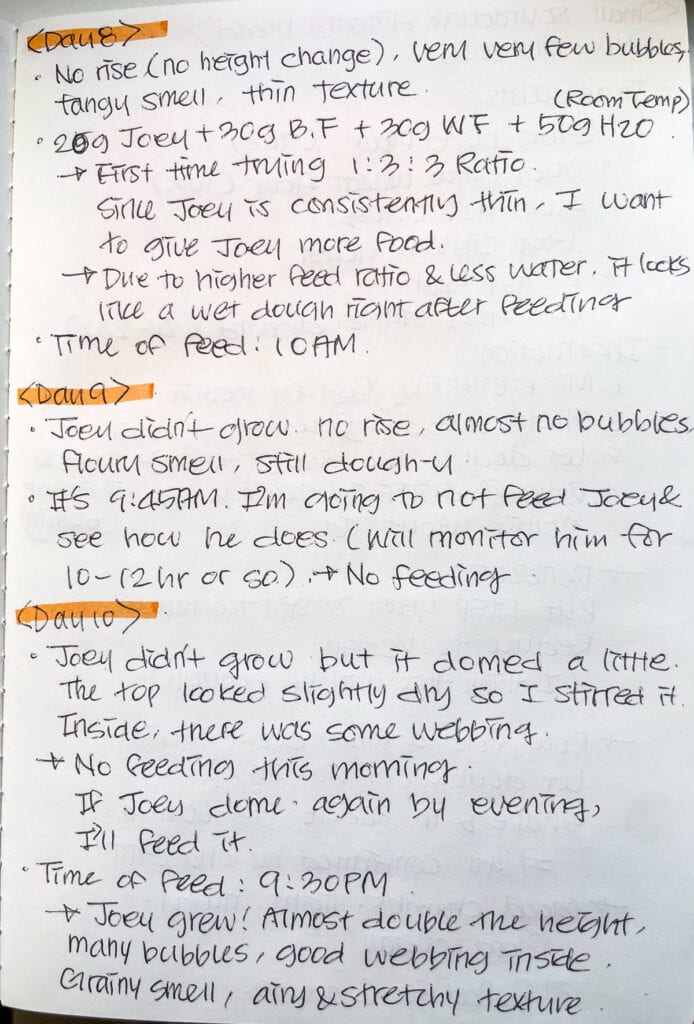
- This stage was the most confusing and frustrating for me because there was very slow or no visible rise.
- Some days the texture looked loose or doughy, so I reset to a smaller amount and gave a fresh feed (Reset: Reducing the amount of starter back to a small portion so it can get a stronger, more effective feed).
- I made little adjustments whenever something felt off, changing the feed as needed.
- This part really required patience. As long as I didn’t see any mold, I kept going and trusted that Joey was working behind the scenes, even when he looked completely dormant.
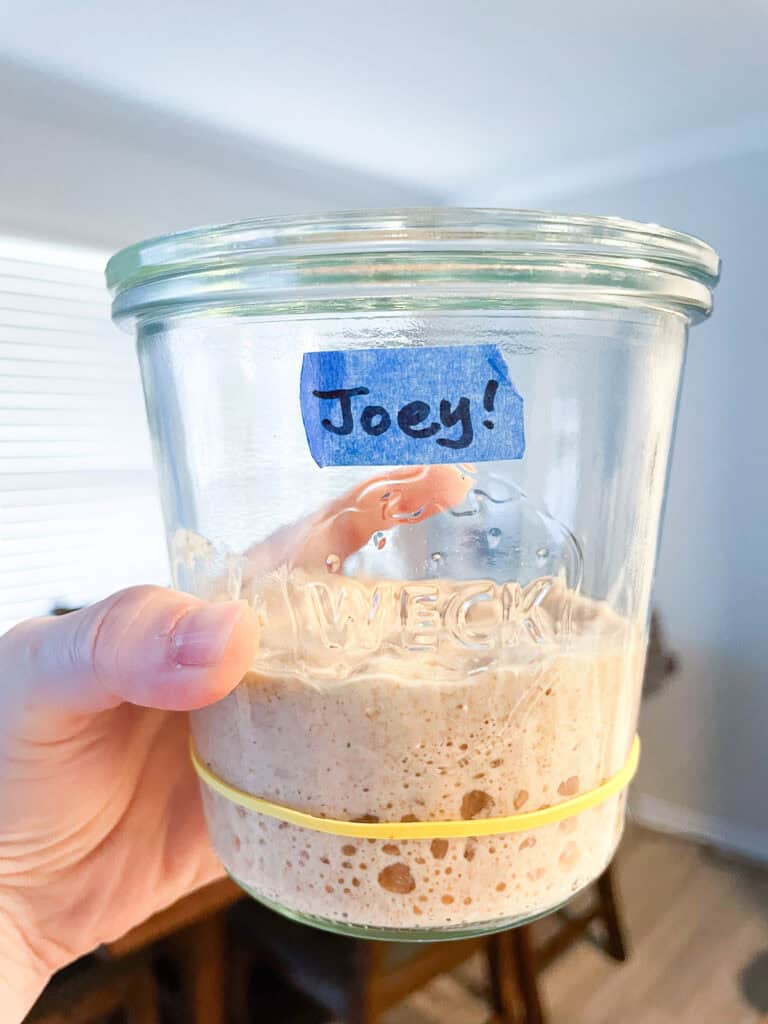
| Day | Time | Feed | Height | Smell | Texture | Notes |
|---|---|---|---|---|---|---|
| 6 | 9 am | 48g BF + 12g WWF + 50g water | 150% total | Tangy | Many bubbles | Grew more in the fridge, then left it at room temp |
| 5 pm | (none) | None | Faint tang | Slightly loose, no bubbles | No growth | |
| 5 pm | 25g Joey + 40g BF + 10g WWF + 45g water | None | Floury | No bubbles | Reset to 25g | |
| 7 | 9 am | 45g Joey + 45g BF + 45g water | Slight dome | Slight tang | Slightly loose | Reset again, kept 45g |
| 2 pm | 5g WWF | None | Slight tang | None | Added a little WWF because it seemed loose | |
| 8 | 10 am | 20g Joey + 30g BF + 30g WWF + 50g water | None | Tangy | Thin, very few bubbles | Joey is consistently thin so increased the feed ratio (more flour) |
| 9 | 10 am | (none) | None | Floury | Doughy, no bubbles | No noticeable change |
| 10 | 10 am | (none) | Slight dome | Grainy | Some webbing | The top looked a little dry so stirred it |
| 10 pm | 40g Joey + 20g BF + 20g WWF + 40g water | Doubled | Sweet, grainy | Airy and stretchy | Whet back to 1:1:1 ratio |
Consistent Growth Phase (Day 11 to Day 15)
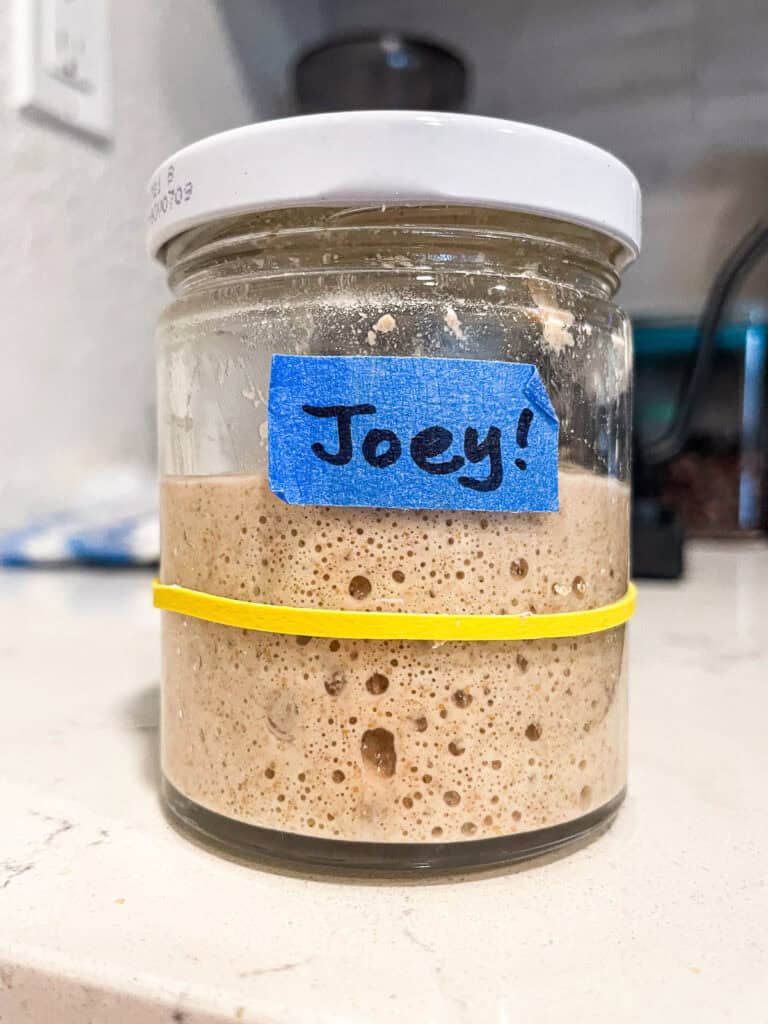
- This is when Joey finally started to feel more predictable. He rose more steadily, the texture looked stronger, and his behavior made a lot more sense.
- Even when he doubled, I still wasn’t always sure if he was ready, so I kept watching the bubbles, the smell, and how stretchy he felt.
- I used this phase to test different feeding ratios and observe how quickly he grew.
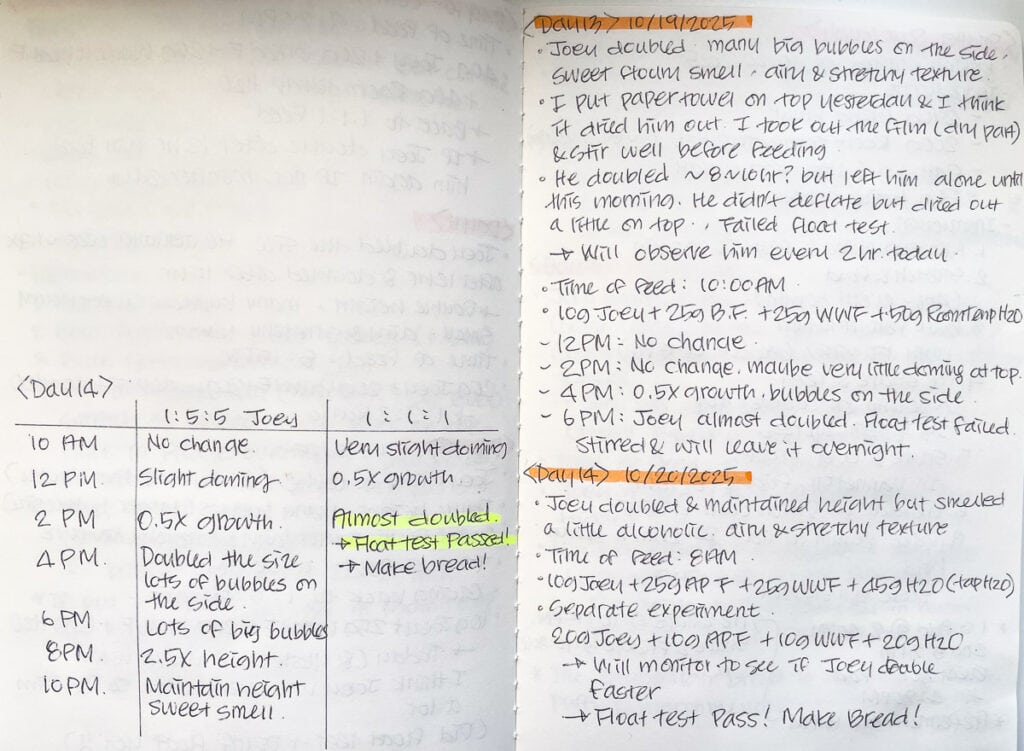
- Day 14 note: I fed Joey a 1:1:1 ratio in a separate jar to compare it with my usual higher feed ratio. That’s why there are two Day 14 entries. I baked my first sourdough with the 1:1:1 portion and kept maintaining Joey with the higher-ratio feed.
| Day | Time | Feed | Height | Smell | Texture | Notes |
|---|---|---|---|---|---|---|
| 11 | 8 am | 20g Joey + 20g BF + 20g WWF + 40g water | Doubled | Sweet | Many bubbles, airy and stretchy | Returned to a 1:2:2 ratio |
| 12 | 11 am | 10g Joey + 25g BF + 25g WWF + 50g water | Doubled | Sweet, grainy | Airy and stretchy | Increased to a 1:5:5 ratio but float test failed |
| 13 | 10 am | 10g Joey + 25g BF + 25g WWF + 50g water | Doubled | sweet, grainy | Airy and stretchy, many bubbles | Healthy growth |
| 6 pm | (none) | Doubled | Sweet, grainy | Airy and stretchy | Float test failed | |
| 14 | 8 am | 10g Joey + 25g BF + 25g WWF + 45g water | Doubled | Sweet, grainy | Airy and stretchy | 1:5:5 ratio, healthy growth |
| 14* | 8 am * | 20g Joey + 10g BF + 10g WWF + 20g water | Doubled | Sweet, grainy | Airy and stretchy | Passed float test after 4 hr, ready to bake |
| 8 pm | (none) | 150% | Sweet, grainy | Airy and stretchy | Healthy growth | |
| 11 pm | 10g Joey + 15g BF + 15g WWF + 30g water | Held height | Sweet, grainy | Airy and stretchy | Kept 10g, returned to 1:3:3 ratio | |
| 15 | 10 am | 10g Joey + 15g BF + 15g WWF + 30g water | Doubled | Sweet, grainy | Airy and stretchy | Left at room temp for 1hr, then moved to fridge |
How to Know When Your Starter Is Ready
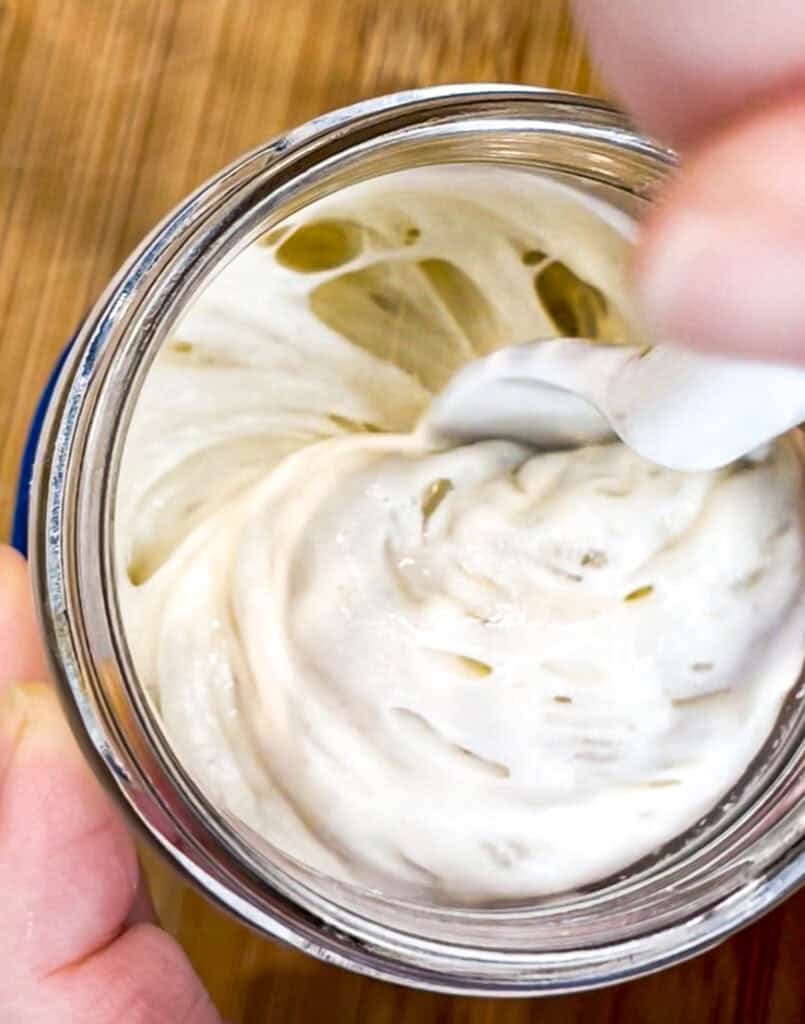
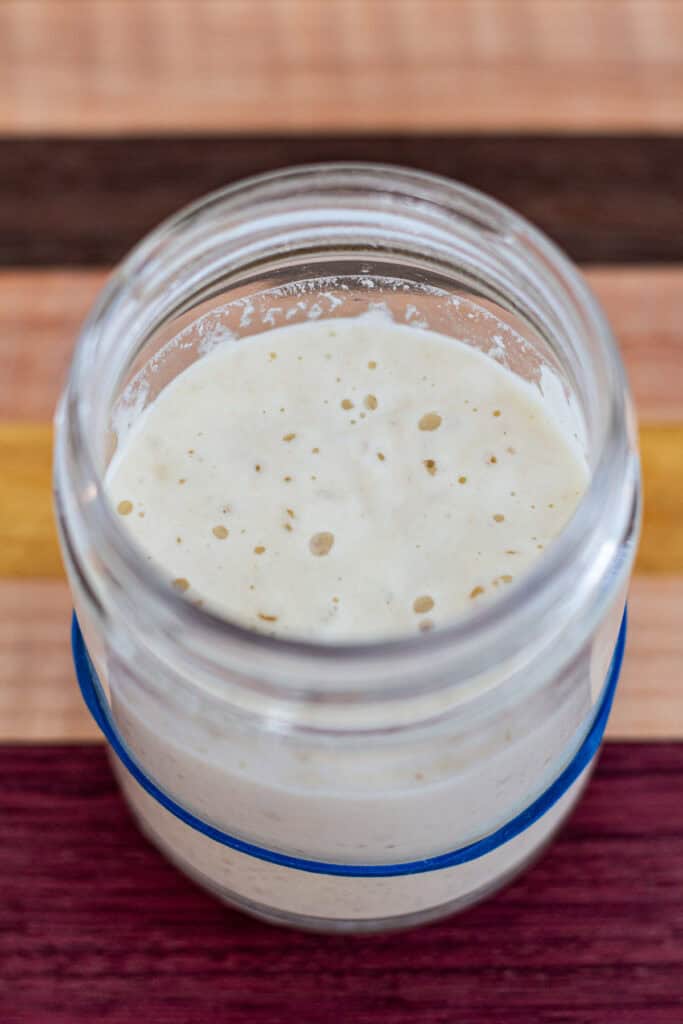
- Doubles in Volume: The starter visibly doubles (or more) within 4 to 8 hours after feeding. In warm weather it may double faster, and in colder weather it may take longer.
- Check the Peak: It’s at its highest point of rise or just beginning to deflate, which means it has reached peak activity.
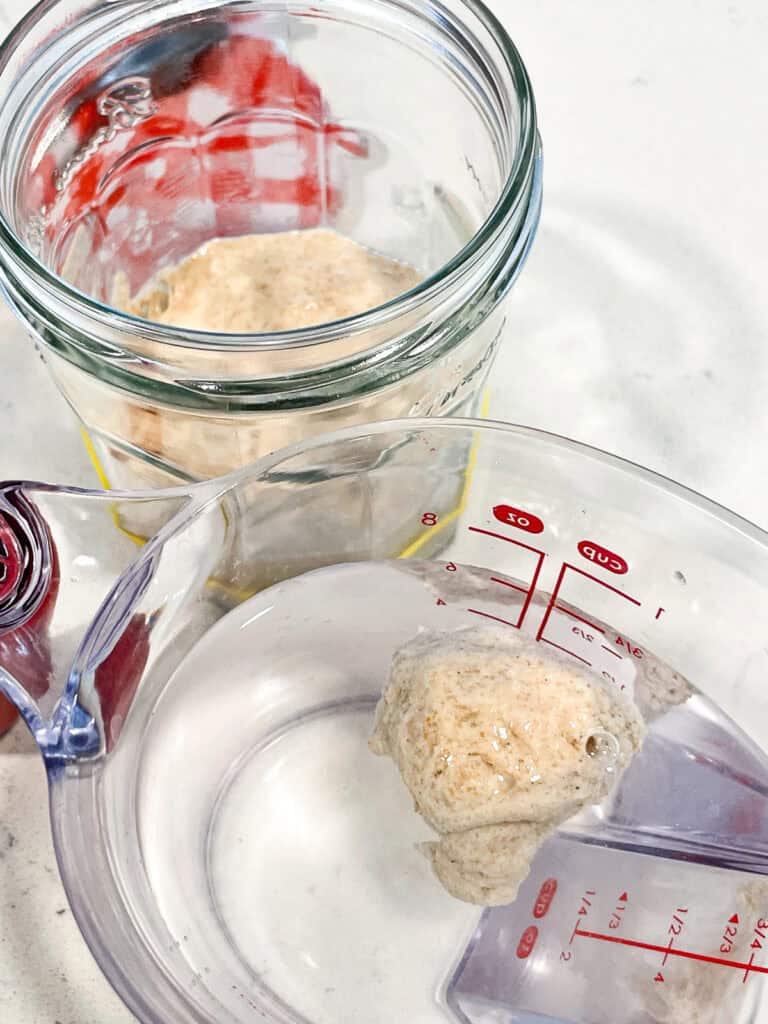
- Optional Float Test: A small, unstirred spoonful gently dropped into water may float when your starter is active and at its peak.
- Plenty of Bubbles: The starter looks aerated with many bubbles throughout.
- Pleasant Aroma: It smells mild, sweet-tangy, and yeasty but not harsh.
What I Learned
- My starter didn’t develop in a straight line. It had quiet days, confusing days, and sudden bursts of activity.
- Paying attention to texture, smell, and small changes helped me trust the process more.
- Adjusting feed ratios, resetting amounts, and responding to what I saw made me feel more connected to the starter.
- Patience mattered more than anything else.
What Happens Next?
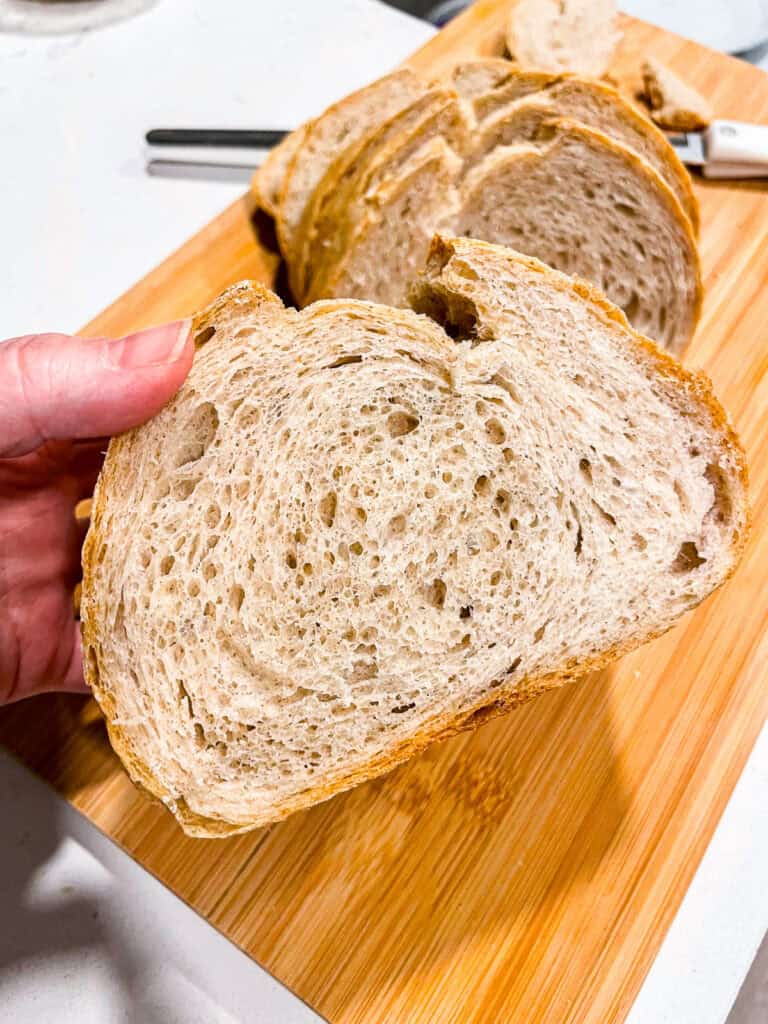
Once Joey became strong and consistent, I moved him to the fridge and transitioned from daily feeding to a simple maintenance routine.
Since I first wrote this daily log, my sourdough routine has changed quite a bit. I now keep a much smaller starter in the fridge and feed it less frequently. I’ll be sharing separate, detailed guides on maintaining a small starter and building it up for baking. In the meantime, here’s the short version of what to do next:
- How to Maintain a Small Sourdough Starter in the Fridge (detailed guide coming soon): For regular maintenance, I keep only a small amount of starter in the jar. Every 10–20 days, I remove the discard, leaving about 5–20g of starter, and feed it 30–35g flour and 25–30g water. I usually return it to the fridge right away.
- How to Build Up a Sourdough Starter for Baking (detailed guide coming soon): When I need a more active starter for baking, I take my small starter out of the fridge and give it a larger feeding. I let it rise until it’s active and has doubled, then use what I need for baking while keeping a small amount to maintain for next time.
That way, this post can remain a record of what my first 15 days actually looked like, while the upcoming guides will walk you through each next step in more detail.
I hope my daily notes and the ups and downs along the way bring you a little comfort. Building a starter isn’t always clear or predictable, and there were many days I felt unsure too. Trust what you see, stay curious, and let your starter grow at its own pace.
When you’re ready to start baking, try my Foundational Sourdough Discard Bread. It’s a great place to practice the core techniques and get comfortable with sourdough baking.
PrintHow to Make a Sourdough Starter
A simple day-by-day method for making a sourdough starter from scratch with flour and water. Use this as a starting point, then follow the 15-day log above to see how I adjusted along the way.
- Prep Time: 5 minutes
- Cook Time: 0 minute
- Total Time: 5 minutes
- Category: Bread
- Method: Fermentation
- Cuisine: American
Ingredients
- Flour
- Water
- Clean jar
- Kitchen scale
Instructions
Create the Starter (Day 1 to Day 8)
- Day 1: Mix 50 g flour and 50 g water. Cover loosely and leave at room temperature for 24 hours.
- Day 2: Add 30 g flour and 30 g water. Leave at room temperature for 24 hours.
- Day 3: Add 30 g flour and 30 g water. Leave at room temperature for 24 hours.
- Day 4: Remove half. Add 30 g flour and 30 g water. Leave at room temperature for 24 hours.
- Day 5: Add 30 g flour and 30 g water. Leave at room temperature for 24 hours.
- Day 6: Remove half. Add 30 g flour and 30 g water. Leave at room temperature for 24 hours.
- Day 7: Add 30 g flour and 30 g water. Leave at room temperature for 24 hours.
- Day 8: Check if the starter is ready. Look for bubbles, steady growth, and a mild tangy smell. If not ready, repeat the cycle starting from Day 4 until activity becomes consistent.
Notes
- The Day 1 to Day 8 method is from The Sourdough Whisperer and was the starting point I used to create my starter, Joey.
- Every sourdough starter develops differently. Mine wasn't ready by Day 8 and took about 15 days to become consistently active.
- If your starter isn’t ready by Day 8, continue the feeding cycle and watch for steady growth, plenty of bubbles, and a pleasant tangy smell rather than relying only on the number of days.
- Be sure to read the full post above for my detailed 15-day sourdough starter log, including what I fed Joey, the changes in his growth, smell, and texture, the adjustments I made, and what I learned along the way.

Share your thoughts below!