
Easy miso soup with dashi made in minutes using three fast broth methods. A light, comforting Japanese soup for two, perfect for weeknights.
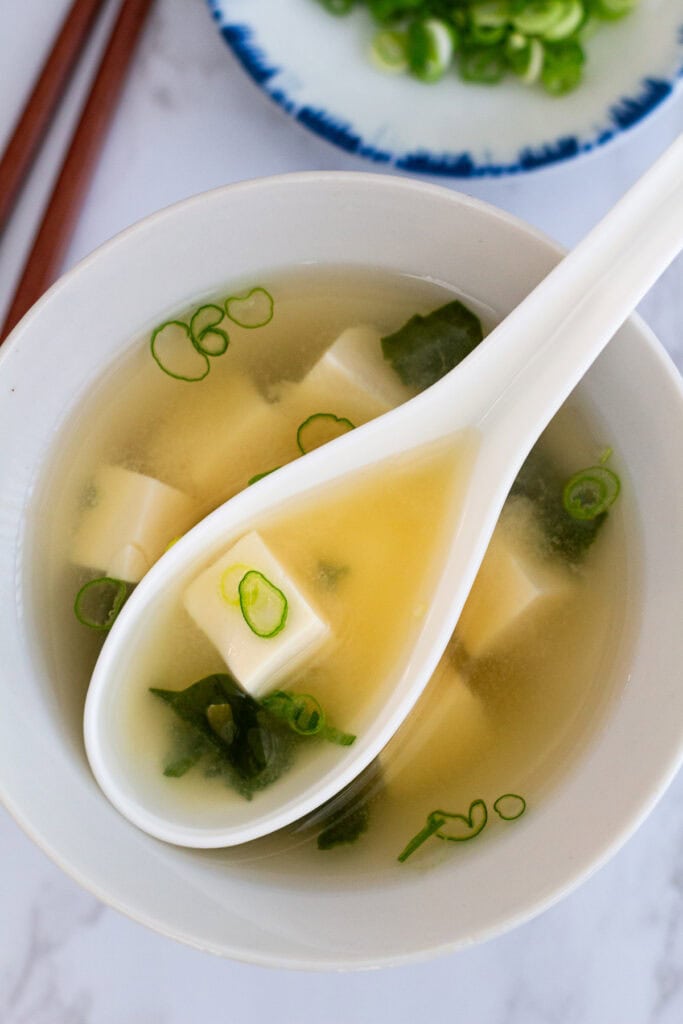
Since the first time I tasted miso soup, I fell in love with its cozy, light, umami-packed flavor. Traditional miso soup starts with katsuobushi, or bonito flakes, to make dashi, but I’m always looking for convenient ways to cook. Over time, I’ve found a few quicker methods that still deliver delicious depth. This recipe makes just enough for two, perfect for a simple weeknight dinner or to serve alongside sushi.
Jump to:

Why You’ll Love This Recipe
- Balanced, flavorful broth: A smooth and savory miso–dashi base that feels cozy and light.
- Quick and easy: Ready in minutes with three fast dashi options.
- Beginner-friendly: Clear steps that show exactly how to dissolve miso properly and build a well-balanced bowl.
- Easy to customize: Adjust saltiness, depth, or swap ingredients to match your taste.
Ingredients You’ll Need
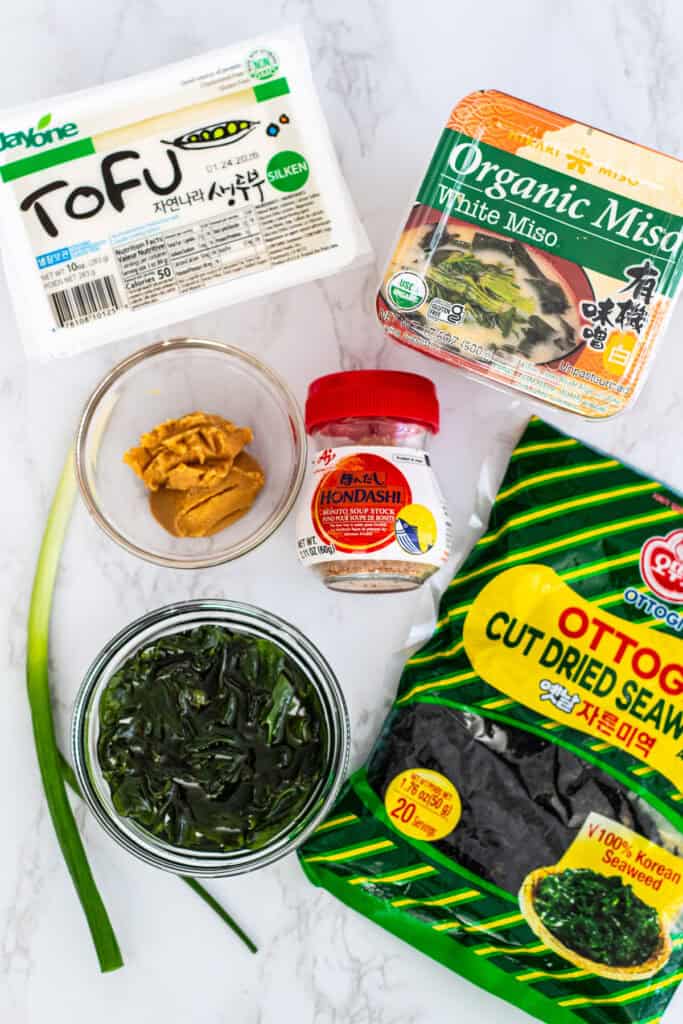
- Miso paste: White miso gives a mild and slightly sweet flavor. I like using white miso for its versatility since it works well in so many Japanese dishes.
- Dashi base: Hondashi, Korean tuna essence 참치액, or tsuyu. Each one makes a quick and flavorful broth for homemade miso soup.
- Wakame or Korean miyuk 미역: Wakame pieces are smaller and usually do not need cutting after rehydrating. Miyuk tends to be larger, so you may want to cut it into smaller pieces before adding it to the soup.
- Soft tofu: Silken or extra-soft tofu is traditional for miso soup with tofu. Firm tofu also works if that is what you have.
- Green onion: Adds a fresh bite. Garnish on top for a sharper flavor or stir into the pot for something milder.
- Soy sauce (optional): I like seasoning my miso soup with a little soy sauce for extra umami. You can also adjust the seasoning with more miso paste or a small pinch of salt.
If you want to learn more about ingredients commonly used in Japanese cooking, you can visit my Essential Japanese Pantry post.
How to Make the Dashi for This Miso Soup
Here is a simple side-by-side comparison of the three quick dashi options. All of them are easy to use. The main difference is their saltiness level, so adjusting the final seasoning will depend on which base you choose.
| Hondashi Powder | Korean Tuna Essence (참치액) | Tsuyu | |
|---|---|---|---|
| Flavor profile | Clean and classic | Deep, savory, richer | Sweet-savory with soy and mirin notes |
| How to Make 1 Cup | Add 1 teaspoon hondashi to 1 cup hot water | Mix 1 teaspoon tuna essence with 1 cup water | Add 1 teaspoon tsuyu to 1 cup water |
| Saltiness Level | Moderate | Moderate to high | Higher |
| Seasoning Tips for Miso Soup | May need a little more miso or soy sauce depending on taste | Taste the broth before adding extra miso or soy sauce | Usually does not need extra soy sauce or miso because tsuyu is naturally saltier |
| Best For | Everyday miso soup with a clean flavor | When you want extra umami depth | When you want the easiest pour-and-stir option |

A quick note on traditional dashi: Classic dashi made with kombu and katsuobushi is delicate and delicious, but these faster methods are perfect for quick homemade miso soup. If you want to try the traditional method, I highly recommend Just One Cookbook’s traditional miso soup recipe.
How to Make This Quick Miso Soup
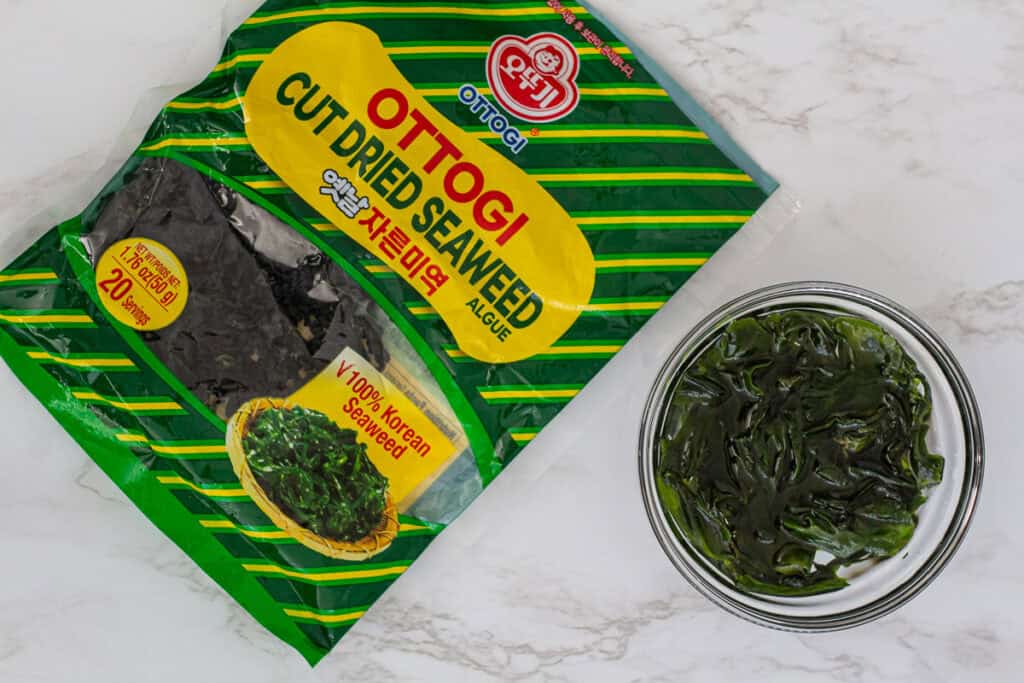
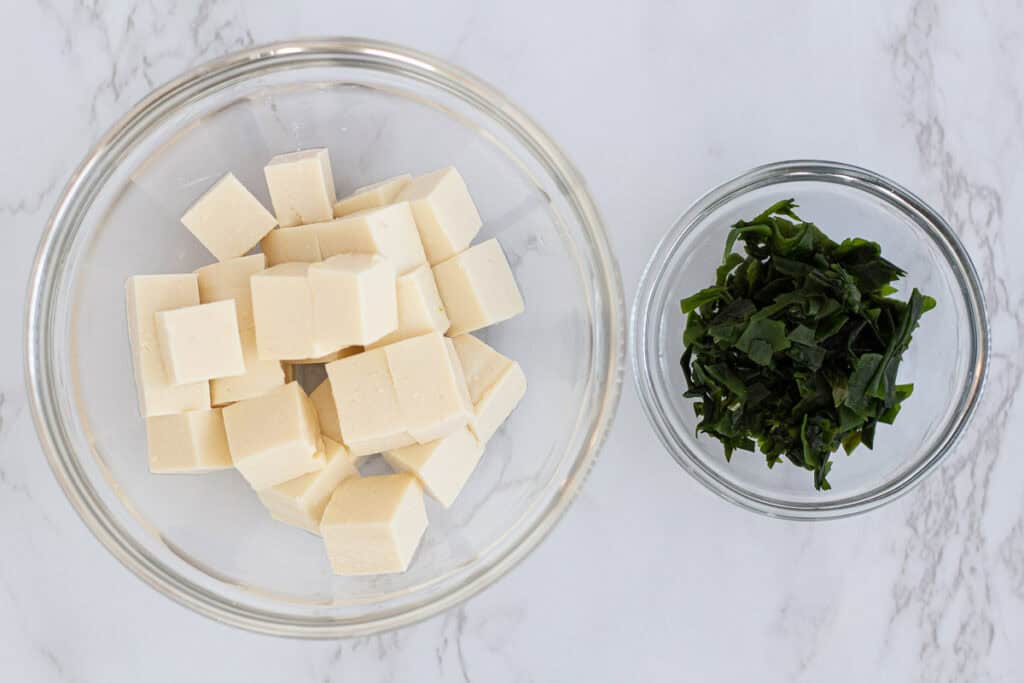

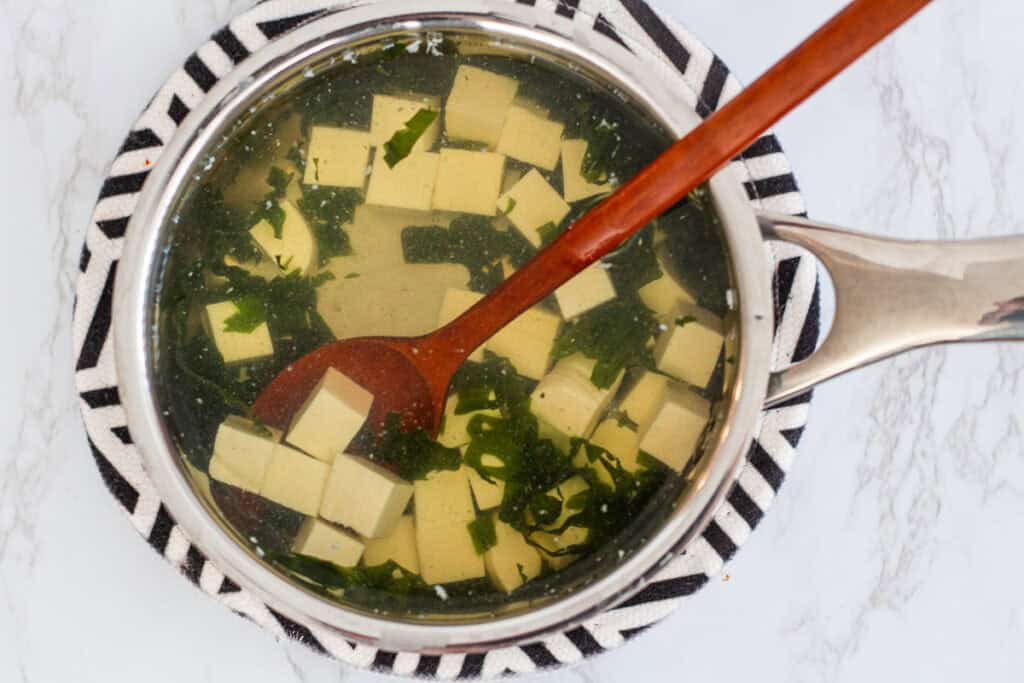
1. Rehydrate the seaweed: Place wakame or miyuk in a small bowl of cold water until it softens. It expands a lot when hydrated, so you only need about 1 teaspoon per cup of soup. Gently squeeze out excess water, and if you are using miyuk, cut it into smaller pieces if needed. I like using cold water because hot water can make seaweed turn a little slimy, something my mom always reminded me of when cooking.
2. Make the dashi: Choose your dashi method of choice and prepare the broth using the ratio in the table above.
3. Add tofu and seaweed: When the dashi reaches a gentle simmer, remove the pot from the heat. Add the tofu and seaweed. This warms them through and slightly lowers the temperature of the broth, which helps protect the probiotics in miso paste.
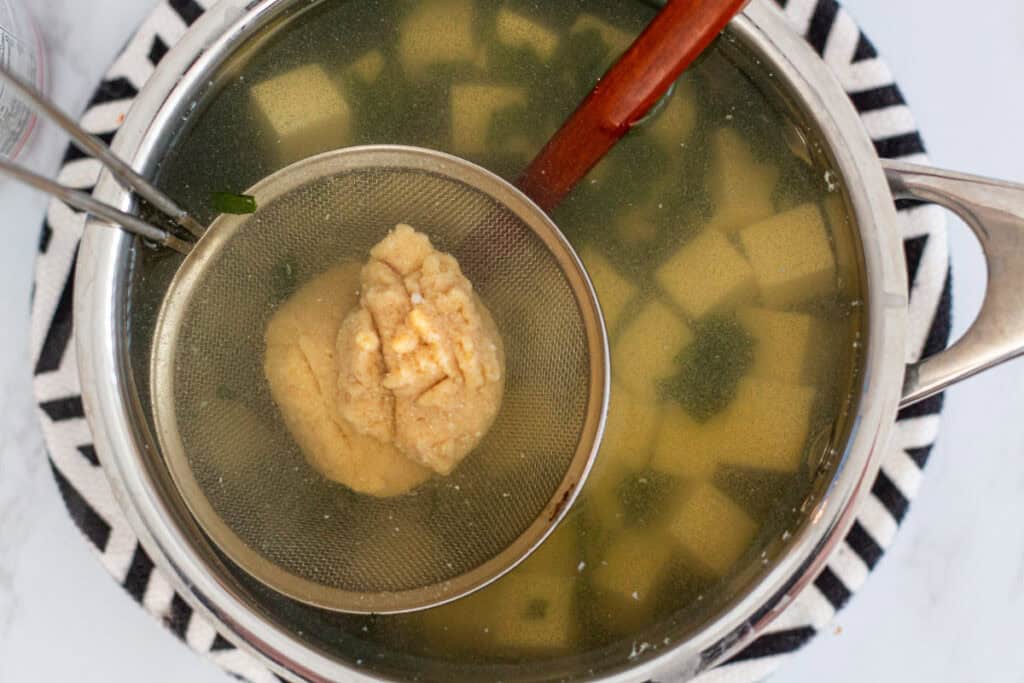
4. Dissolve the miso paste: Place the miso paste in a small bowl or fine mesh strainer and dissolve it completely before adding it back to the pot. Doing this off the heat helps keep the broth smooth and balanced.
5. Adjust the seasoning
- Add a little miso paste or soy sauce if you want more depth.
- Add a splash of water if the flavor is too strong.
- If you made your dashi with tsuyu, you may not need any extra seasoning since it is naturally saltier.
6. Garnish and serve: Ladle the miso soup into bowls and top with sliced green onion. If you prefer a milder onion flavor, add the green onion earlier when you add the tofu and seaweed so it softens and mellows.
Common Questions About Homemade Miso Soup
White miso is the most common choice for everyday miso soup because it has a mild and slightly sweet flavor that works well with tofu and wakame. Yellow or red miso has a stronger, saltier taste and makes a deeper-flavored soup. Any of these will work, but I recommend starting with white miso since I find it the most versatile for using in other dishes. You can learn more about how I stock my pantry for Japanese cooking here.
Dissolving miso paste off the heat helps keep the broth smooth and prevents clumps. It also protects the probiotics naturally found in miso. If you boil the soup after adding miso, you may lose some of those probiotic benefits, but the soup will still taste great. For the best flavor and texture, dissolve the miso in a small bowl or strainer before stirring it back into the pot.
Miso soup tastes best when made fresh. If you want to prepare part of it ahead, make the dashi broth and store it in the refrigerator. Add the tofu, seaweed, and miso paste right before serving. Seaweed continues to absorb liquid as it sits, and miso flavor can change over time, so keeping the components separate will give you the best results.

I hope these quick dashi methods help you make miso soup whenever you want something cozy, light, and flavorful. Each method brings a slightly different character to the bowl, so feel free to try a few and choose the one you like best. If you prefer a plant-based option, I also have a vegan miso soup made with mushrooms and kelp dashi. This simple bowl pairs beautifully with my Japanese recipes, including sushi rolls, hand rolls, sushi/poke bowls, and Japanese curry, making it easy to build a comforting dinner at home!
PrintEasy Miso Soup with Dashi (3 Fast Dashi Methods)
Easy miso soup with dashi made in minutes using three fast broth methods. A light, comforting Japanese soup for two, perfect for weeknights.
- Prep Time: 5 minutes
- Cook Time: 10 minutes
- Total Time: 15 minutes
- Yield: 2 servings 1x
- Category: Soup
- Method: Stovetop
- Cuisine: Japanese
Ingredients
-
-
3 cups water
-
3 teaspoons Hondashi powder
(or 3 teaspoons Korean tuna essence, or 3 teaspoons tsuyu) -
5 teaspoons white miso paste
-
¼ block soft tofu (about 3 oz), cut into cubes
-
2 teaspoons dried wakame seaweed
-
1 green onion, thinly sliced, for garnish
-
Instructions
-
Rehydrate the seaweed
Place the wakame or miyuk in a small bowl of cold water until softened. It expands a lot, so you only need a small amount. Squeeze out excess water, and cut into smaller pieces if using miyuk. -
Make the dashi
Choose your dashi method of choice and prepare the broth using the ratio above. -
Add tofu and seaweed
When the dashi reaches a gentle simmer, remove the pot from the heat. Add the tofu and seaweed to warm them through and slightly cool the broth. -
Dissolve the miso
Place the miso paste into a small bowl or fine strainer. Dissolve it completely with a ladleful of hot dashi before stirring it back into the pot. Doing this off the heat keeps the broth smooth and preserves more of the miso’s flavor. -
Adjust seasoning and serve
Taste the soup and adjust to your preference. Add a little more miso paste or soy sauce for extra depth, or a splash of water if the flavor is too strong. Ladle into bowls and garnish with green onion.
(For a milder onion flavor, add the green onion earlier with the tofu and seaweed so it can soften.)
Notes
-
- Servings: This recipe makes 2 large bowls of miso soup or 3 smaller servings.
-
Dashi options: You can make this miso soup with hondashi powder, Korean tuna essence, or tsuyu. Each one has a slightly different saltiness level, so adjust the miso paste or soy sauce to taste.
-
Seaweed tips: Wakame pieces are usually small and ready to use once softened. Korean miyuk tends to rehydrate into larger pieces, so cut it into smaller strips if needed. Cold water helps keep the seaweed from turning slimy.
-
Tofu options: Soft, silken, or extra-soft tofu works best here, but firm tofu is fine if that is what you have.
-
Dissolving miso: Always dissolve miso paste off the heat to keep the broth smooth and preserve more of the miso’s natural flavor.
-
Green onion flavor: Add green onion as a garnish for a fresh bite, or stir it in earlier with the tofu and seaweed for a mellower flavor.
-
Vegan option: If you prefer a plant-based version, try my Vegan Miso Soup with mushroom and kelp dashi.




Share your thoughts below!