
This vegan miso soup uses kombu and shiitake dashi for rich, umami flavor - no bonito flakes needed. Easy, authentic, and ready in 15 minutes.
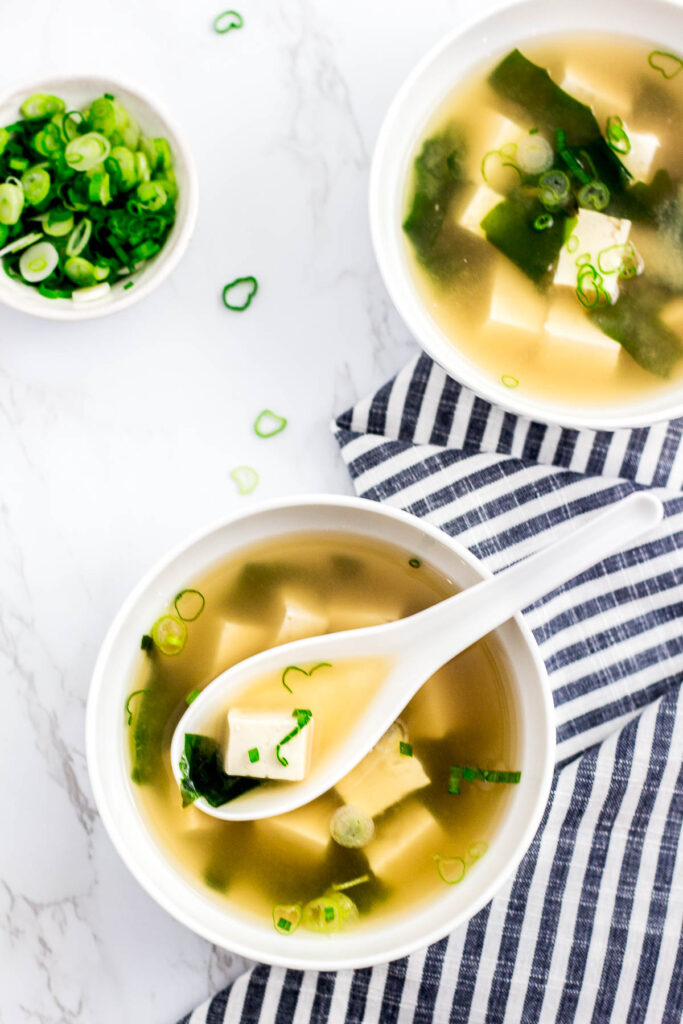
If you’re looking for a rich and comforting vegan miso soup without bonito flakes, this recipe is it! Made with simple ingredients and traditional Japanese techniques, it comes together in just 15 minutes. I’ll also share my quick way to make vegan dashi and Yondu seasoning tip for an extra boost of flavor.
Jump to:
Why You’ll Love This Vegan Miso Soup Recipe
- No bonito flakes – 100% plant-based flavor using vegan dashi
- Quick and easy – Ready in just 15 minutes with minimal prep.
- Yondu flavor boost – Optional Korean vegan seasoning adds even more depth.
- Customizable add-ins – Tofu, wakame, green onions - make it your own.
What is Vegan Dashi?

Dashi is a Japanese word for “broth” or “stock,” and it’s the foundation of many soup recipes. Traditional dashi often uses bonito flakes (dried skipjack tuna), but this vegan miso soup builds flavor from two plant-based ingredients:
- Kombu – dried kelp that adds a deep, ocean-like umami without any fish.
- Dried shiitake mushrooms – bring earthy richness and a subtle sweetness to the broth.
You can use just kombu or just shiitake, but I find that combining both creates a fuller, more umami-rich flavor.
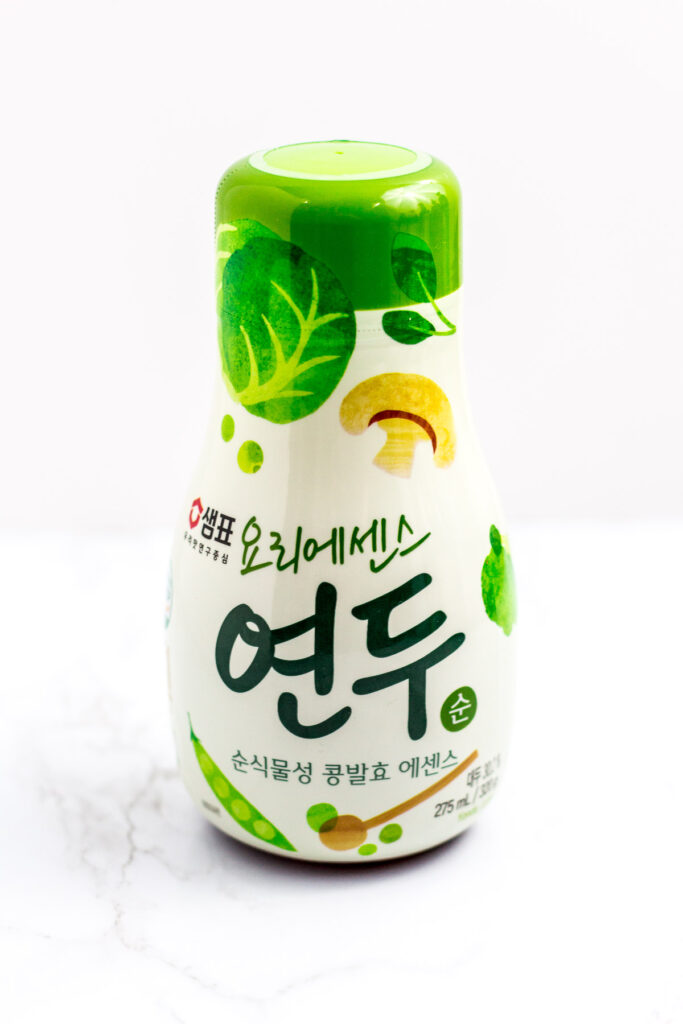
Tip: If you have Yondu (a Korean-style vegan seasoning sauce — learn more in my Korean Vegan Pantry post), you can add a small splash to the dashi for an extra layer of savory depth. This dashi is also the base for my Vegan Kitsune Udon Noodle Soup recipe!
Ingredients You’ll Need
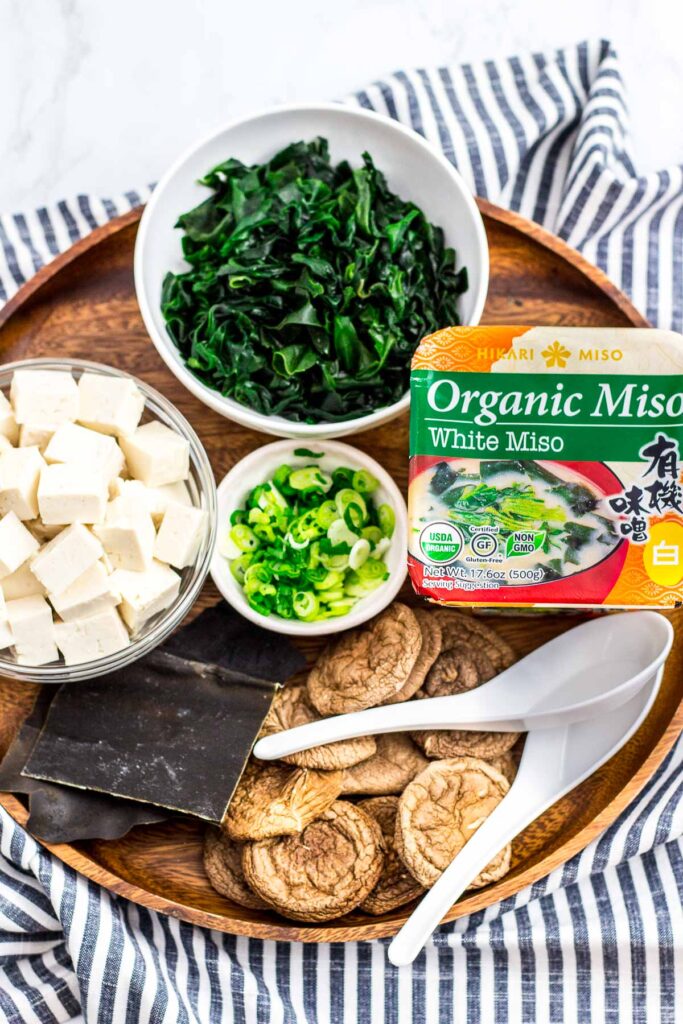
- Water
- Kombu (dried kelp) – adds ocean-like umami without fish; look for thick, dark kombu for richer flavor.
- Dried shiitake mushrooms – bring earthy depth and subtle sweetness.
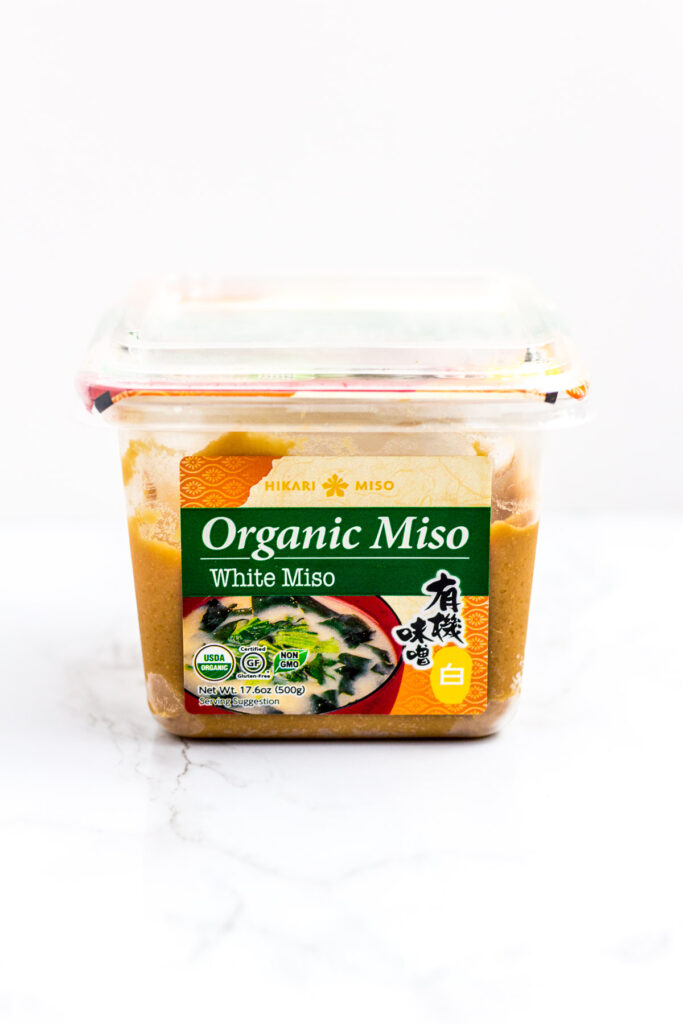
- White miso paste – mild, slightly sweet miso works best here. Yellow miso can be used for a deeper flavor; red miso will be stronger and saltier.
- Yondu – a Korean-style vegan seasoning sauce that enhances umami. Low-sodium soy sauce or tamari (for gluten-free) are great alternatives.
- Soft tofu – traditional in miso soup for its delicate texture. Medium tofu will hold its shape better if you prefer firmer cubes.
- Dried wakame (seaweed) – rehydrates quickly in cold water and adds briny, ocean notes.
- Green onion – sliced thin for garnish and freshness.
How to Make It (Step-by-Step)
- Rehydrate wakame
Add dried wakame to a bowl of cold water. Soak about 5 minutes, then rinse, squeeze out excess water, and cut into small pieces. Set aside. - Make the broth
Traditionally, kombu and shiitake are soaked in cold water for several hours before gently heating for the best flavor. For a quicker version, bring dried shiitake in water to a boil, reduce heat to simmer, add kombu, and continue to simmer for 10 minutes. - Prep add-ins
While the broth simmers, cube the soft tofu and finely slice the green onion. - Strain the dashi
Turn off the heat. Use tongs to remove the kombu and shiitake from the pot. (You can slice the mushrooms and add them back if you like.) - Add tofu and wakame
Stir in the tofu cubes and the rehydrated wakame. Let them warm through in the hot broth for about a minute. - Dissolve miso
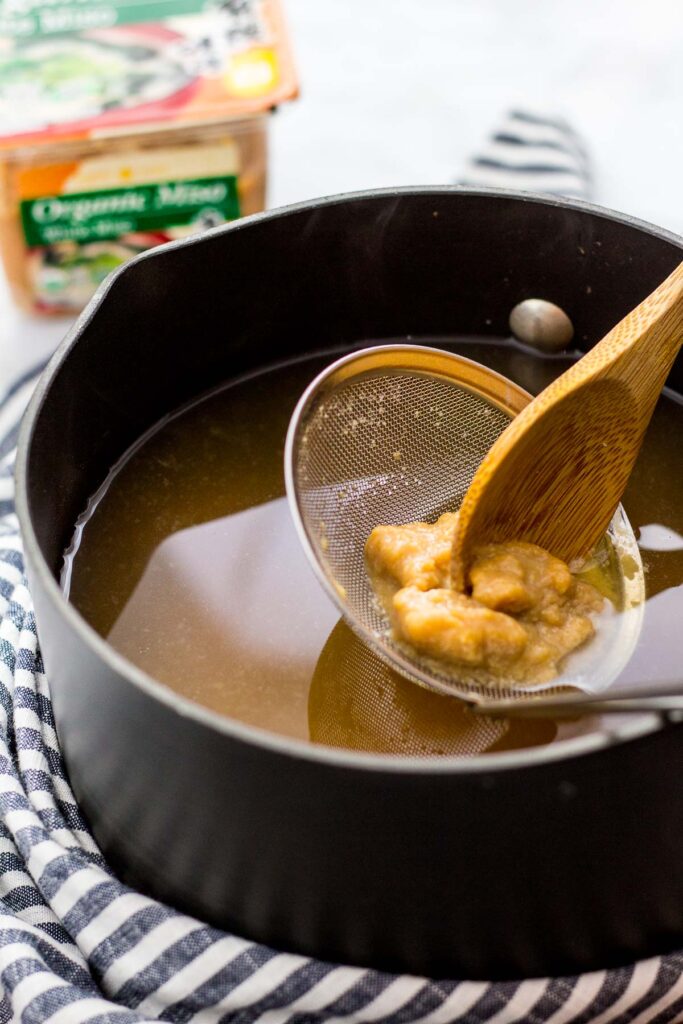
Using a small fine-mesh strainer (or a ladle), dissolve the miso paste into the hot broth until smooth and fully incorporated. - Season
Add a small splash of Yondu (or low-sodium soy sauce/tamari) to season to taste. - Serve
Ladle into bowls and garnish with sliced green onion.
Pro Tips: Temperature & When to Add Miso
- Vegan dashi shortcut. The traditional method of soaking kombu and shiitake in cold water (cold brew method) before gently heating produces the best flavor, but it’s time-consuming. For a quicker version, simmer dried shiitake first, then add kombu for the last 10 minutes, boosting umami with a splash of Yondu.
- Add miso off heat. Ladle some hot broth into a small bowl, whisk in miso until smooth, then return it to the pot.
- Do not boil after adding miso. High heat can dull flavor and reduce probiotic benefits.
- Season last. Add Yondu, soy sauce, or tamari after miso so you don’t oversalt. You can also add more miso if you want more robust miso flavor.

FAQ About Vegan Miso Soup
No. Traditional miso soup is made with dashi containing bonito flakes (dried fish). This recipe uses a vegan dashi made from kombu and dried shiitake mushrooms for a 100% plant-based version.
I like using white (shiro) miso. It is mild and slightly sweet, making it a great everyday choice. You can use yellow miso or red miso, but they are stronger and saltier.
Always add miso off heat. Dissolve it in a strainer or small bowl of hot broth, then return it to the pot. Avoid boiling after adding miso to preserve its flavor and beneficial probiotics and enzymes.
This usually happens if kombu is boiled too long or at too high a temperature. Keep the heat gentle and remove kombu after about 10 minutes of simmering.
Soft or silken tofu is traditionally used for miso soup as its delicate texture breaks apart easily in the broth. Medium tofu will hold its shape better if you prefer firmer cubes.
For more Japanese-inspired recipes, you might enjoy my Vegan Kitsune Udon Noodle Soup, which uses the same flavorful vegan dashi base as this miso soup. Miso soup also pairs beautifully with sushi. Explore my How to Make Perfect Sushi Rice, Easy Maki Roll (includes cucumber roll), and Vegan Avocado Cucumber Roll for a complete Japanese meal. You can also learn more about the techniques for making hand rolls in my Temaki (Hand Roll) Sushi post. And if you want to stock your kitchen with the right sauces and seasonings, check out my Japanese Pantry Essentials Guide - it’s packed with tips on my go-to ingredients for authentic flavor.
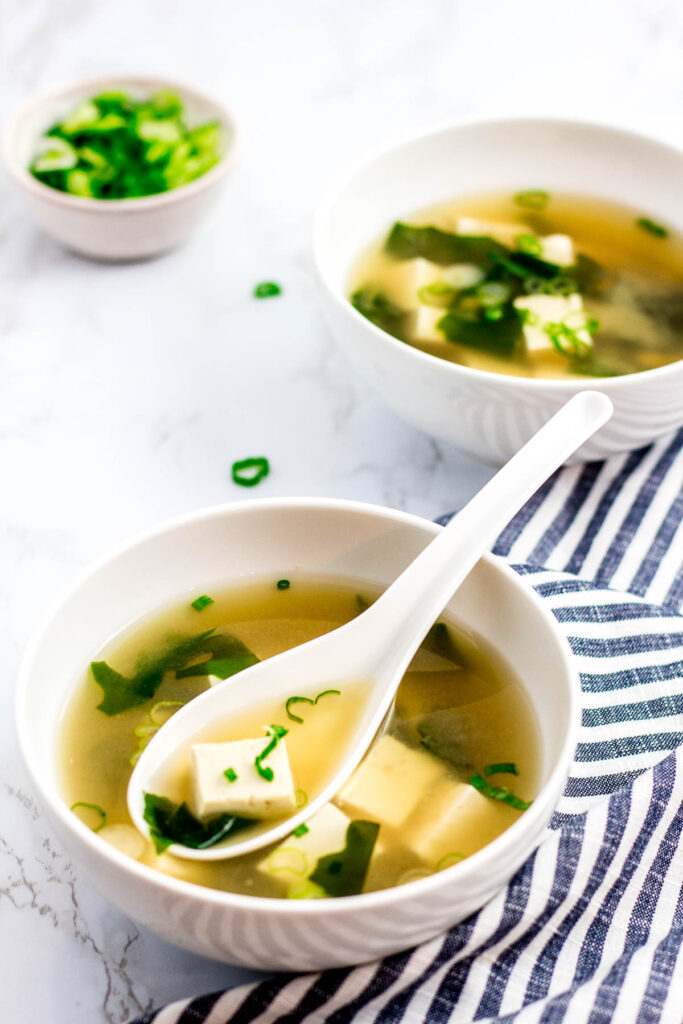
Vegan Miso Soup with Kombu & Shiitake Dashi (No Bonito Flakes)

This vegan miso soup uses kombu and shiitake dashi for rich, umami flavor - no bonito flakes needed. Easy, authentic, and ready in 15 minutes.
- Prep Time: 5 minutes
- Cook Time: 15 minutes
- Total Time: 20 minutes
- Yield: 4 large servings 1x
- Category: Soup
- Method: Stovetop
- Cuisine: Japanese
- Diet: Vegan
Ingredients
- 6 cups of water
- 2 to 3 pieces of Kombu/Dried Kelp
- 8 pieces of dried shiitake mushroom
- 2 tablespoons white miso
- 1 tablespoon Yondu (or 1 tablespoon low-sodium soy sauce)
- ½ cup cubed soft tofu
- 2 tablespoons seaweed/wakeme
- 1 green onion, finely sliced (for garnish)
Instructions
-
Rehydrate wakame
Add dried wakame to a bowl of cold water. Soak about 5 minutes, then rinse, squeeze out excess water, and cut into small pieces. Set aside. -
Make the broth
Traditionally, kombu and shiitake are soaked in cold water for several hours before gently heating for the best flavor. For a quicker version, bring dried shiitake in water to a boil, reduce heat to simmer, add kombu, and continue to simmer for 10 minutes. -
Prep add-ins
While the broth simmers, cube the soft tofu and finely slice the green onion. -
Strain the dashi
Turn off the heat. Use tongs to remove the kombu and shiitake from the pot. (You can slice the mushrooms and add them back if you like.) -
Add tofu and wakame
Stir in the tofu cubes and the rehydrated wakame. Let them warm through in the hot broth for about a minute. -
Dissolve miso
Using a small fine-mesh strainer (or a ladle), dissolve the miso paste into the hot broth until smooth and fully incorporated. -
Season
Add a small splash of Yondu (or low-sodium soy sauce/tamari) to season to taste. -
Serve
Ladle into bowls and garnish with sliced green onion.
Notes
For best results, see the Step-by-Step Method and Pro Tips sections in the post for details on making vegan dashi, when to add miso, and how to avoid bitterness or sliminess.




Tracy says
Just found your blog and wanted to say how inspiring your story is! You are so brave to share that with everyone. I wish you peace & strength on your journey.
My boyfriend and I discovered Korean food a few years ago and it's now our absolute favorite. Really looking forward to trying some of your recipes at home!
George says
Awww thank you so much, Tracy! Hope you enjoy my recipes!! Let me know if you have any questions 😊