
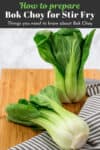
Learn how to prepare bok choy for stir fry with this step-by-step guide. From washing and cutting to storing, here’s everything you need to know about this nutritious veggie.
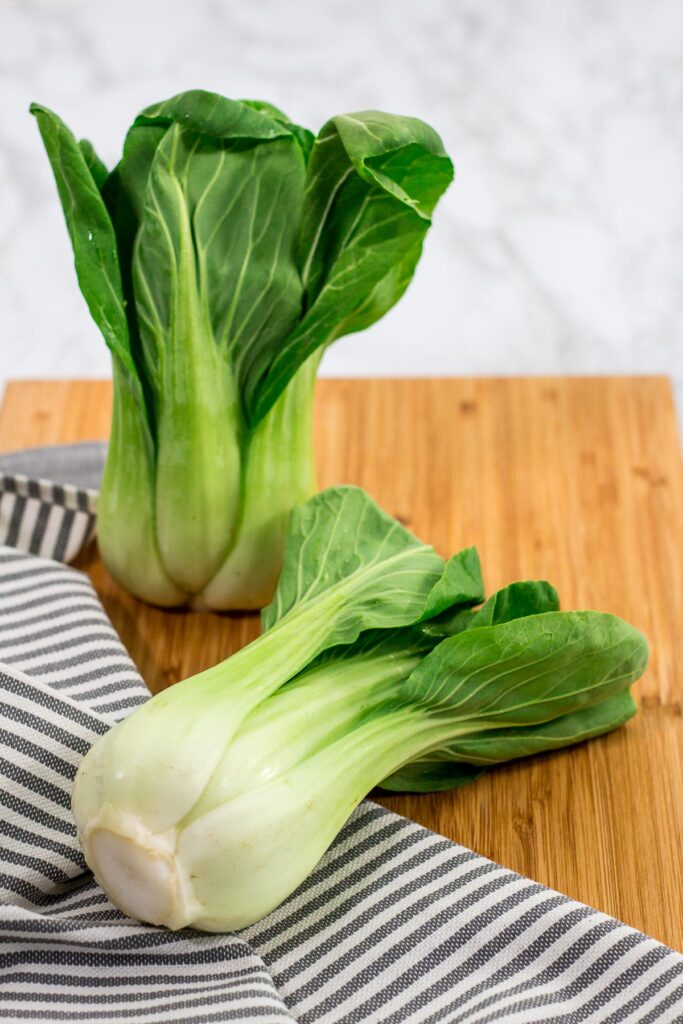
How to prepare bok choy for stir fry may feel intimidating at first, but it’s actually very simple. In this post, I’ll walk you through how to wash, cut, and store bok choy, plus answer common questions so you’ll feel confident cooking with it.
What is Bok Choy?
Bok choy (also called pak choi) is a type of Chinese cabbage that belongs to the cruciferous vegetable family. It’s widely used in Asian cooking and adds a fresh, crunchy bite to stir fries, soups, and braised dishes. You will often see two main types:
| Type | Description | Flavor & Texture | Best Uses |
|---|---|---|---|
| Regular Bok Choy | Larger with wide ribs and dark green leaves | Mild, crunchy, holds up in cooking | Stir fries, braises, stews |
| Baby Bok Choy | Smaller, more tender | Mild, softer, cooks quickly | Quick stir fries, soups, steaming |
How to Pick Bok Choy
- Firm stalks that feel crisp, not rubbery
- Vibrant green leaves without yellowing or wilting
- Smooth white ribs free from brown spots or blemishes
- Compact heads (for regular bok choy) or tight clusters (for baby bok choy)
- Smaller bok choy is usually more tender, while larger ones give you extra crunch
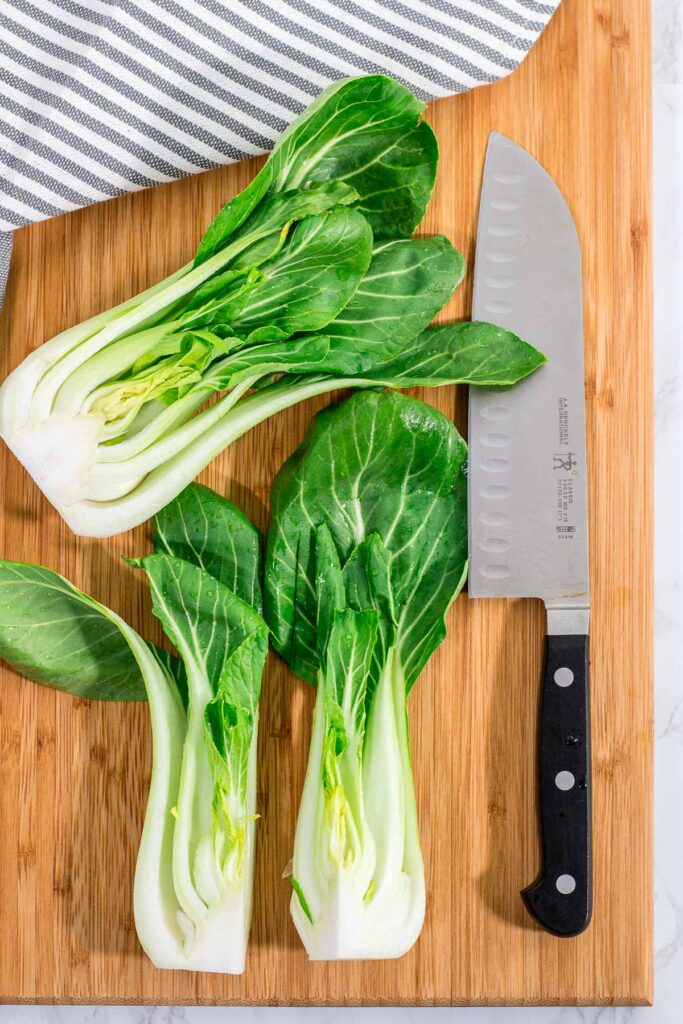
How to prepare Bok Choy for stir fry
For Large Bok Choy
- Cut in half lengthwise: Place the whole head on a cutting board and slice down the middle, cutting through the root end. The root will still hold each half together.
- Cut into quarters (optional): For easier cleaning or smaller pieces, cut each half in half again lengthwise, keeping the root intact.
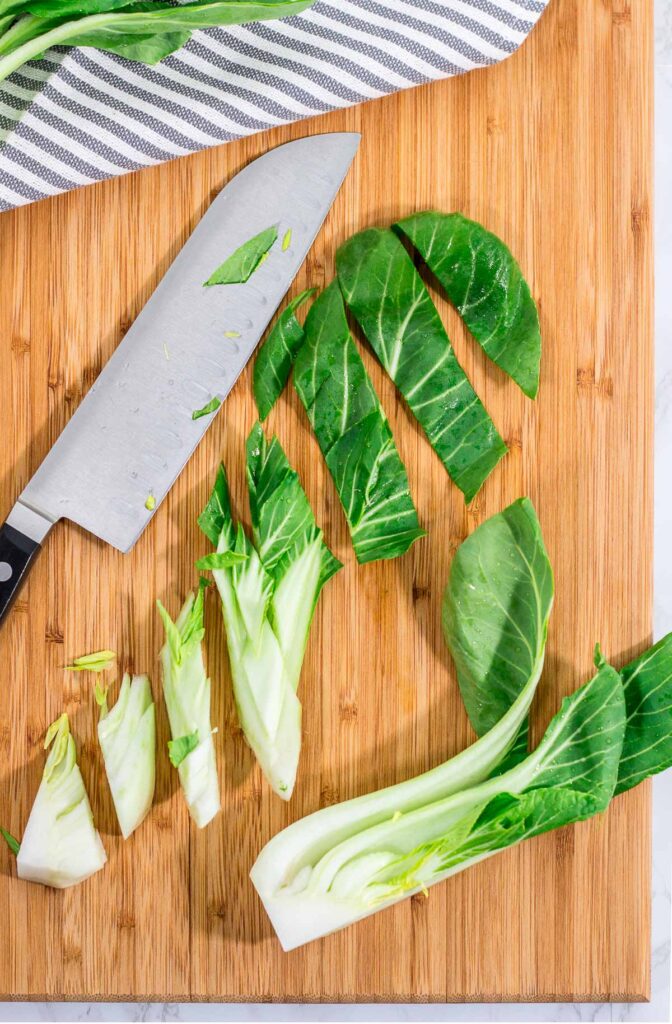
- Cut as desired: With manageable sections, chop into bite-sized pieces for your recipe. Discard the root end at this point.
- Wash thoroughly: Place the cut pieces in a large bowl of cold water. Swish to loosen any dirt or sand. The grit will sink to the bottom.
- Drain well: Lift the bok choy out of the water and transfer them into a colander or salad spinner to drain well. Repeat if needed until the water runs clear.
- Dry completely: Pat with a clean towel or spin dry.
For Baby Bok Choy
- Cut in half or quarters lengthwise: This exposes the inner layers where dirt can hide.
- Rinse well: Submerge in cold water and swish, or rinse under running water, gently separating leaves if needed.
- Drain well: Dry completely with a towel or spinner before cooking.
How to Store Bok Choy
- Do not wash before storing: Moisture makes it wilt faster.
- Wrap loosely: Place in a produce bag or wrap in a slightly damp paper towel, then tuck inside a plastic bag.
- Refrigerate: Keep in the crisper drawer of your fridge.
- Use within 4–6 days: Baby bok choy is more delicate, so try to use it sooner.
How to Use Bok Choy
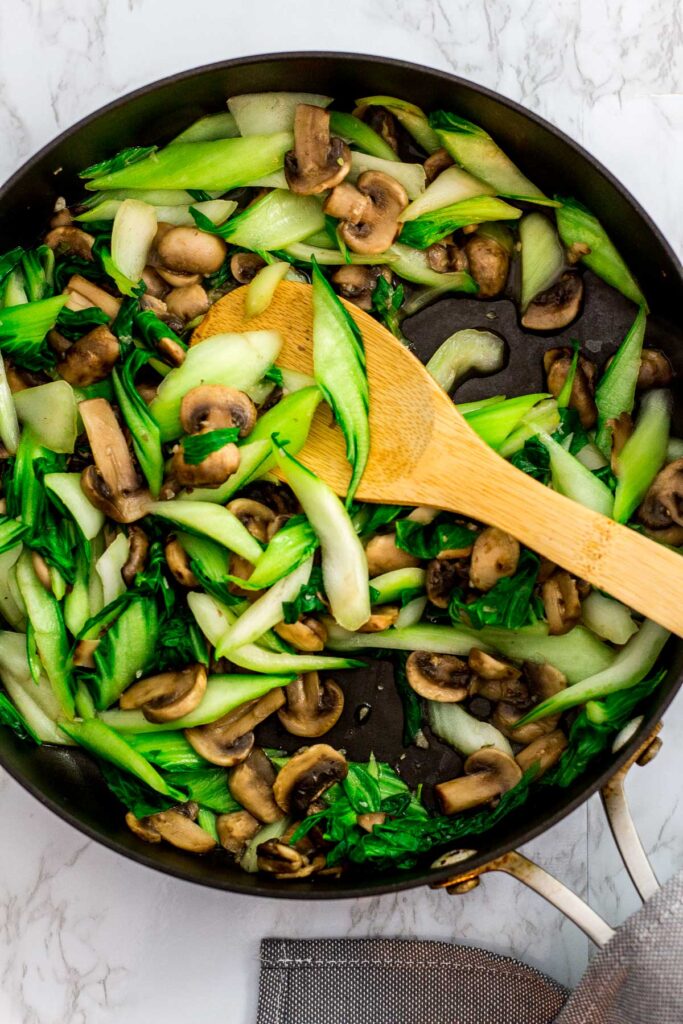
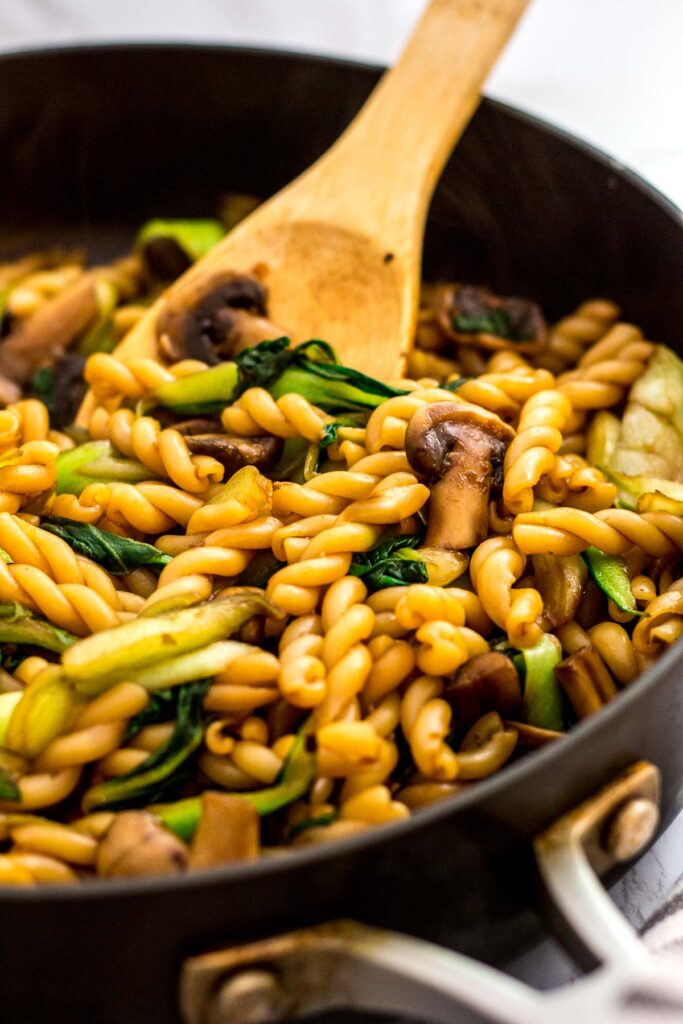
- Stir fry recipes: It’s the most popular way of using this vegetable. Looking for something with a fusion flare? Check out my Bok Choy Pasta with Mushroom.
- Soups: Baby bok choy makes a great topping for pho or udon noodle soup.
- Dumplings: Adds freshness and crunch inside the filling. Instead of cabbage, you can use bok choy for my Vegan Dumplings.
- Vegetable sides: Sautéed or roasted as a simple, healthy side.
Frequently Asked Questions about Bok Choy
Yes! The stems are crunchy, juicy, and completely edible. Slice them thinner if they’re large so they cook evenly with the leaves.
Keep it unwashed, loosely wrapped in a produce bag, and stored in the crisper drawer. For full details, see my How to Store Bok Choy section above.
Absolutely. It’s packed with vitamins A, C, and K, along with calcium and potassium. It’s low in calories but high in antioxidants, making it a great veggie to add to your meals.
Now you know how to prepare bok choy for stir fry - from cutting and washing to storing. Whether you add it to a quick stir fry, soup, or dumplings, this veggie is simple to use and full of flavor. Pick some up on your next market trip and let me know your favorite way to enjoy it in the comments.


Alexandra says
Is it better to buy Bok Choy when is little or big? Is there a difference in taste?
George says
Hello Alexandra,
You can use regular bok choy and baby bok choy interchangeably. Baby bok choy tends to be a little sweeter in taste and tender in texture but there isn't a big difference. Hope this helps 🙂
Cheryl says
I tried Bok Choy for the first time tonight. Was utterly delicious. I made it with garlic, ginger, mushrooms and stir fry beef. Can't wait to try another recipe.
George says
So glad you loved it, Cheryl! That combo sounds amazing—bok choy is so versatile. Can’t wait for you to try more recipes! 😊