
These vegan mandu are Korean vegetable dumplings filled with tofu, vegetables, and glass noodles. Easy to fold, cook, and freezer-friendly.
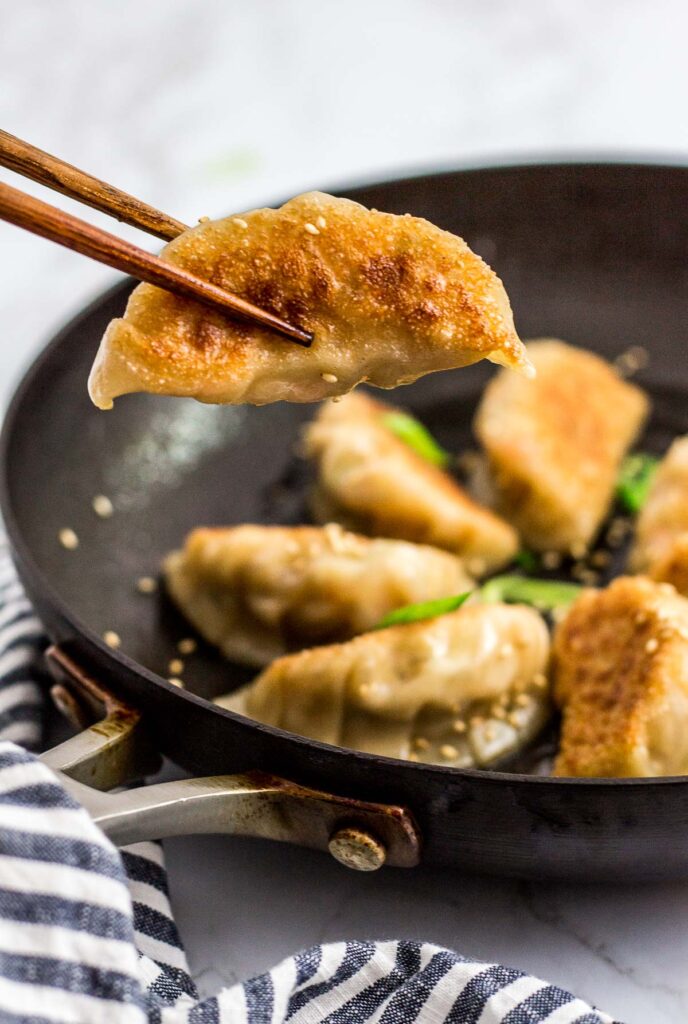
These vegan mandu are Korean-style dumplings filled with seasoned tofu, vegetables, and glass noodles. Inspired by the mandu I grew up eating, they’re flavorful, hearty, and easy to make at home. Pan-fry, steam, or boil for a comforting homemade Korean meal.
Jump to:
At a Glance: Vegan Mandu
- What it is: Korean dumplings filled with seasoned tofu, vegetables, and glass noodles that are light yet satisfying.
- When to make it: Great for holidays like Lunar New Year or Chuseok, cozy dinners, or freezer prep.
- How to enjoy it: Serve alongside jjigae or banchan, or enjoy on its own as a snack or appetizer with dipping sauce.
- Skill level: Beginner-friendly with a simple fold, intermediate with traditional pleating (pleating improves with practice).
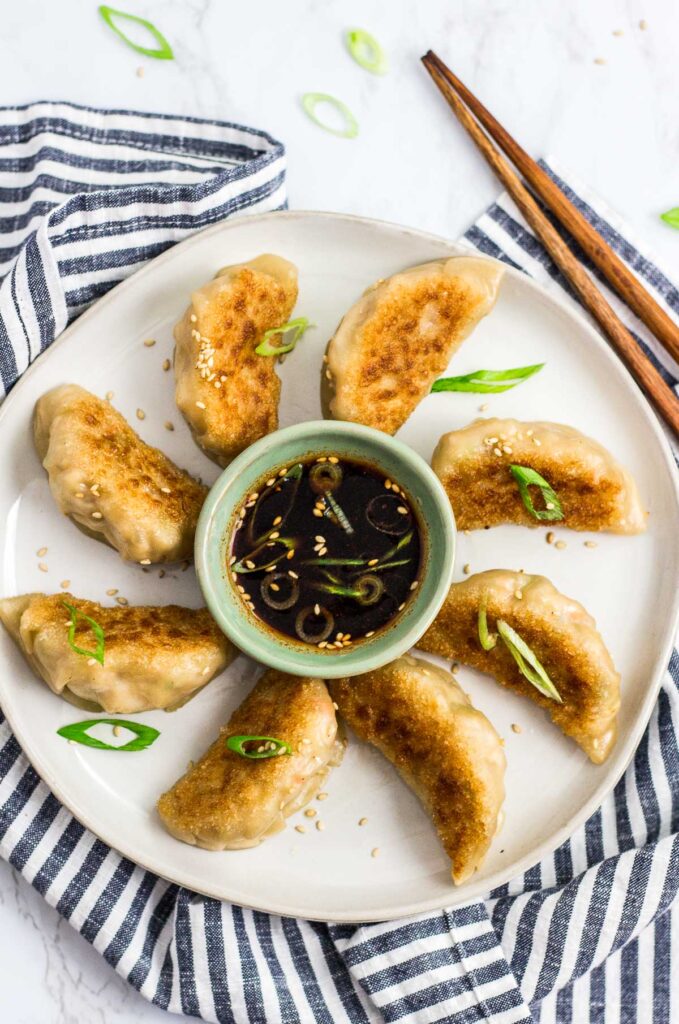
Ingredients You Need (Plus Substitutions)
- Tofu – In traditional Korean mandu, ground pork or beef is common, but crumbled tofu gives these vegan dumplings a similar, hearty texture without the meat. I use firm or extra firm tofu for this recipe.
- Substitution: Finely chopped mushrooms or plant-based meat work well if you prefer a different texture.
- Korean glass noodles (sweet potato noodles) – Known as dangmyeon, these chewy noodles are famous in japchae and add body and a pleasant bite to the filling.
- Substitution: Cellophane noodles or rice vermicelli can be used, though the filling will be slightly softer.
- Vegetables – A colorful mix of green onion, carrot, and cabbage adds freshness, texture, and natural sweetness to balance the tofu and noodles.
- Substitution: Napa cabbage, mushrooms, zucchini, or bean sprouts all work well and can be swapped based on what you have.
- Seasoning – Minced garlic and soy sauce infuse the filling with savory depth and umami, bringing all the ingredients together.
- Substitution: Tamari can be used for a gluten-free option, and garlic powder works in a pinch if fresh garlic isn’t available.
If you’re new to Korean cooking, my Korean Pantry guide breaks down the staples used in this recipe.
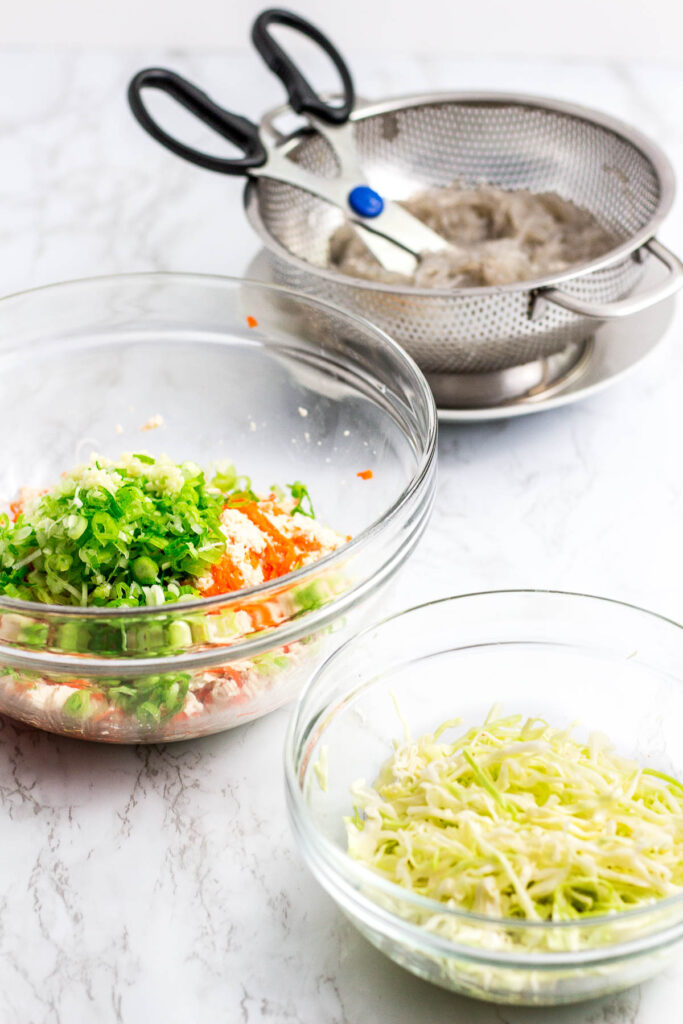
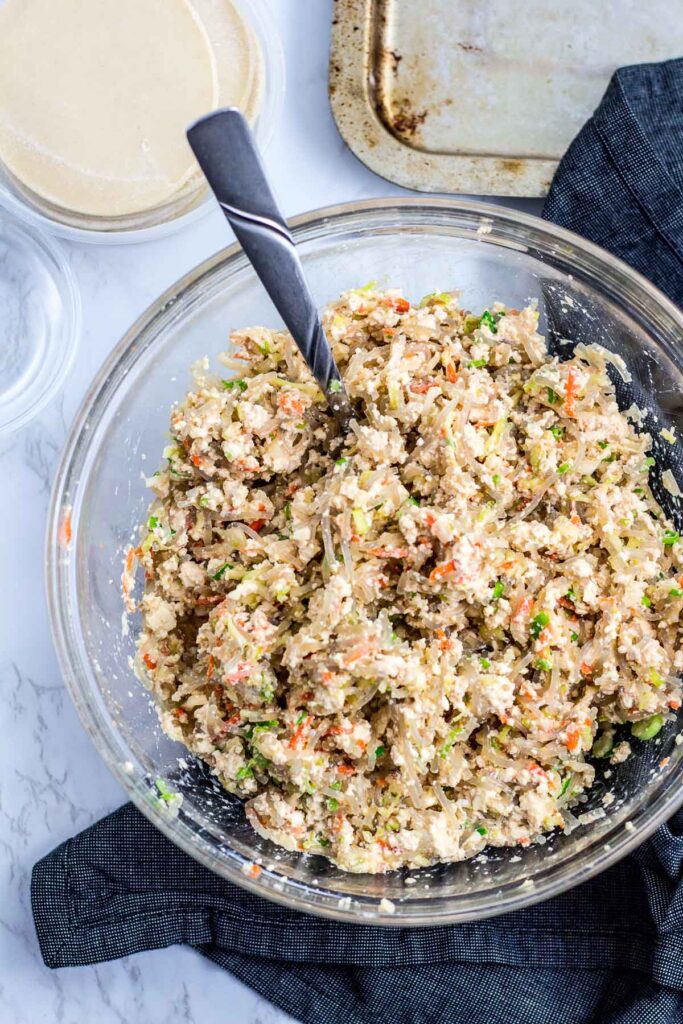
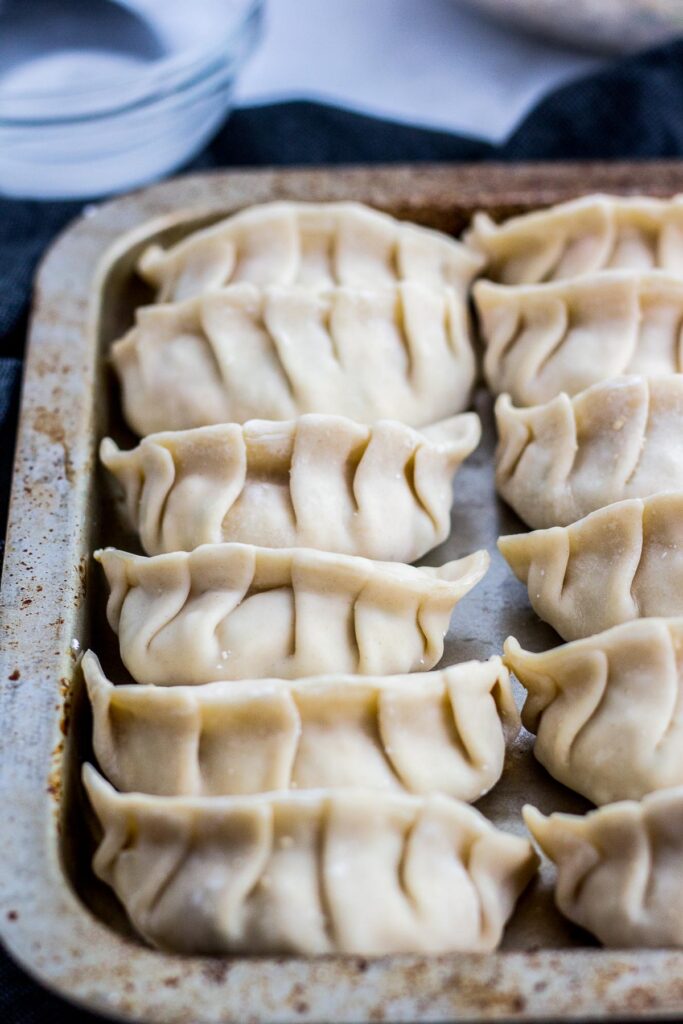
How to fold Mandu/Dumplings
- Prepare the wrapper: Place one dumpling wrapper on your palm. Lightly brush water around the entire edge.
- Add the filling: Spoon about 1 tablespoon of filling into the center, leaving space around the edges.
- Fold and seal the first point: Bring the bottom half of the wrapper up over the filling to meet the top half. Pinch one end firmly to secure it.
- Pleat and seal toward the center: Starting from that sealed end, fold a small section of the bottom edge toward the top edge, pressing to seal as you go. Work your way toward the middle.
- Switch sides: Go back to the other end and repeat the folding process toward the middle until the dumpling is fully sealed.
- Final check: Press along the entire edge to make sure there are no openings.
Simple Fold Option: If pleating feels tricky, just fold the wrapper in half over the filling and press the edges together firmly. As long as it’s sealed, it will cook perfectly.
Tips for Sucess
- Use store-bought wrappers for ease: Buying pre-made dumpling wrappers saves time and ensures a consistent size and thickness.
- Moisten the edges before filling: I brush the edges with water before adding the filling. This slightly softens the wrapper, making it easier to fold, and the water still acts like glue to seal it. Just don’t use too much - a light moisten is enough. Brushing after adding the filling can make the wrapper slippery and harder to handle.
- Don’t overfill: Too much filling makes it difficult to close the wrapper and can cause it to burst while cooking.
- Practice makes perfect: Your first few dumplings may not look perfect, but they’ll still taste great.
- Try different folds: If pleating feels tricky, use the simple fold option: just fold in half and press the edges together firmly.
Cooking Methods for Vegan Mandu
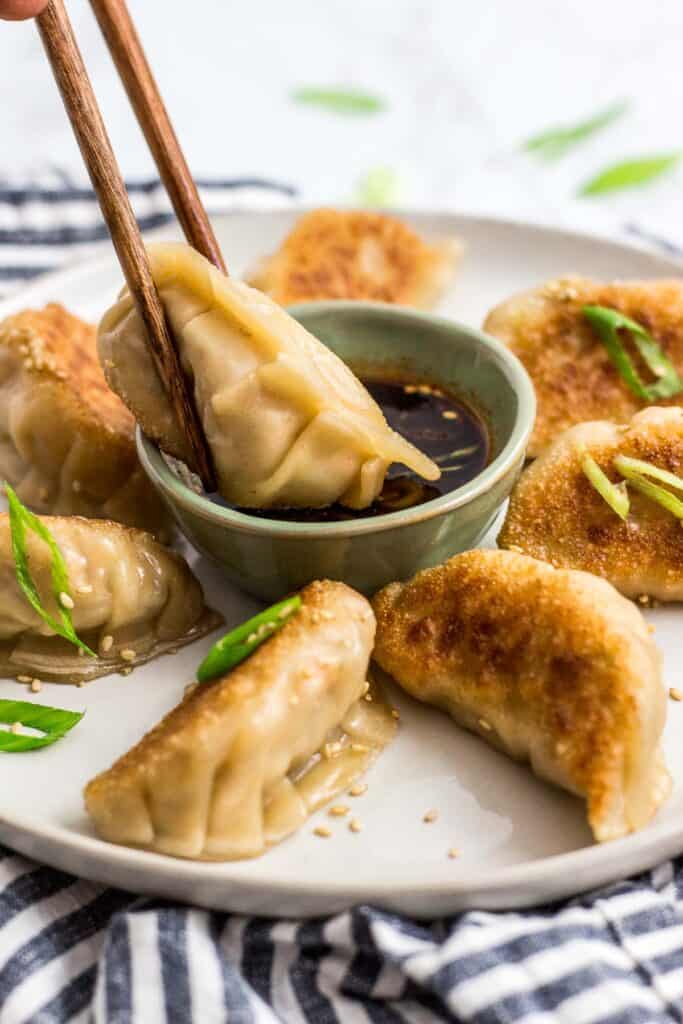
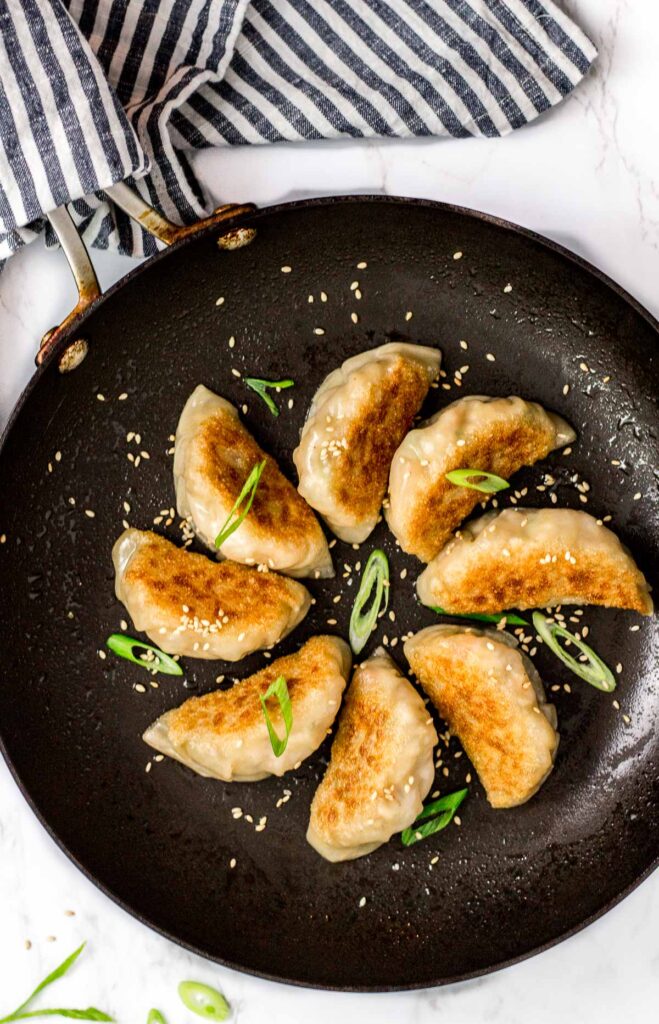
- Pan-Fry (Crispy Bottoms) – My favorite method
- Heat 1–2 tablespoons of oil in a non-stick skillet over medium heat.
- Add dumplings in a single layer and cook until the bottoms turn golden brown (about 2–3 minutes).
- Add ¼ cup water, cover with a lid, and steam until the water evaporates (about 5 minutes).
- Remove the lid and let the bottoms crisp back up for another 1–2 minutes.
- Steam (Soft & Tender)
- Place dumplings in a steamer basket lined with parchment paper or cabbage leaves to prevent sticking.
- Steam over boiling water for 8–10 minutes, until the wrappers turn slightly translucent and the filling is heated through.
- Boil (Light & Juicy)
- Bring a pot of water to a boil.
- Add dumplings in batches and cook for 4–5 minutes, or until they float to the surface.
- Remove with a slotted spoon and serve immediately.
Freezing and Storage Tips
- Freeze before cooking - Arrange uncooked dumplings in a single layer on a parchment-lined baking sheet. Freeze until solid, then transfer to a freezer-safe bag or container. They’ll keep for up to 2 months.
- Cook from frozen - No need to thaw; just add 1–2 extra minutes to the cooking time.
- Store leftovers in the fridge - Cooked dumplings can be refrigerated in an airtight container for up to 3 days. Reheat by steaming or pan-frying to keep them from drying out.
Questions you might have for Vegan Mandu
Yes. Assemble the dumplings and freeze them before cooking. They’ll keep for up to 2 months and can be cooked straight from frozen.
Finely chopped mushrooms or plant-based meat are great alternatives for a hearty texture.
Use parchment paper or cabbage leaves in a steamer, and avoid crowding them in the pan when frying.
Dumpling is a broad term used for filled dough wrappers found in many cuisines. Potstickers are Chinese-style dumplings cooked to have a crispy bottom, gyoza are the Japanese version with thinner wrappers and a garlicky filling, and mandu are Korean dumplings that often include tofu, vegetables, kimchi, or meat. While they vary slightly in wrapper thickness, seasoning, and cooking method, they’re all types of dumplings at heart. This vegan dumplings recipe is inspired by Korean mandu but can be made using most standard dumpling wrappers.
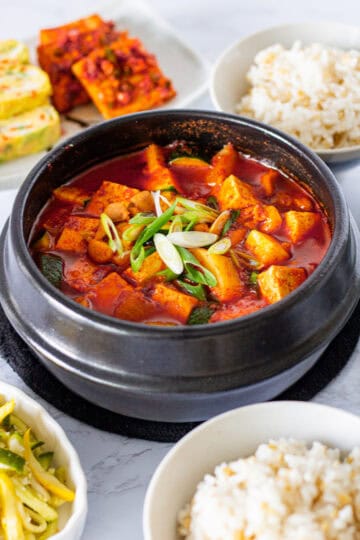
Vegan mandu are often enjoyed during holidays like Chuseok (Korean Thanksgiving) and Lunar New Year. Serve them alongside Vegan Soondubu, Doenjang Jjigae, or bulgogi for a comforting Korean meal, or pair them with simple banchan to build your own spread at home. They also make a wonderful snack or appetizer with a simple soy dipping sauce. Once you get the rhythm of folding, mandu becomes one of those recipes you will want to keep in your freezer at all times.
PrintVegan Mandu (Korean Vegetable Dumplings with Tofu)

These vegan mandu are Korean vegetable dumplings filled with tofu, vegetables, and glass noodles. Easy to fold, cook, and freezer-friendly.
- Prep Time: 1 hour
- Cook Time: 15 minutes
- Total Time: 1 hour 15 minutes
- Yield: 50 vegan dumplings 1x
- Category: Appetizer
- Method: Stovetop
- Cuisine: Korean
- Diet: Vegan
Ingredients
For the Mandu/Dumplings
-
1 block tofu, water squeezed out and crumbled
-
100g Korean glass noodles (dangmyeon), cooked and cut into very small pieces
-
3 green onions, minced (about ½ cup)
-
2 cloves garlic, minced
-
1 ½ cups shredded cabbage
-
1 small carrot, grated (about ⅓ cup)
-
4 tablespoons soy sauce
-
2 packages mandu/dumpling wrappers
For the Dipping Sauce
-
1 tablespoon soy sauce
-
1 ½ tablespoons apple cider vinegar (white vinegar or rice vinegar can also be used)
-
1–2 teaspoons agave nectar (or sugar, or honey if not strictly vegan)
Instructions
-
Make the filling - In a large mixing bowl, combine crumbled tofu, cooked and chopped glass noodles, green onions, garlic, cabbage, carrot, and soy sauce. Mix until everything is evenly incorporated.
-
Prepare the wrapper - Place one dumpling wrapper on your palm and lightly brush water around the edge. This softens the wrapper and makes folding easier.
-
Add the filling - Spoon about 1 tablespoon of filling into the center, leaving space around the edges.
-
Fold and seal - Bring the bottom half of the wrapper over the filling to meet the top half. Pinch one end to secure, then pleat from that end toward the center. Repeat on the other side until sealed. Press along the edge to check for gaps. (For a simpler fold, just press the edges together without pleating.)
-
Choose a cooking method:
-
Pan-Fry (my favorite) - Heat 1–2 tablespoons of oil in a non-stick skillet over medium heat. Add dumplings in a single layer and cook until bottoms are golden (2–3 minutes). Add ¼ cup water, cover, and steam until water evaporates (about 5 minutes). Remove the lid and let bottoms crisp again for 1–2 minutes.
-
Steam - Place dumplings in a parchment- or cabbage-lined steamer basket. Steam over boiling water for 8–10 minutes, until wrappers turn slightly translucent.
-
Boil - Bring a pot of water to a boil. Add dumplings in batches and cook for 4–5 minutes, or until they float to the surface. Remove with a slotted spoon.
-
-
Serve - Mix dipping sauce ingredients in a small bowl. Serve dumplings hot with sauce on the side.
Notes
- This recipe will make about 48 to 50 mandu/dumplings.
- Storage Tip: Freeze uncooked dumplings in a single layer until solid, then store in a freezer bag for up to 2 months. Cook directly from frozen, adding 1–2 minutes to the cooking time.
- Folding Tips: Please refer to the Pro tip section above for detail.
Courtney says
I love this recipe, made it several times now and I love to freeze my extras and have on hand for a quick weeknight add on to stir fry or ramen. I am wondering if anyone has marinated the tofu before adding it to the mixture? Would it make the inside of the dumpling too wet?
George says
Hi Courtney! I'm so happy to hear you've enjoyed the recipe and made it several times.
I think marinating the tofu before adding it to the filling could make the mixture a bit too wet. If you'd like to add extra flavor, I'd recommend cooking the tofu with the marinade first and letting any excess moisture cook off. Then allow it to cool completely before mixing it with the other filling ingredients.
If you give it a try, I'd love to hear how it turns out. Thank you so much for your rating and for taking the time to leave a comment!
Emelia says
Tastes gourmet!! Amazing
George says
Thank you so much, Emelia! I'm so happy to hear you like my mandu recipe!
Soo In says
So delicious!