
Love Korean spicy pork but don't have the time? This 20-minute gochujang ground pork has all the sweet, savory, and spicy flavors you love, but it's much quicker and easier to make.
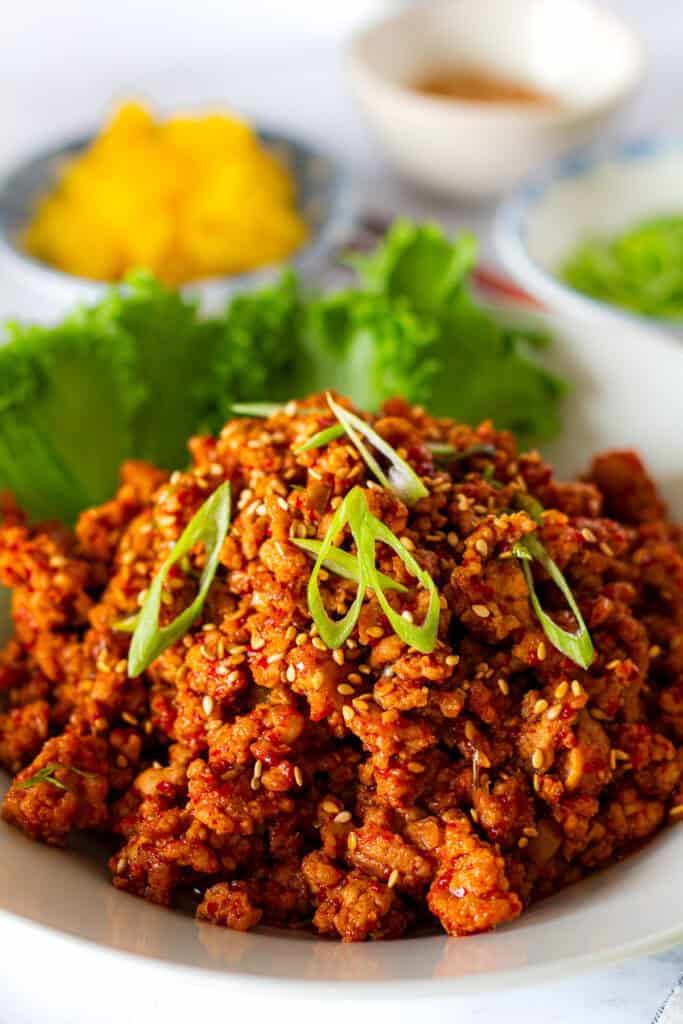
At a Glance: Gochujang Ground Pork
- What it is: Ground pork cooked in a sweet, savory, and spicy gochujang sauce inspired by Korean spicy pork (jeyuk bokkeum 제육볶음).
- What it tastes like: Sweet, savory, spicy, garlicky, and slightly smoky.
- When to make it: Busy weeknights when you need dinner on the table in about 20 minutes.
- What to serve with it: Steamed rice, kimchi, lettuce wraps, or cucumber salad.
- Cooking for Two Note: Makes 3 generous servings, or 4 servings with a couple of side dishes.
- Skill Level: Easy.
Jump to:
Ingredients & Substitutions
You'll find the exact ingredient measurements in the recipe card below.
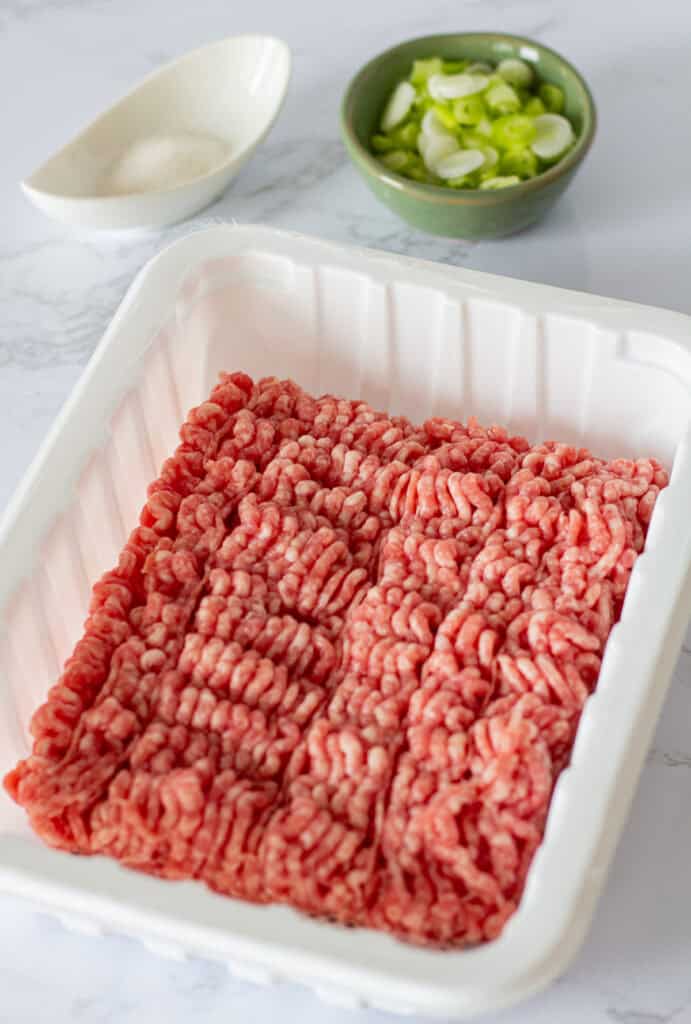
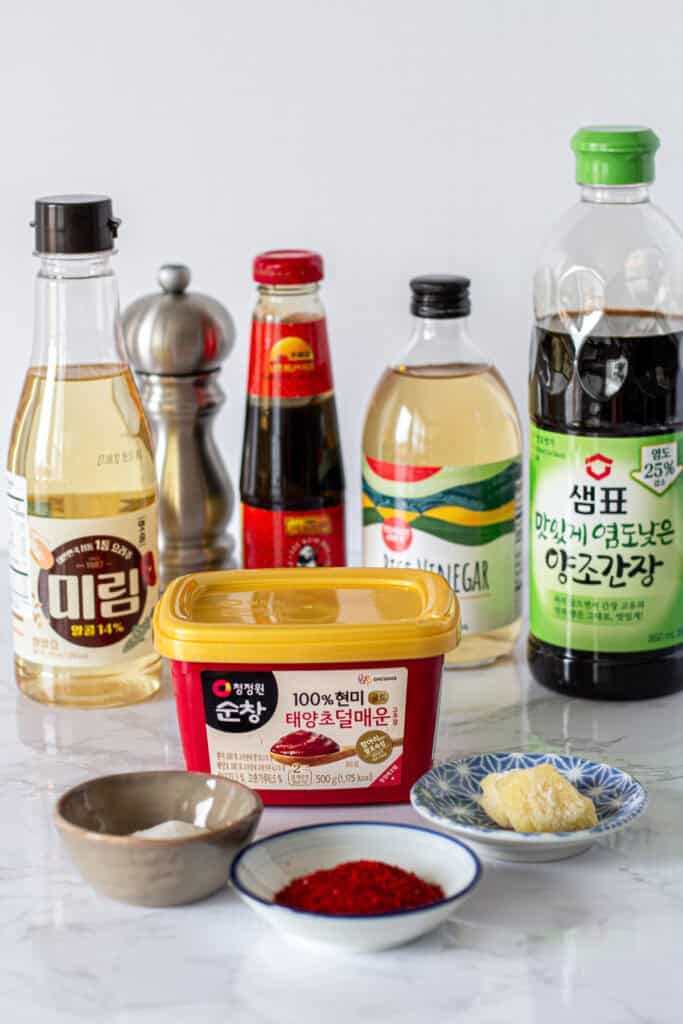
- Ground pork: Ground chicken or turkey also work well, though they'll be slightly less juicy than pork.
- Green onions: Separate the white and green parts. Cook the white parts with the pork and stir in the green parts at the end.
- Sugar: Balances the savory and spicy flavors.
- Gochujang: A Korean fermented chili paste that adds sweet, savory, and spicy flavor. If you're sensitive to heat, look for mild gochujang at your local Asian market.
- Gochugaru: Korean red pepper flakes that add smoky heat. Use less for a milder dish.
- Soy sauce: Adds savory, umami flavor.
- Oyster sauce: Adds savory depth and richness.
- Mirin: Adds a touch of sweetness. Substitute with cooking sake and a pinch of sugar if needed.
- Garlic: Fresh minced garlic adds savory flavor.
- Rice vinegar: Balances the richness of the pork without making it taste sour.
- Black pepper: Adds a little extra flavor.
- Sesame seeds: Optional, but they add a nice finishing touch.
New to Korean cooking? Check out my Korean Essential Pantry post to learn more about the ingredients I use most often.
How to Make Gochujang Ground Pork
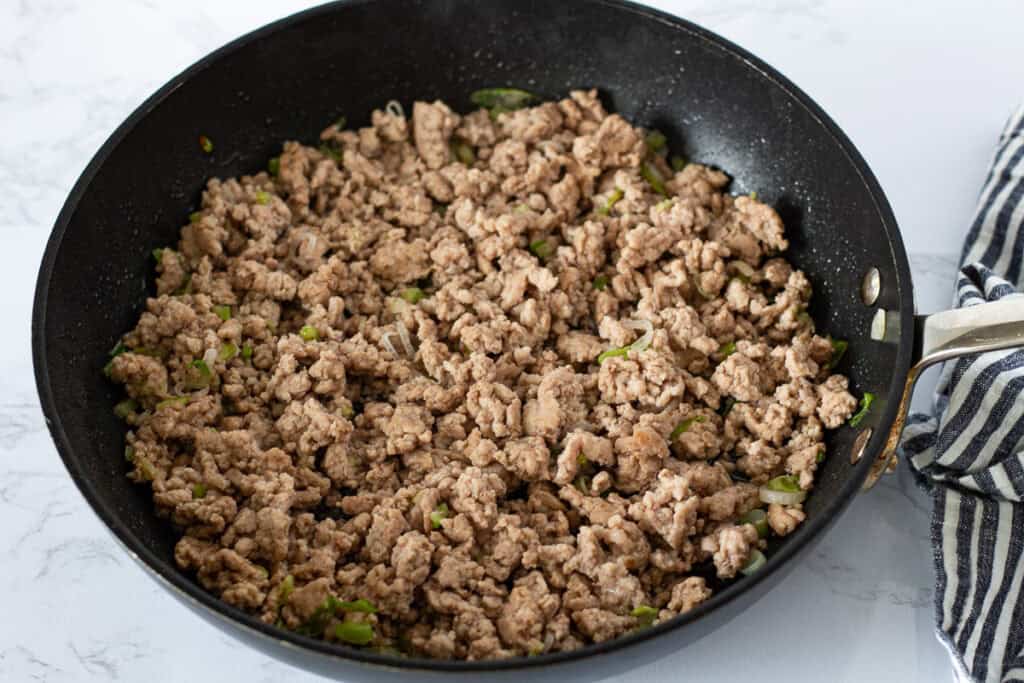
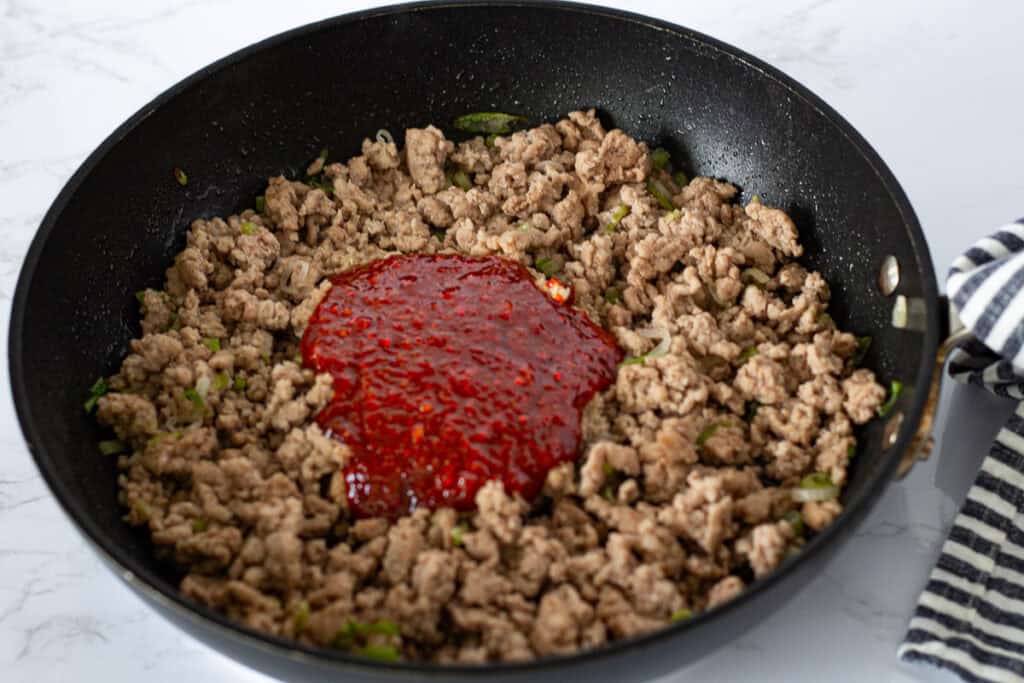
- Prepare the green onions. Thinly slice the green onions, separating the white and green parts.
- Make the sauce. In a small bowl, whisk together the gochujang, gochugaru, soy sauce, oyster sauce, mirin, garlic, rice vinegar, black pepper, and sugar until smooth.
- Cook the pork. Heat a large nonstick skillet over medium-high heat. Add the ground pork, the white parts of the green onions, and 1 teaspoon sugar. Break the pork into small pieces as it cooks, until no longer pink, about 6–8 minutes.
- Add the sauce. Pour the sauce into the skillet and stir until the pork is evenly coated. Cook for another 2–3 minutes, until the sauce coats the pork.
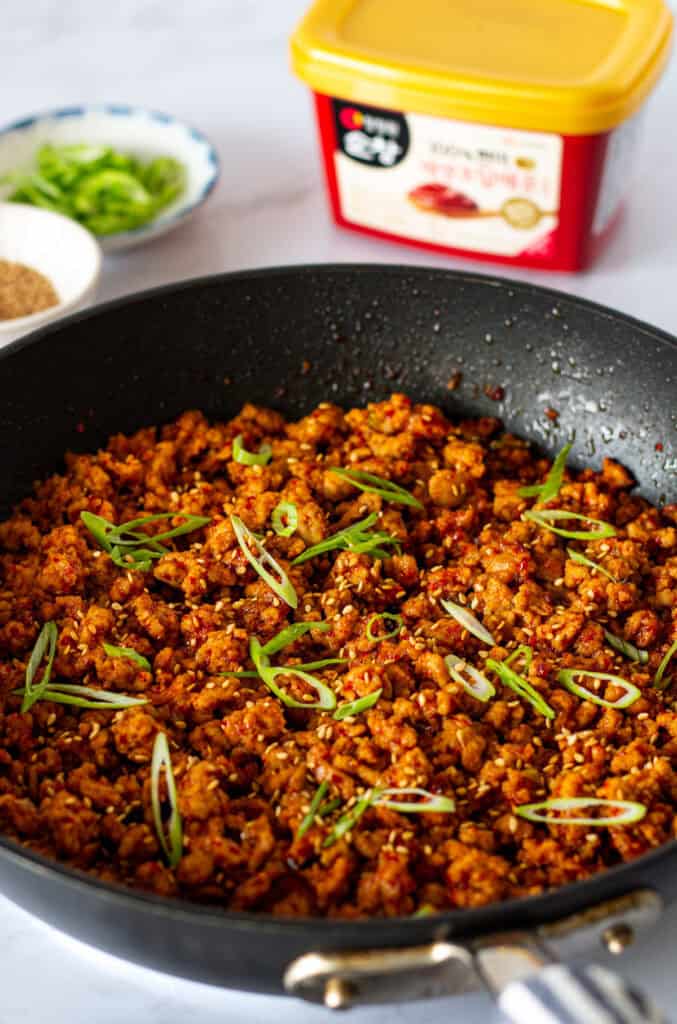
- Finish and serve. Stir in the green onions, sprinkle with sesame seeds, and serve over steamed rice, in lettuce wraps, or as a rice bowl.
Expert Tips
- Cook the pork with sugar. Adding the sugar while the pork cooks is a common Korean cooking technique. It gives the pork a great base of flavor before the sauce goes in. There's no need to add salt at this stage because the gochujang, soy sauce, and oyster sauce provide plenty of seasoning.
- Use just a little oil if needed. If you're using a nonstick skillet, there's no need to add oil. For stainless steel or cast iron, add just enough neutral oil to prevent the pork from sticking.
- Adjust the spice level. Use less gochugaru for a milder dish or add more if you like extra heat.
- Don't skip the rice vinegar. It won't make the dish taste sour. It simply balances the richness of the pork.
- Finish with sesame seeds. I skip sesame oil because it can make the dish feel greasy, and heating it reduces its nutty aroma. Instead, I like to finish with plenty of sesame seeds. If you love the flavor, drizzle a little over the pork just before serving.
How to Serve
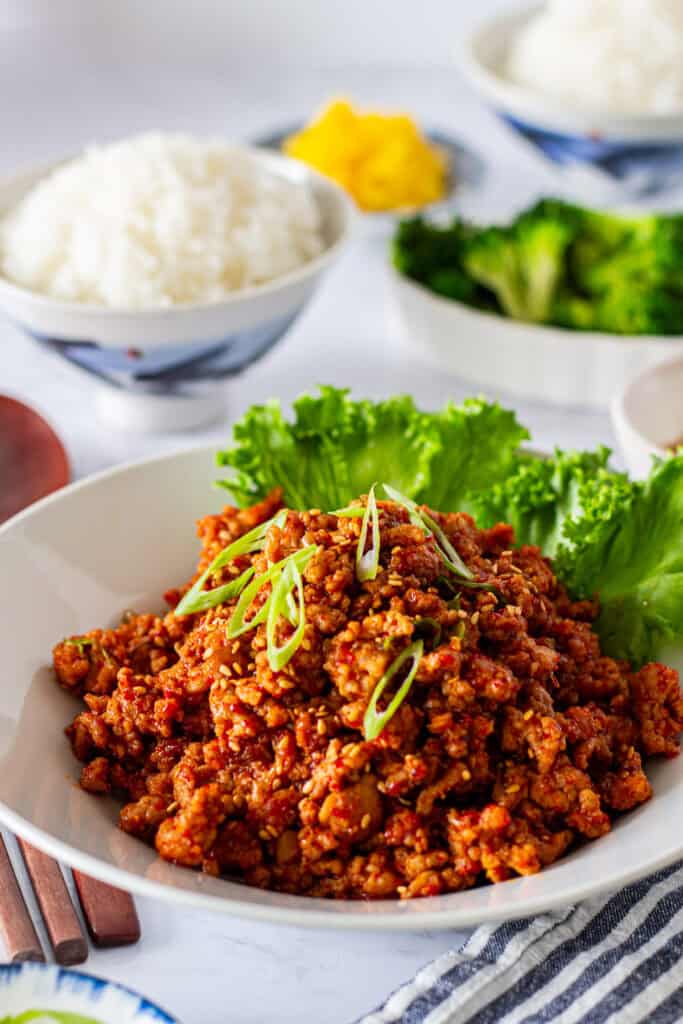
Here are a few of my favorite ways to serve it:
- Make a Rice Bowl
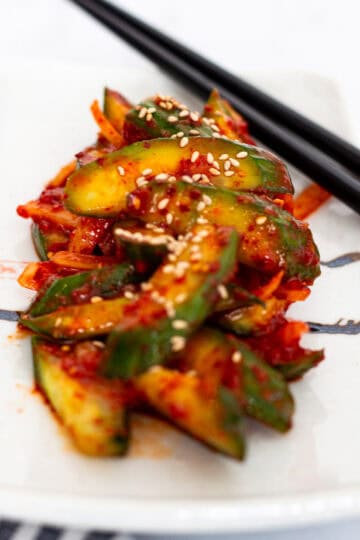
Serve it over Jasmine Rice for Two with steamed broccoli, sliced cucumbers or Korean Cucumber Salad, and a fried egg for an easy weeknight dinner. - In Bibimbap
Use this ground pork as the protein for an easy bibimbap. While bulgogi is a popular choice, this pork works just as well because it already has all the sweet, savory, and spicy flavors. Top with your favorite vegetables and a fried egg. - Serve It Korean Style
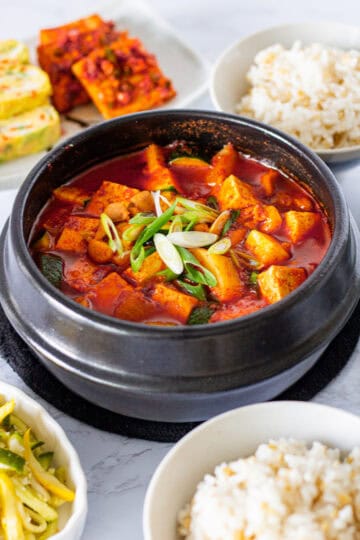
For a more traditional Korean meal, wrap the pork in crisp lettuce leaves and serve it with kimchi and a bowl of Doenjang Jjigae, Soondubu Jjigae, or Gochujang Jjigae.
20-Minute Gochujang Ground Pork
This easy gochujang ground pork is sweet, savory, spicy, and ready in just 20 minutes. Serve it over rice, in lettuce wraps, or use it as a bibimbap topping for a quick weeknight dinner.
- Prep Time: 10 minutes
- Cook Time: 10 minutes
- Total Time: 20 minutes
- Yield: 4 servings 1x
- Category: Dinner
- Method: Stovetop
- Cuisine: Korean
Ingredients
Scale
- 1 pound ground pork
- 2 green onions, thinly sliced, white and green parts separated
- 4 teaspoons granulated sugar, divided (1 teaspoon for the pork, 3 teaspoons for the sauce)
- 2 tablespoons gochujang
- 1 tablespoon gochugaru (adjust to taste)
- 1 tablespoon soy sauce
- 1 tablespoon oyster sauce
- 1 tablespoon mirin
- 1 tablespoon minced garlic
- 1 teaspoon rice vinegar
- Freshly ground black pepper, to taste
- 2 to 3 teaspoons water, if needed
- Sesame seeds, for garnish
Instructions
- Thinly slice the green onions, separating the white and green parts.
- In a small bowl, whisk together the gochujang, gochugaru, soy sauce, oyster sauce, mirin, garlic, rice vinegar, black pepper, and 3 teaspoons of the sugar. If your gochujang is especially thick, stir in 2 to 3 teaspoons water until the sauce is smooth.
- Heat a large nonstick skillet over medium-high heat. If you're using stainless steel or cast iron, add about 1 teaspoon neutral oil to prevent sticking. Add the ground pork, the white parts of the green onions, and the remaining 1 teaspoon sugar. Cook, breaking the pork into small pieces, until no longer pink, about 6 to 8 minutes.
- Pour the sauce into the skillet and stir until the pork is evenly coated. Cook for 2 to 3 minutes, or until the sauce coats the pork.
- Remove from the heat and stir in the green onions. Sprinkle with sesame seeds before serving.
Notes
- If you're using a nonstick skillet, there's no need to add oil. Ground pork releases enough fat as it cooks. If you're using stainless steel or cast iron, add about 1 teaspoon of neutral oil to help prevent sticking.
- For a sweeter version, add 1 teaspoon sugar to the sauce.
- Adjust the amount of gochugaru to make the dish milder or spicier.
- The rice vinegar won't make the dish taste sour. It simply balances the richness of the pork.
- If your gochujang is especially thick, add 2 to 3 teaspoons water to the sauce so it coats the pork more easily.
- Leftovers keep well in an airtight container in the refrigerator for up to 4 days. Reheat in the microwave or in a skillet until warmed through.

Share your thoughts below!