
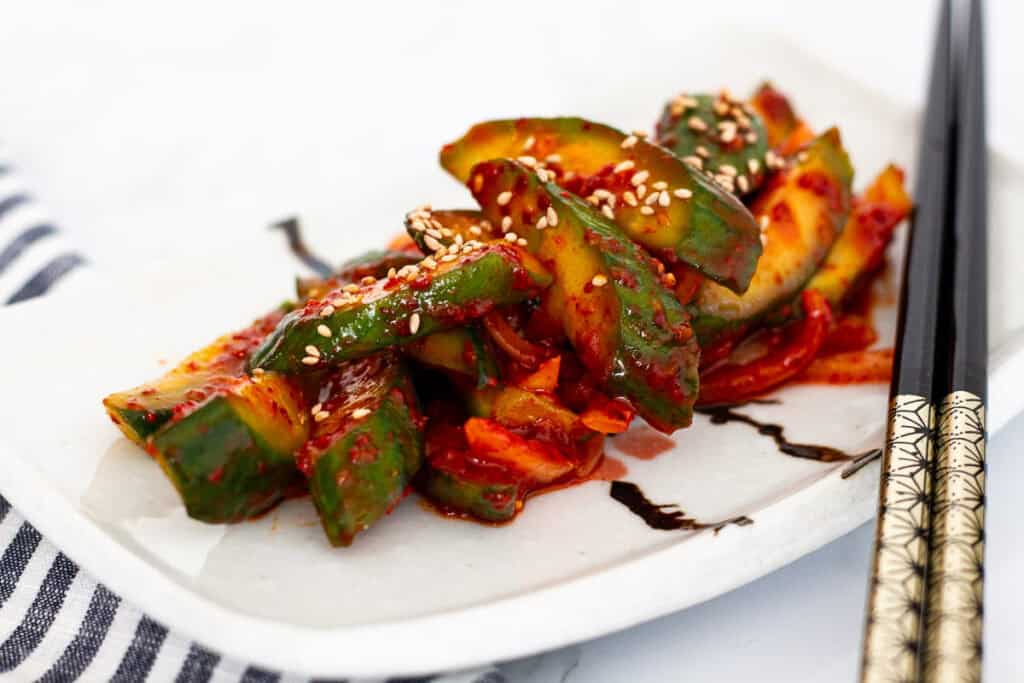
Korean cucumber salad (Oi Muchim) combines crisp cucumbers with a sweet, sour, and spicy dressing. A refreshing, flavorful Korean side dish for any table.
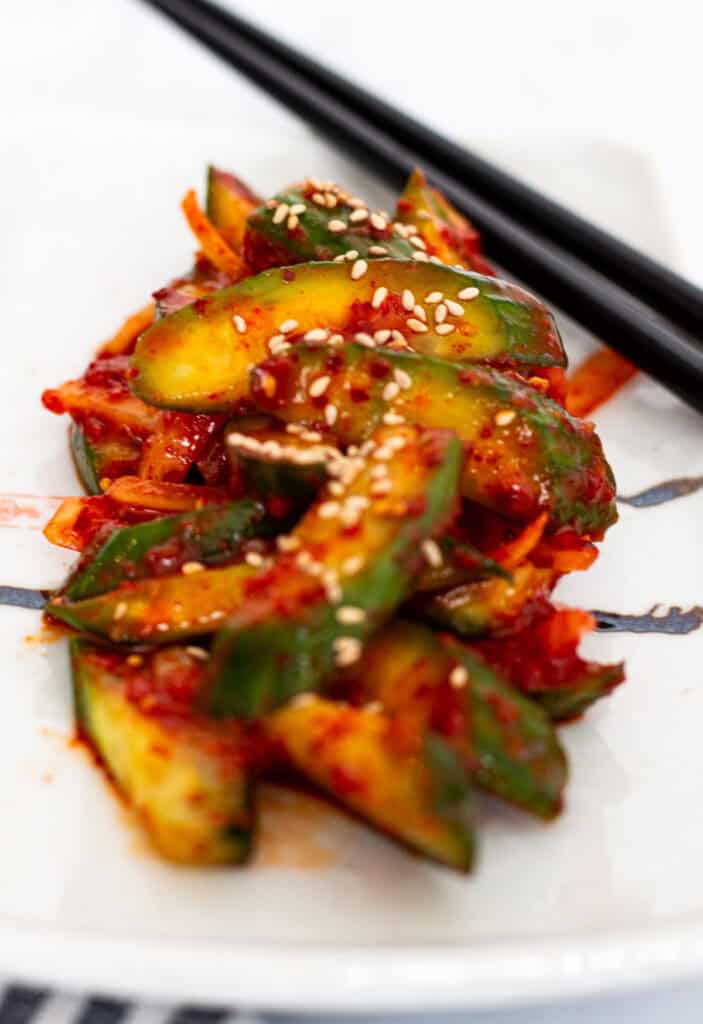
This Korean cucumber salad (Oi Muchim) is one of those dishes my mom made for us all the time when I was growing up. Like many Korean moms, she never measured anything, just a sprinkle here and a dash there, so it took me a few rounds of trial and error to finally recreate her version. It’s crisp, spicy, and refreshing, the kind of simple side dish that instantly brings a taste of home to any meal.
Why You’ll Love This Korean Cucumber Salad
- Refreshing, crunchy, and spicy
- No cooking required
- Made with simple Korean pantry ingredients
- Complements both Korean and non-Korean meals beautifully
Ingredients You’ll Need
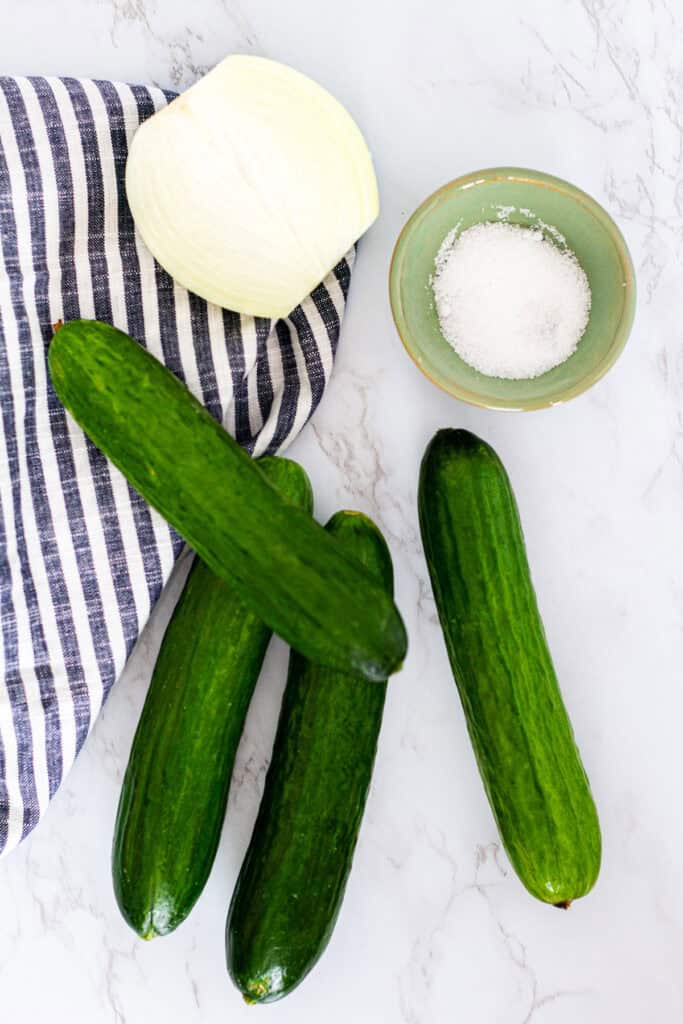
- Cucumbers: Persian cucumbers work best for their crisp texture and mild flavor. English cucumbers are a great substitute if that’s what you have on hand.
- Onion: Adds a subtle sharpness and crunch that balances the spice.
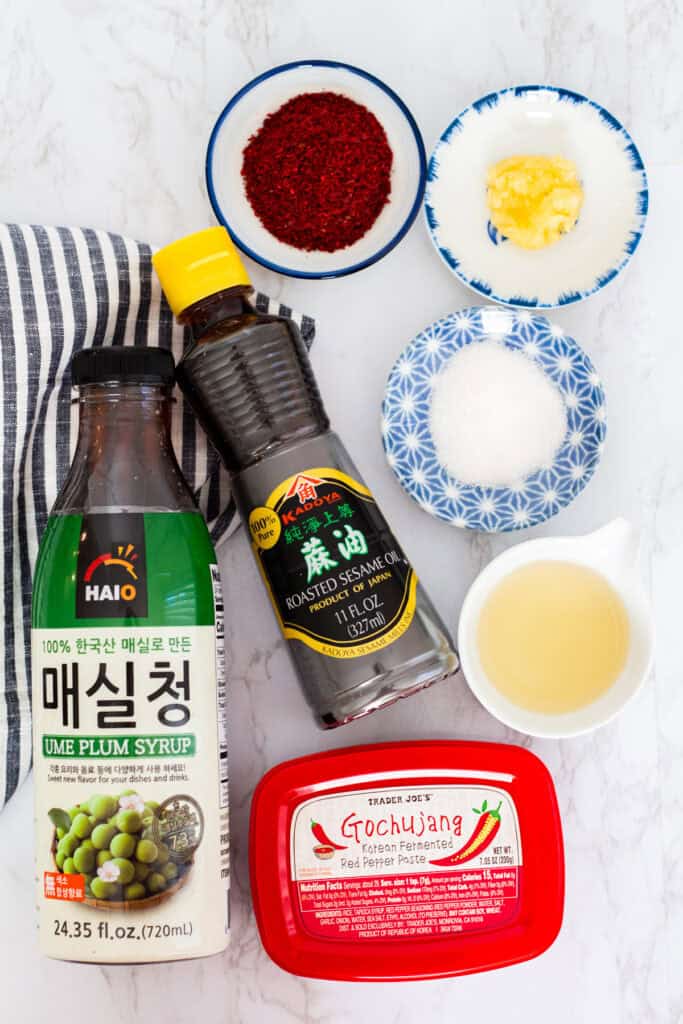
- Gochujang & Gochugaru: A flavorful combo that gives this salad its signature color and layered heat.
- Garlic: Brings depth and aroma to the dressing.
- Vinegar: Apple cider or rice vinegar adds brightness and tang.
- Sugar & Maesil-aek (Korean plum syrup): Create a balanced sweet and tangy flavor.
- Sesame oil & Sesame seeds: Add a nutty finish and a touch of richness.
If you’re new to Korean cooking, check out my Korean Pantry Essentials guide for more information!
How to Make Spicy Korean Cucumber Salad
- Slice the vegetables
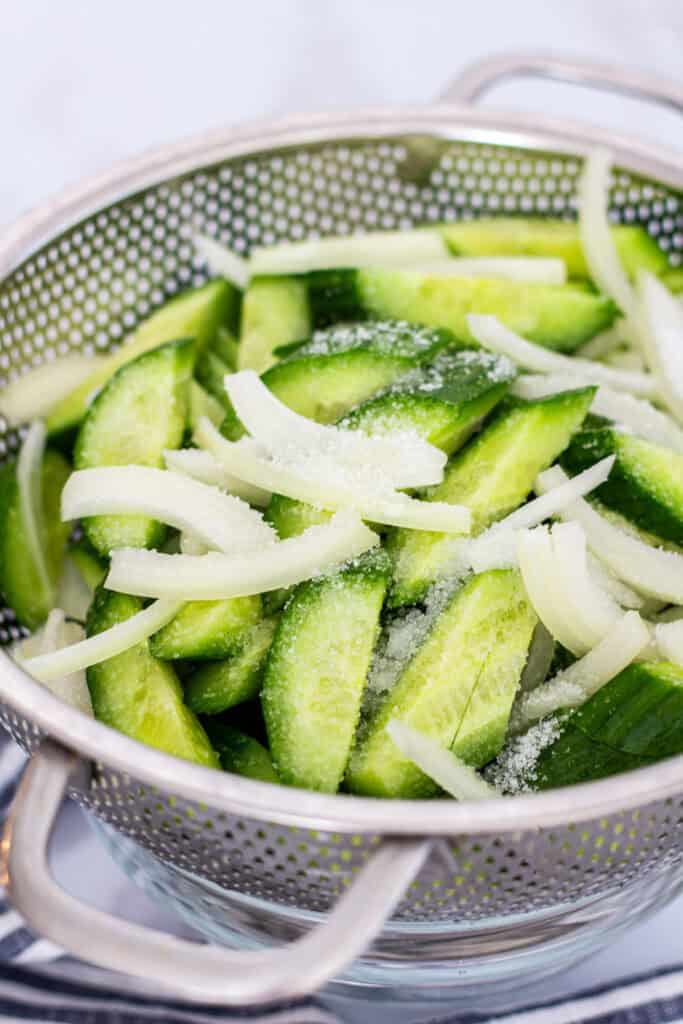
You can cut the cucumbers however you like - sliced on a bias, into half moons, or just thin rounds. All work well for this recipe. Thinly slice the onion. - Salt the cucumbers and onion
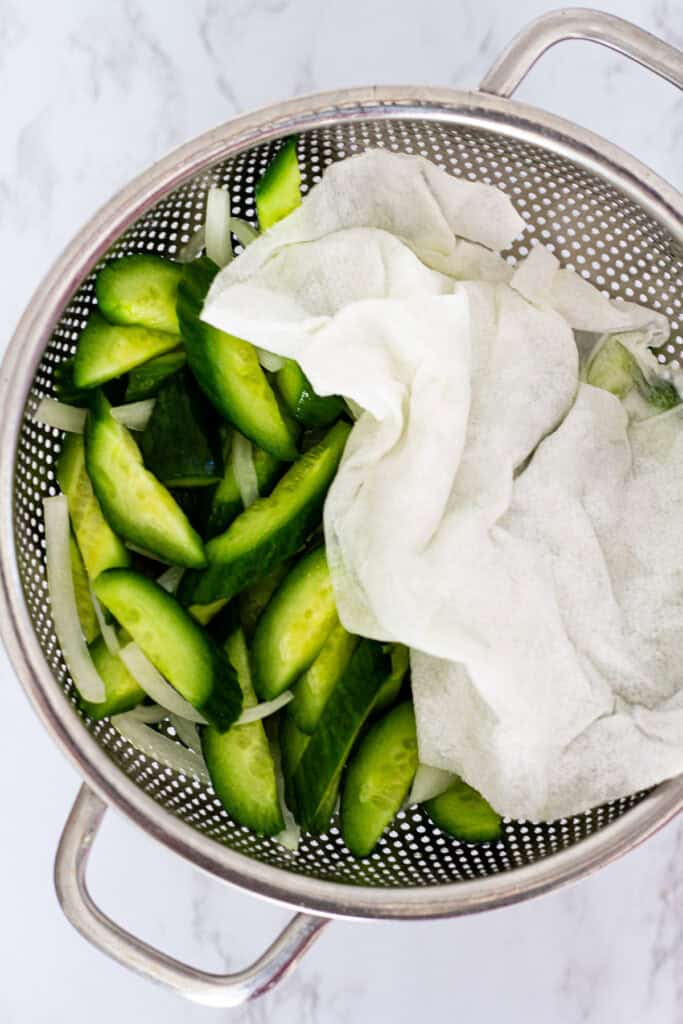
Sprinkle with salt and let them sit for 15 to 30 minutes. This step keeps the vegetables crisp and lightly seasons them. - Make the sauce
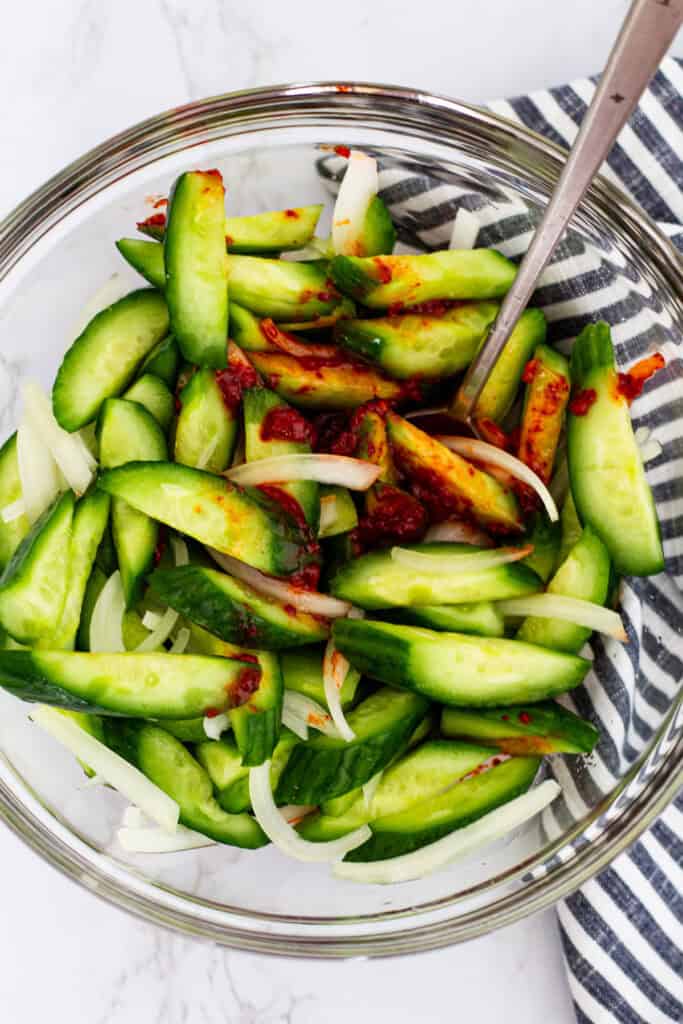
In a large bowl, mix together gochujang, gochugaru, sugar, maesil-aek (or the sugar and vinegar alternative), minced garlic, vinegar, and sesame oil. - Remove excess moisture
Dab the salted cucumbers and onions gently with a paper towel to remove extra liquid. - Combine everything
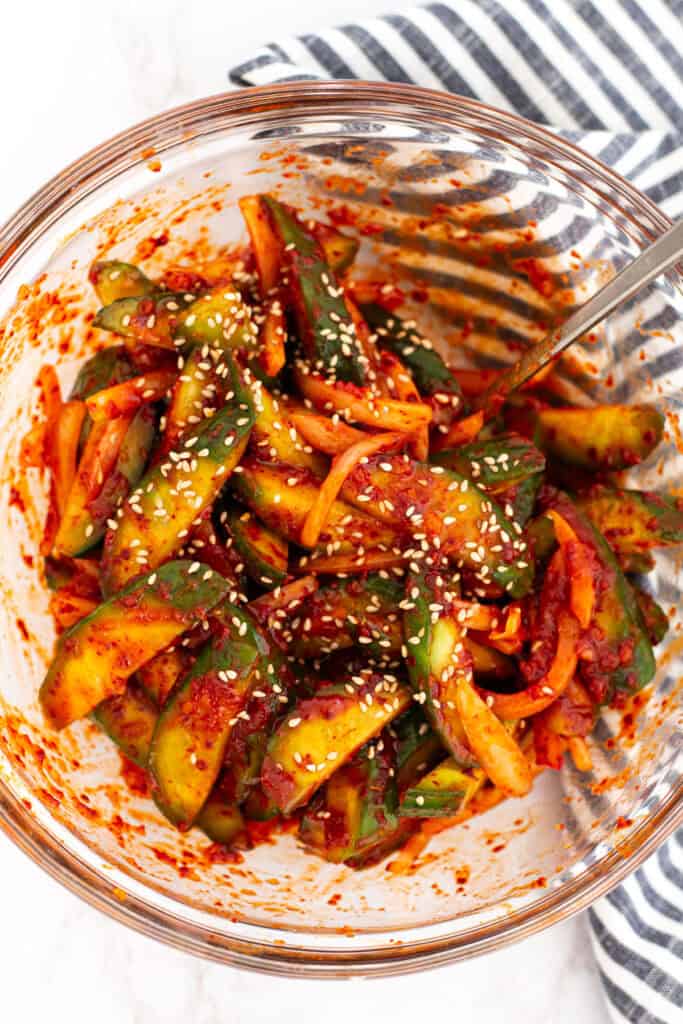
Add the cucumbers and onions to the sauce and toss gently until evenly coated. - Garnish and serve
Sprinkle with sesame seeds before serving.
Pro Tips for Best Flavor and Texture
- Salt first for crunch: Salting the cucumbers and onion draws out moisture so the salad stays crisp.
- Adjust the spice level: Gochugaru can vary in heat. Start with less and add more if you want extra kick.
- Balance the flavors: Taste and adjust the sweetness, tang, and spice to your liking before mixing with the vegetables.
- Adjust the salt level: If your cucumbers taste too salty after sitting longer, rinse them briefly under cold water and dab dry with a paper towel. If the salad tastes under-seasoned after mixing, sprinkle in a little more salt to suit your taste.
- Storage tips: It’s best served fresh but will keep in the fridge for a couple of days. The sauce may draw out more moisture over time, so if it looks watery, you can either pour out the excess liquid or stir it back in before serving.
Questions You Might Have
Yes, but it’s best to keep the components separate until you’re ready to serve. You can slice the vegetables and make the sauce in advance, storing each in the fridge. When you’re ready to eat, salt the cucumbers and onion, let them sit, then mix everything together for the freshest flavor and crunch. If you have leftovers, they’ll still keep well in the fridge for a couple of days. The sauce will draw out a bit more moisture over time, so if it looks watery, you can pour out the excess liquid or stir it back in before serving.
You can easily substitute it with a mix of 1 teaspoon of sugar and 1 teaspoon of vinegar. It gives the same sweet-tangy balance that maesil-aek provides.
Absolutely. Start with one tablespoon of gochugaru and add more if you prefer it spicier. Different brands can vary in heat, so taste as you go.
Persian cucumbers are ideal for their crunch and size, but English cucumbers also work great if that’s what you have.
This Korean cucumber salad adds a refreshing touch to any meal. Try serving it alongside classics like bulgogi, doenjang jjigae, gochujang jjigae, or even a comforting bowl of beef and broccoli. It also makes a great topping for rice bowls or bibimbap when you want extra crunch and spice. If you’re building your Korean pantry, check out my Essential Korean Pantry Staples and Vegan Korean Pantry guides to keep all the right ingredients on hand for simple, flavorful cooking at home. No matter how you enjoy it, I hope this Oi Muchim brings a little taste of comfort and home to your table, just like it does for me.
PrintKorean Cucumber Salad (Oi Muchim)

Korean cucumber salad (Oi Muchim) combines crisp cucumbers with a sweet, spicy sauce. A refreshing Korean side dish for any meal.
- Prep Time: 30 minutes
- Total Time: 30 minutes
- Yield: 4 servings 1x
- Category: Side Dish
- Method: Mix
- Cuisine: Korean
- Diet: Vegan
Ingredients
-
4 Persian cucumbers, halved lengthwise and sliced on a bias (or cut into thin rounds or half moons)
-
¼ large onion, thinly sliced
-
2 teaspoons salt
-
½ tablespoon gochujang
-
1 to 2 tablespoons gochugaru (start with 1 tablespoon)
-
1 tablespoon sugar
-
1 tablespoon Korean plum syrup (maesil-aek)
-
Substitute: 1 teaspoon sugar + 1 teaspoon vinegar (apple cider or rice)
-
-
2 to 3 teaspoons minced garlic
-
1 tablespoon apple cider or rice vinegar
-
½ tablespoon sesame oil
-
Sesame seeds, for garnish
Instructions
-
Slice the vegetables
Cut the cucumbers however you like (on a bias, into half moons, or thin rounds). Thinly slice the onion. -
Salt the cucumbers and onion
Sprinkle with salt and let sit for 15 to 30 minutes to keep them crisp and lightly seasoned. -
Make the sauce
In a large bowl, mix together gochujang, gochugaru, sugar, maesil-aek (or the sugar and vinegar substitute), garlic, vinegar, and sesame oil. -
Remove excess moisture
Pat the cucumbers and onions dry with a paper towel to remove extra liquid. -
Combine everything
Add the cucumbers and onions to the sauce and toss gently until evenly coated. -
Garnish and serve
Sprinkle with sesame seeds before serving.
Notes
-
Salt first for crunch: Salting helps the cucumbers stay crisp.
-
Adjust the spice level: Start with less gochugaru and add more to taste.
-
Balance the flavors: Taste and adjust sweetness, tang, and spice before mixing.
-
Adjust the salt level: If too salty, rinse under cold water and dab dry; if under-seasoned, sprinkle a little more salt after mixing.
-
Storage tips: Best served fresh but keeps for a couple of days in the fridge. The sauce will draw out more moisture over time. Pour out or mix in any extra liquid before serving.




Share your thoughts below!