
Spicy, savory, and deeply comforting, this gochujang jjigae 고추장 찌개 with chicken is just the thing when you’re craving a cozy Korean meal.
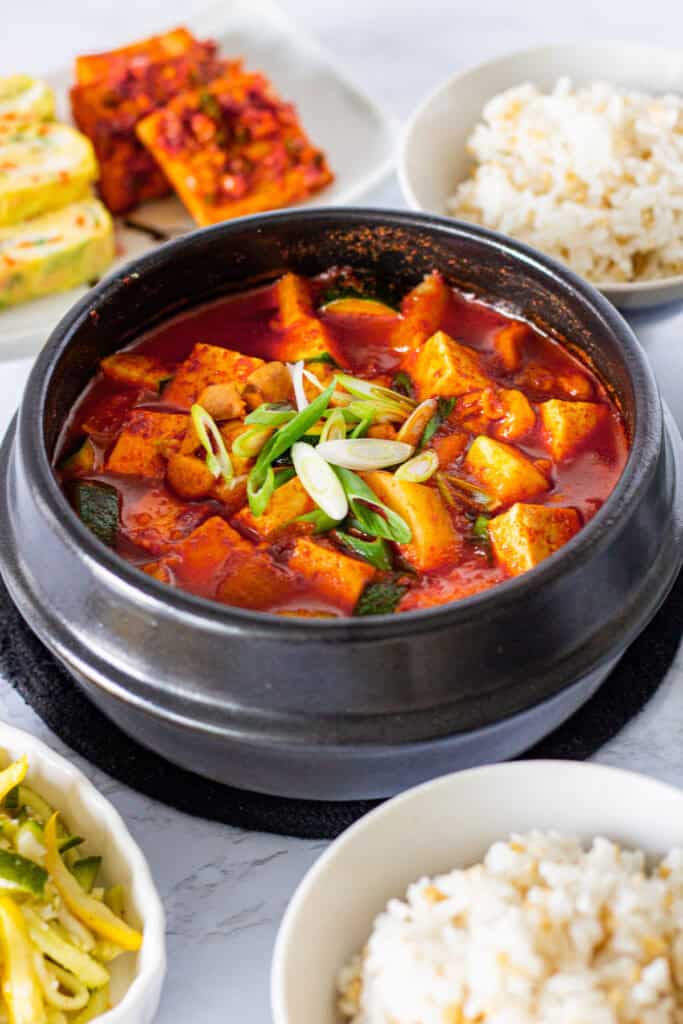
At a Glance: Gochujang Jjigae with Chicken
- What it is / tastes like: A spicy, savory Korean stew with tender chicken, tofu, potato, and zucchini in a rich gochujang broth
- When to make it: A cozy weeknight dinner when you want something warm, hearty, and comforting
- What to serve with: Pair with simple banchan like kimchi or spicy cucumber salad
- Time: Ready in under 30 minutes
- Cooking for two note: A small-batch stew that makes two generous servings without a big pot of leftovers
- Skill level: Easy
Ingredients & Substitutions
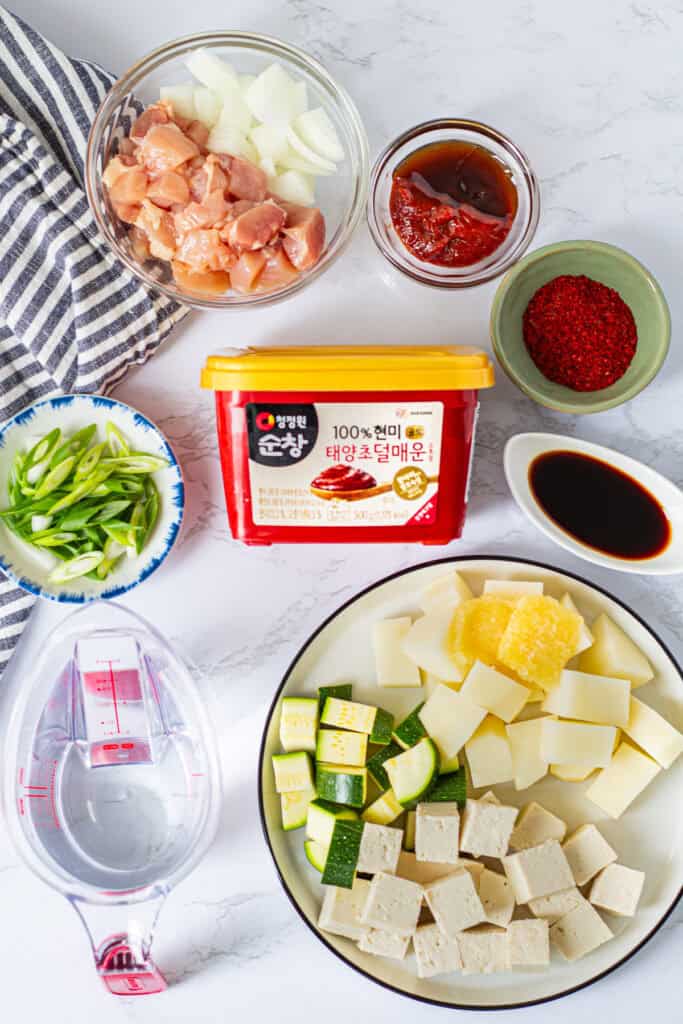
You’ll find exact measurements in the recipe card below. If you’re new to Korean cooking, check out my Korean Pantry Essentials guide for more information about ingredients like gochujang and gochugaru.
- Chicken thighs: I originally made this jjigae with pork butt, a common choice for Korean stews. Since pork butt is often sold in larger packages, I use boneless, skinless chicken thighs for this recipe for two. They stay tender and add richness to the broth.
- Gochujang: Korean fermented red chili paste that gives the stew its spicy, savory flavor. Heat and sweetness vary by brand.
- Gochugaru: Korean red pepper flakes that add heat and chili flavor to the broth.
- Soy sauce + oyster sauce: Add saltiness and savory depth.
- Russet potato: I tested both russet and waxy potatoes and prefer russet. It absorbs the broth well and breaks down slightly as it cooks, helping thicken the stew.
- Zucchini: Yellow summer squash or a combination of zucchini and yellow squash also works well.
- Tofu: Firm or extra-firm tofu both work. Firm tofu is commonly used in Korean soups and stews, while extra-firm tofu holds its shape a little better.
- Garlic, onion + green onion: Build the savory base of the stew, with green onion added at the end for freshness.
How to Make Gochujang Jjigae
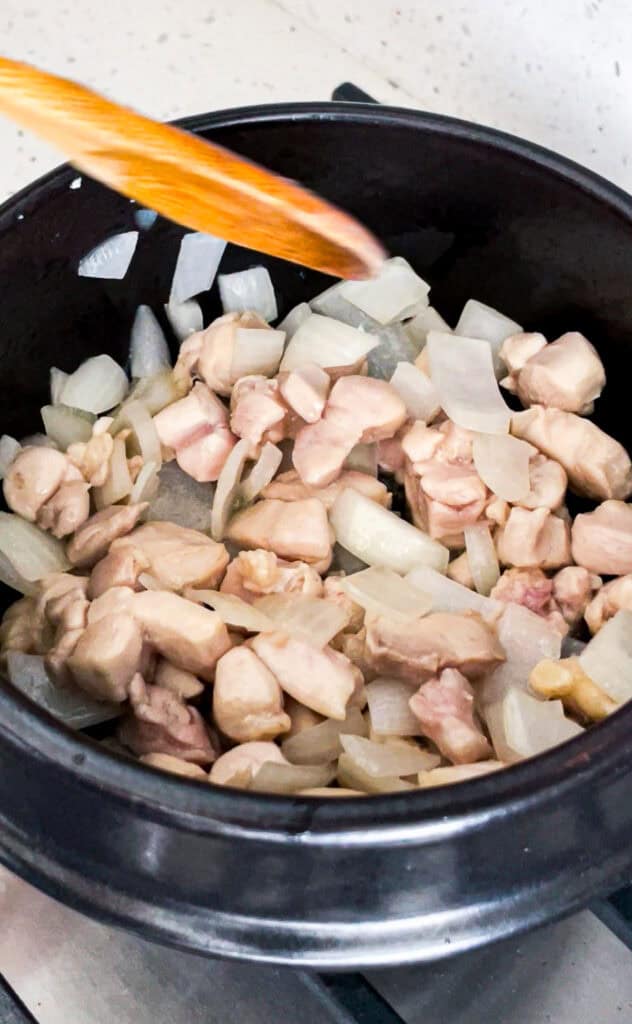
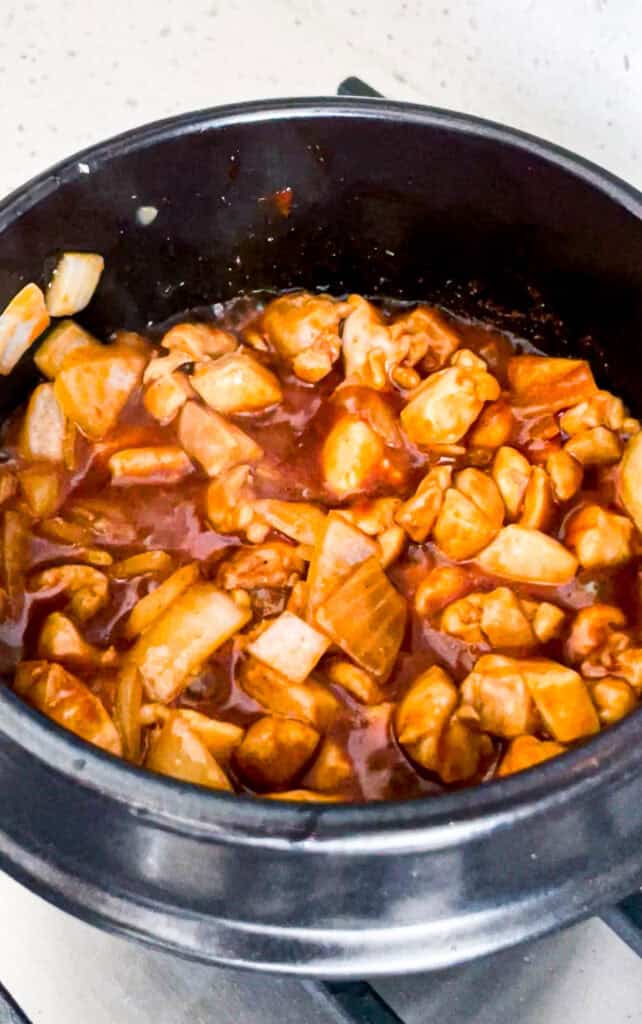
- Cook the chicken and onion. Heat the oil in a small pot over medium heat. Add the chicken and onion and cook until the onion begins to soften and the chicken is lightly cooked on the outside.
- Add the seasonings. Stir in the gochujang, soy sauce, and oyster sauce until the chicken and onion are evenly coated.
- Bloom the gochugaru. Add the gochugaru and cook for 15–30 seconds, stirring constantly. Be careful not to let it burn.
- Add the water and potato. Immediately pour in 1¼ cups water, then add the potato and garlic. Increase the heat to medium-high to high and bring to a boil. Cook for 5–6 minutes, until you can pierce the potato with a paring knife but it is not completely tender.
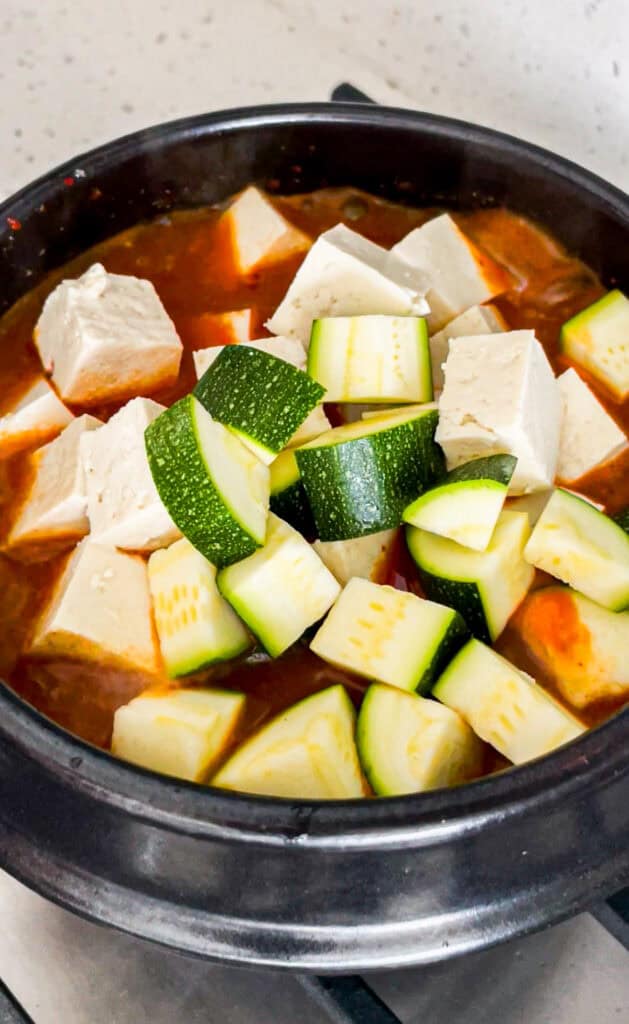
- Add the zucchini and tofu. Add the zucchini, tofu, and black pepper. Gently stir and continue cooking until the zucchini is cooked through and the potato is tender.
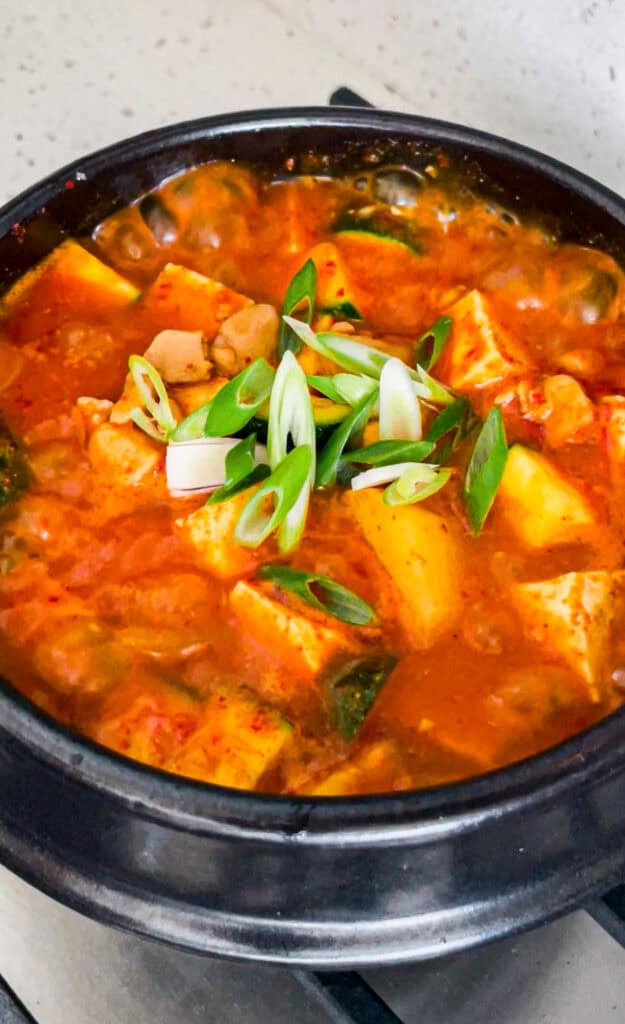
- Finish. Taste and adjust the seasoning if needed. Top with sliced green onion and serve hot.
Expert Tips
- Use the right-size pot. I use a small Korean clay pot for this recipe. A regular saucepan works too, but avoid using a large pot. Since this is a small-batch stew, a wide pot can cause too much liquid to evaporate before the potatoes finish cooking.
- Don’t worry about the small amount of water. Gochujang jjigae is a stew, not a soup, so the broth should be concentrated rather than very soupy. The zucchini and tofu also release some moisture as they cook.
- Have the water ready before blooming the gochugaru. Gochugaru can burn quickly. Keep the measured water next to the stove so you can pour it in immediately after blooming the pepper flakes for 15–30 seconds.
- Adjust the spice level to taste. For a milder jjigae, use less gochugaru. For more heat, add sliced jalapeño or serrano pepper when you add the zucchini.
- Use soy sauce to adjust the seasoning. If the finished stew needs more salt, add soy sauce instead of plain salt for deeper savory flavor. Add 1 teaspoon at a time, tasting between additions.
What to Serve with Gochujang Jjigae
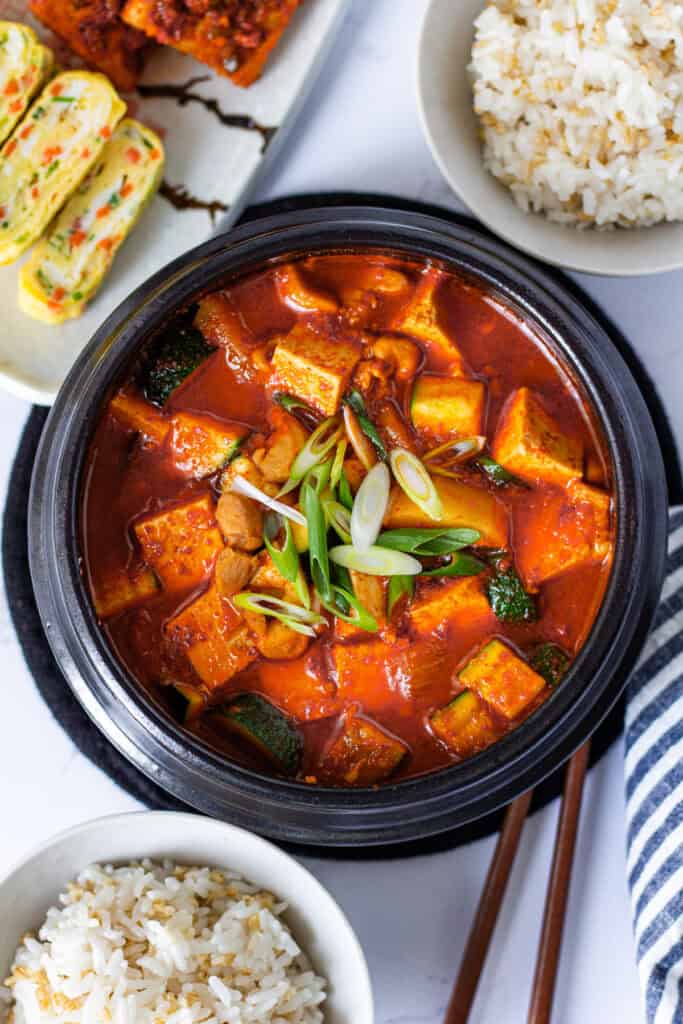
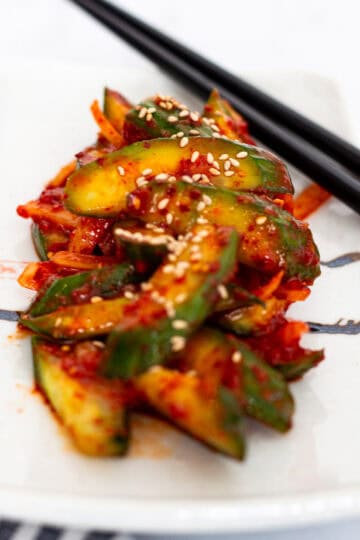
For a traditional Korean-style dinner, serve gochujang jjigae with Korean rice (short-grain rice) and a few banchan, such as kimchi, spicy cucumber salad, roasted seaweed, or japchae. My Jasmine Rice for Two also works well if that’s what you have on hand.
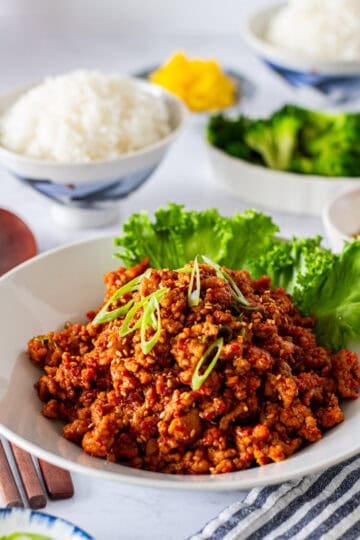
Korean meals often include several dishes on the table, so you can also pair the jjigae with a protein dish like bulgogi or gochujang ground pork for a more substantial meal.
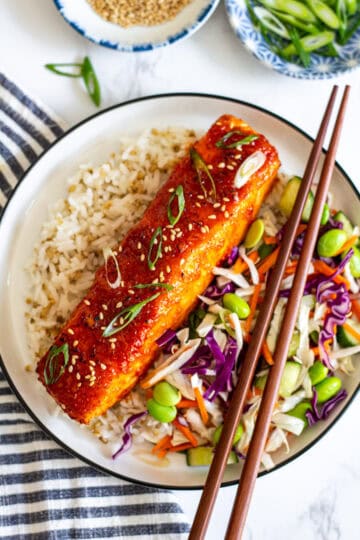
If you enjoy the spicy, savory flavor of gochujang, you might also like my gochujang-glazed salmon or gochujang-braised potatoes.
PrintGochujang Jjigae with Chicken for Two

A spicy and savory Korean gochujang stew made with tender chicken thighs, tofu, potato, and zucchini. This small-batch jjigae is ready in under 30 minutes and makes a cozy, satisfying meal for two.
- Prep Time: 10 minutes
- Cook Time: 15 minutes
- Total Time: 25 minutes
- Yield: 2 servings 1x
- Category: Main
- Method: Stovetop
- Cuisine: Korean
- Diet: Dairy-Free
Ingredients
- 2 teaspoons neutral oil
- 4 ounces boneless, skinless chicken thigh (about 1 small thigh), cut into small pieces
- ¼ onion, diced
- 1 tablespoon gochujang
- 2 teaspoons soy sauce
- 2 teaspoons oyster sauce
- 1 tablespoon gochugaru
- 1 ¼ cups water
- ½ medium russet potato (about 1 cup diced)
- 2 teaspoons minced garlic
- 1 small zucchini (about ½ cup diced)
- ¼–⅓ block firm or extra-firm tofu (about 1 cup diced)
- Black pepper, to taste
- 1 green onion, sliced
Instructions
- Cook the chicken and onion. Heat the oil in a small pot over medium heat. Add the chicken and onion and cook until the onion begins to soften and the chicken is lightly cooked on the outside.
- Add the seasonings. Add the gochujang, soy sauce, and oyster sauce. Stir until well combined and the chicken and onion are evenly coated.
- Bloom the gochugaru. Have the 1¼ cups water measured and ready next to the stove. Add the gochugaru and cook for 15–30 seconds, stirring constantly. Immediately pour in the water to prevent the gochugaru from burning.
- Cook the potato. Add the potato and garlic. Increase the heat to medium-high to high and bring to a boil. Cook for 5–6 minutes, until the potato can be pierced with a paring knife but is not completely tender.
- Add the zucchini and tofu. Add the zucchini, tofu, and black pepper. Stir and continue cooking until the zucchini is cooked through and the potato is completely tender.
- Finish. Taste and adjust the seasoning if needed. Top with sliced green onion and serve hot.
Notes
- Pot size: I use a small Korean clay pot for this recipe. A small saucepan works well too. Avoid using a large or wide pot, which can cause too much liquid to evaporate as the jjigae cooks.
- Adjusting the spice level: For a milder stew, reduce the gochugaru. For more heat, add sliced jalapeño or serrano pepper along with the zucchini.
- Adjusting the seasoning: If the finished stew needs more salt, add soy sauce 1 teaspoon at a time, tasting after each addition.
- Storage: Store leftovers in an airtight container in the refrigerator for up to 3–4 days.
- Make ahead & reheating: The jjigae will thicken as it sits because the potato and tofu absorb some of the broth. Refrigerate in an airtight container for up to 3–4 days. When reheating, add a splash of water as needed to loosen the broth, then heat on the stovetop until hot.

Share your thoughts below!