
Quick and easy stir-fried kimchi in 15 minutes. Tangy, savory, and perfect with rice. A classic Korean side dish anyone can make at home.

Stir-fried kimchi, or kimchi bokkeum (김치 볶음), is a quick and comforting Korean side dish made with well-fermented kimchi. It is tangy, savory, and slightly sweet, and the flavor mellows as it cooks. This version is ready in 15 minutes and works with any kimchi you have at home, whether it is store-bought or homemade. I like to make it with my vegan kimchi for a plant-based option.
Jump to:
Why you will love this recipe:
- Quick & easy: ready in just 15 minutes.
- A perfect way to use up sour, well-fermented kimchi.
- Balanced flavors: tangy, slightly sweet, and full of umami.
- Works as a side dish or topping for rice and noodles.
- Naturally vegan if you use vegan kimchi.
Ingredients for Kimchi Bokkeum
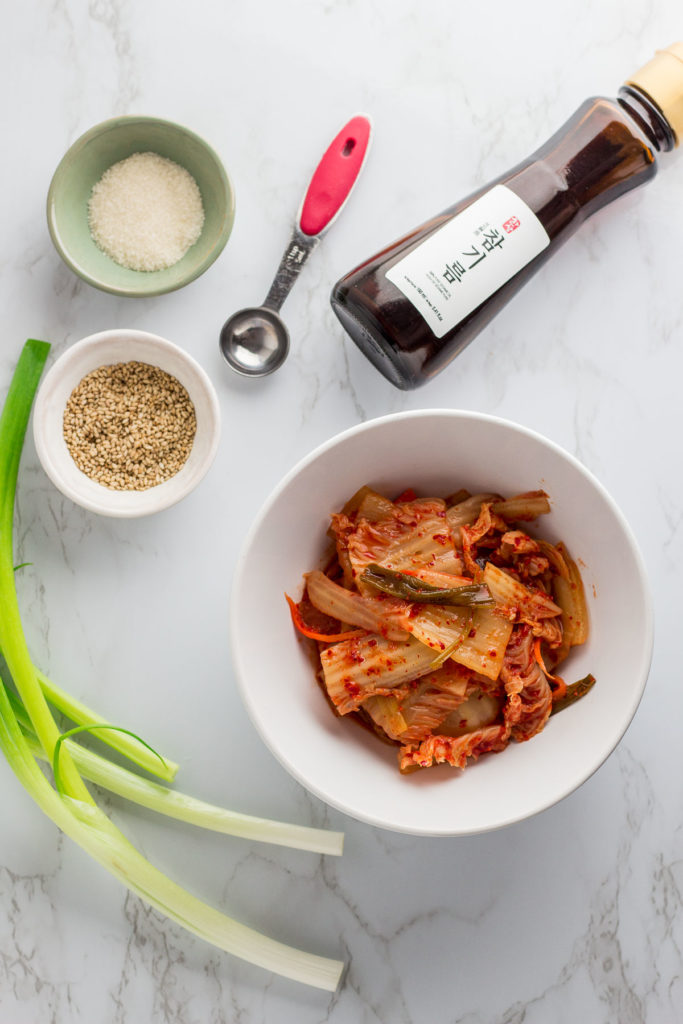
- Neutral oil: helps soften the kimchi and start caramelization without adding flavor.
- Green onions: white parts add savory depth; green parts finish fresh and bright.
- Well-fermented kimchi: the sour flavor transforms when cooked; fresh kimchi won’t have the same depth.
- Sugar: balances acidity and helps the edges caramelize.
- Sesame oil: adds nutty aroma right at the end.
- Sesame seeds: a simple garnish that adds texture and flavor.
If you are stocking up on ingredients, take a look at my Korean pantry essentials list
How to Make Stir-Fried Kimchi
- Sauté the aromatics:
Heat neutral oil in a large skillet over medium heat. Add the white parts of the green onion and cook until fragrant, about 2 minutes. - Add the kimchi:
Stir in the chopped, well-fermented kimchi and cook for 3 to 4 minutes, stirring often. - Balance the flavor:
Sprinkle in the sugar and continue cooking until the kimchi looks slightly caramelized. - Finish and serve:
Add the green parts of the onion, remove from heat, then finish with sesame oil and sesame seeds. Serve warm.

Expert Tips for Stir-Fried Kimchi
- Use well-fermented kimchi:
Sour kimchi has the best flavor for this dish because it caramelizes and turns naturally sweet as it cooks. Fresh kimchi will not develop the same depth. - Use scissors to cut kimchi:
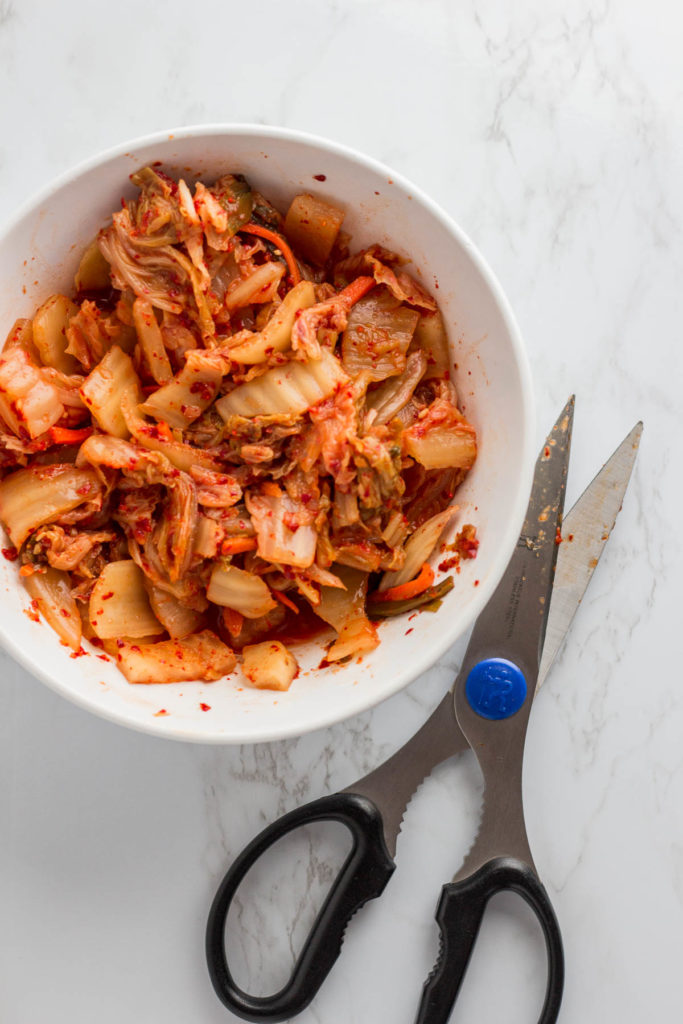
This is how many Koreans cut kimchi at home. It is fast, clean, and saves your cutting board from stains. - Adjust heat and flavor:
For a milder taste, rinse your kimchi under water, then squeeze it dry. For more heat and color, add a teaspoon of gochugaru (Korean red pepper flakes) while cooking. - Butter adds richness:
Cooking the kimchi with butter or vegan butter softens the pungency and adds savory depth. Neutral oil gives a cleaner, traditional flavor. - Do not rush the caramelization:
Let the kimchi cook long enough to lightly brown at the edges. This is what gives the dish sweetness and umami.
Stir-Fried Kimchi Variations
- Spicy garlic version:
Add 1–2 cloves of minced garlic and 1 teaspoon of gochugaru while you sauté the kimchi. This boosts heat and aroma, and brings back some of the red color if your kimchi has faded during fermentation. - Butter kimchi:
Cook the kimchi with 1 tablespoon of butter or vegan butter. Add it to the pan at the beginning so it melts into the kimchi as it caramelizes. This variation is especially good tucked into grilled cheese or served over warm rice. - Soy sauce drizzle:
Stir in 1–2 teaspoons of soy sauce at the end of cooking for extra umami. It works beautifully if you are serving the kimchi over rice or as a topping for a rice bowl. - Add protein:
Mix in sliced tofu, canned tuna, pork belly, or spam during cooking, or top with a fried egg when serving. It turns this dish into a satisfying meal.

Questions About Stir-Fried Kimchi
I highly recommend using well-fermented kimchi. Sour kimchi caramelizes as it cooks and turns slightly sweet. Fresh kimchi will not develop the same depth or texture.
Regular kimchi is uncooked and eaten as-is. Stir-fried kimchi is sautéed, which mellows the sharpness, deepens the flavor, and adds natural sweetness.
Store leftovers in an airtight container in the refrigerator for up to 4 days. Reheat in a skillet over medium heat until warm, adding a splash of water if it looks dry. The flavor becomes a little softer as it sits.
To make it milder, rinse your kimchi under water and squeeze it dry before cooking. To make it spicier, add minced garlic or gochugaru while sautéing.
More Delicious Ways to Use Kimchi
- Kimchi pancake - A crispy, savory Korean pancake perfect for rainy days.
- Kimchi fried rice - A quick and flavorful way to use up leftover rice and kimchi.
- Kimchi ramen fried rice - A fun twist on fried rice, combining two comfort foods in one.
Stir-fried kimchi is one of those simple, nostalgic Korean side dishes that never disappoints - tangy, savory, and so satisfying. If you’d like to try making your own kimchi at home, check out my Vegan Kimchi Recipe for an easy, plant-based version. You can also stock your kitchen with the right ingredients by reading my Korean Pantry Essentials and Vegan Korean Pantry Essentials guides. I hope this recipe inspires you to enjoy a little taste of Korea at your own table!
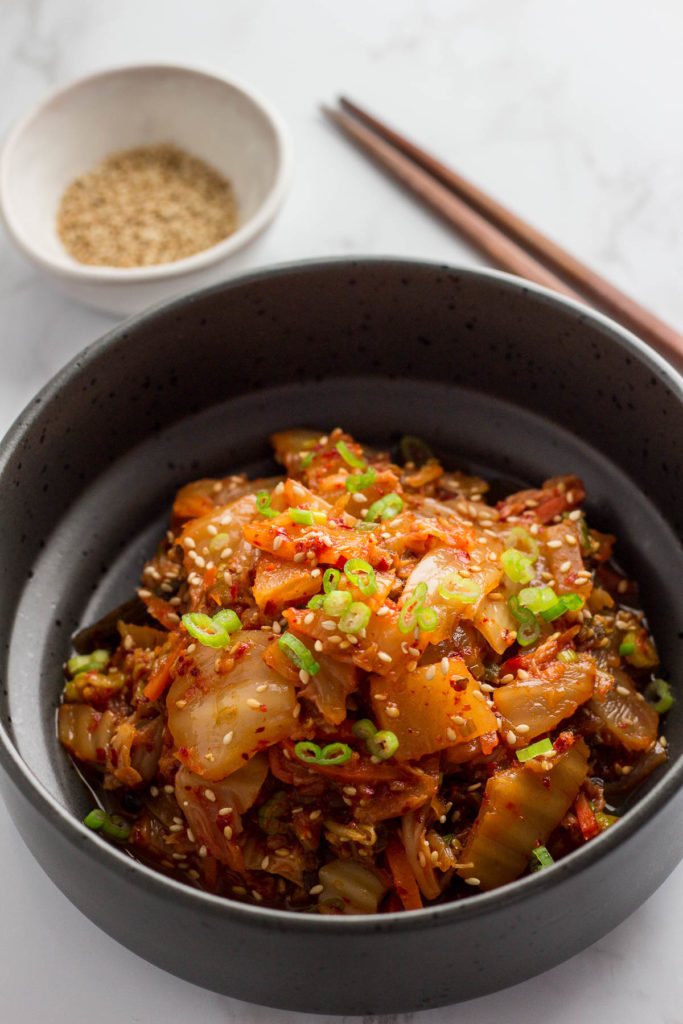
Quick & Easy Stir-Fried Kimchi (Kimchi Bokkeum)

Quick and easy stir-fried kimchi in 15 minutes. Tangy, savory, and perfect with rice. A classic Korean side dish anyone can make at home.
- Prep Time: 5 minutes
- Cook Time: 10 minutes
- Total Time: 15 minutes
- Yield: 4 servings as a side dish 1x
- Category: Side Dish
- Method: Stovetop
- Cuisine: Korean
Ingredients
-
1 tablespoon neutral-tasting oil
-
2–3 green onions, diced (white and green parts separated)
-
1½ cups sour, well-fermented kimchi, chopped into bite-sized pieces
-
2 teaspoons sugar
-
1 tablespoon sesame oil
-
1 tablespoon sesame seeds
Instructions
- Heat neutral oil in a large skillet over medium heat. Add the white parts of the diced green onion and sauté until fragrant, about 2 minutes.
- Stir in the chopped, sour kimchi and cook, stirring often, for 3–4 minutes.
- Sprinkle in the sugar and continue cooking until the kimchi is slightly caramelized.
- Add the green parts of the onion, then remove from heat.
- Finish with a drizzle of sesame oil and a sprinkle of sesame seeds before serving.
Notes
-
If you’re vegan, be sure to use vegan kimchi. You can find my Vegan Kimchi Recipe for an easy, plant-based version.
-
For more tips on spiciness, flavor adjustments, and cooking tricks, check out the Helpful Tips section above in this post.



Share your thoughts below!