
Non-spicy bibim guksu recipe with soy sauce and fresh vegetables. A light, refreshing Korean noodle dish for two ready in just 15 minutes.
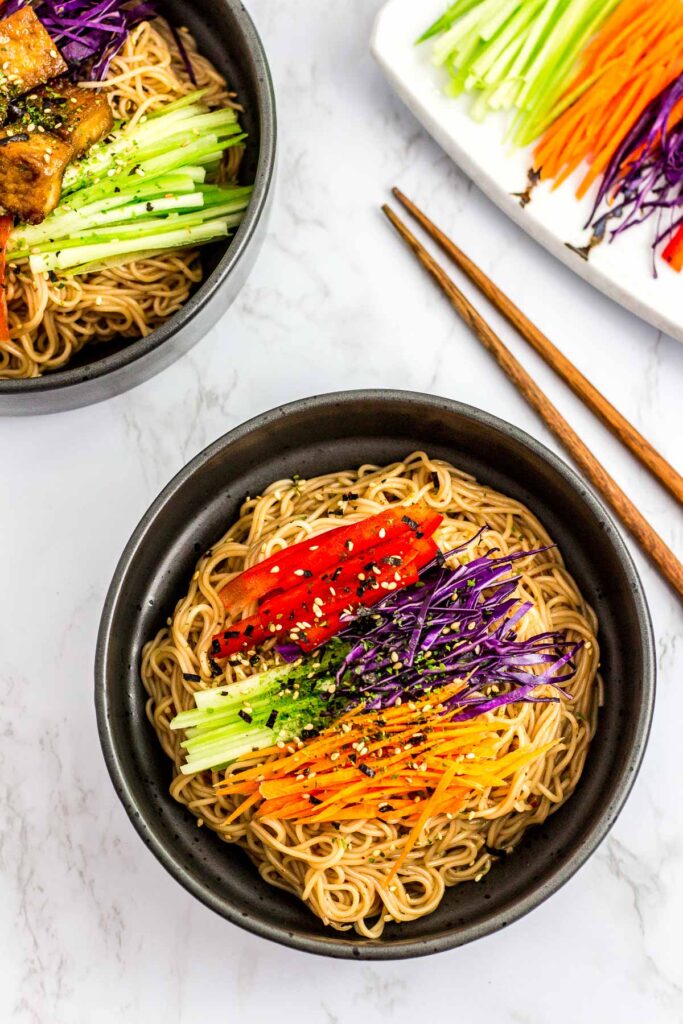
If you search for a bibim guksu 비빔국수 recipe, you’ll mostly find the classic spicy version made with gochujang, Korean red pepper paste. But in Korea, there is another version that's just as loved: Soy sauce bibim guksu, also known as ganjang bibim guksu 간장비빔국수. This lighter, savory style is especially popular with children, and it’s the one I grew up eating.
When my sister and I were little, my mom would make this for us on hot summer days. The chewy noodles coated in a simple soy sauce dressing and served cold were refreshing, filling, and something we always looked forward to. This is my take on her version. It's quick, non-spicy, and perfect when you want Korean noodles without the heat.
Jump to:
What is Bibim Guksu (Korean Mixed Noodles)?
In Korean, bibim means “mixed” and guksu means “noodles,” so bibim guksu literally means “mixed noodles.” It’s a cold or room-temperature Korean noodle salad, perfect for summer. The most popular versions use a spicy sauce made with gochujang (Korean red pepper paste), vinegar, soy sauce, and sweetener — tangy, spicy, and slightly sweet.
For kids or anyone who prefers mild flavors, the heat can be too much. That’s where soy sauce bibim guksu (ganjang bibim guksu) comes in. This non-spicy version is salty, lightly sweet, and savory — just like the one my mom used to make for me and my sister.

Why You’ll Love This Recipe
- Non-spicy and family-friendly – This non-spicy bibim guksu is perfect for anyone who loves Korean noodles but prefers to skip the heat.
- Light yet satisfying – Chewy noodles tossed in a savory soy sauce dressing make this dish refreshing but still filling.
- Quick to prepare – From start to finish, these Korean soy sauce noodles come together in about 15 minutes.
- Perfect for summer – Served cold, it’s an ideal meal for hot days when you want something cooling and easy.
Ingredients You Need
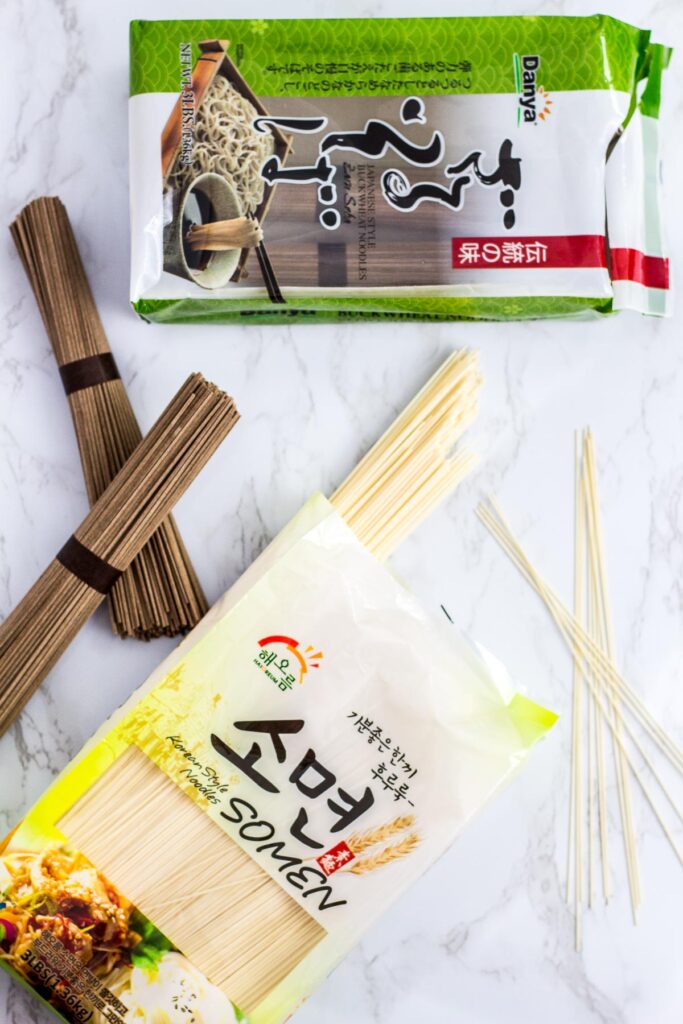
- Somen noodles – Thin wheat noodles that cook quickly and work beautifully in cold noodle dishes. If you can’t find them, soba noodles (made with buckwheat and wheat flour) make a great substitute with a slightly nuttier flavor.
- Soy sauce – The savory base for the dressing. Learn more about picking the right soy sauce in my Korean pantry essentials post.
- Sugar – Balances the saltiness and enhances flavor.
- Salt – Optional, especially if serving with lots of vegetables.
- Sesame oil – Adds rich, nutty depth.
- Korean red pepper flakes (gochugaru) – Optional, for a mild kick.
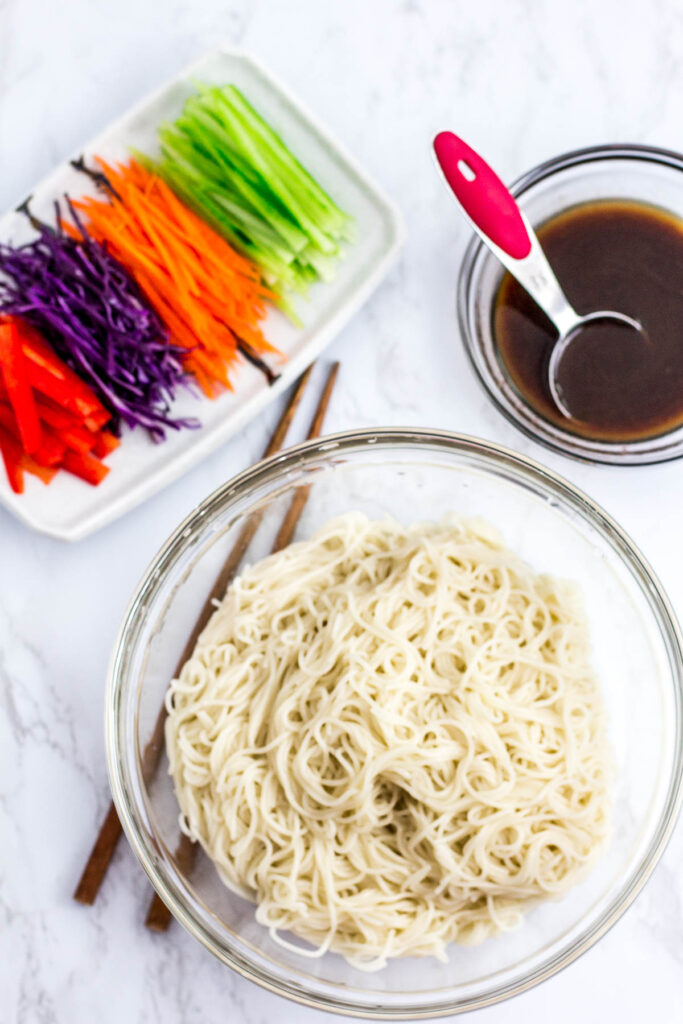
- Fresh vegetables – Such as cucumber, carrots, cabbage, and/or kimchi for crunch and freshness.
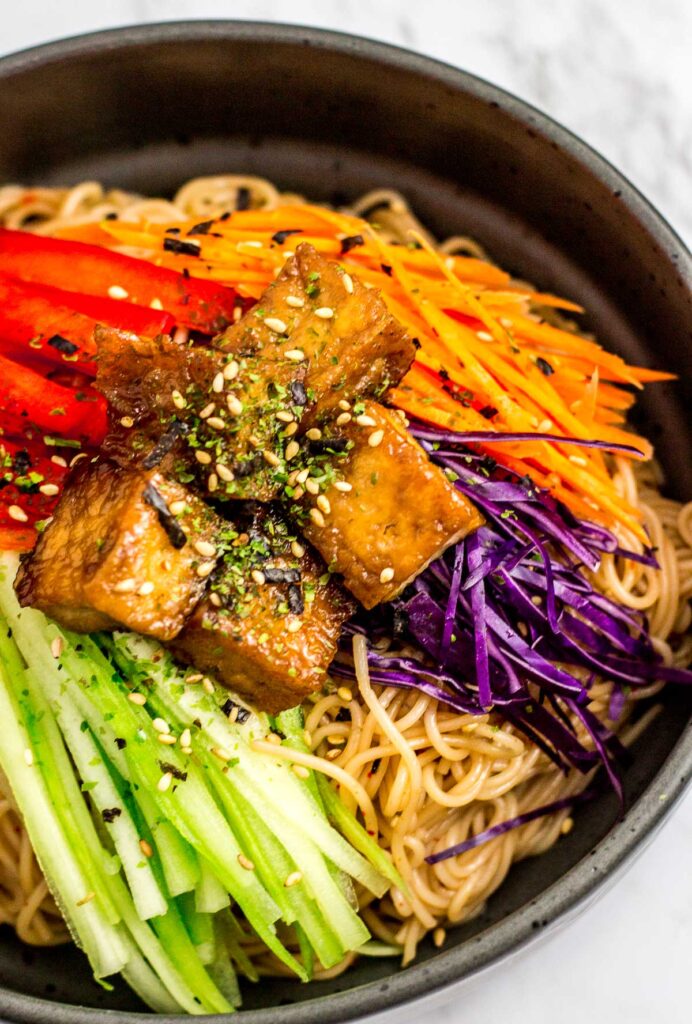
- Easy Teriyaki Tofu – Optional but highly recommended for extra protein and flavor.
How to Make Non-Spicy Bibim Guksu
- Cook the noodles
Bring a large pot of water to a boil. Add the somen noodles and cook according to package instructions (usually 3–4 minutes) until just tender. Drain and rinse under cold water to stop the cooking and remove excess starch. - Prepare the sauce
In a medium bowl, whisk together soy sauce, sugar, sesame oil, and Korean red pepper flakes (if using) until the sugar is dissolved. If you’re curious about ingredients used in Korean cooking, check out my Korean Essential Pantry guide. - Assemble the noodles
Toss the cooled noodles with the sauce until evenly coated. - Serve
Top with fresh vegetables and Easy Teriyaki Tofu if desired. Serve immediately, either chilled or at room temperature.

Pro Tips for Non-Spicy Bibim Guksu
- Cook noodles the Korean way for the best texture – When boiling somen noodles, once the water comes to a rolling boil, add a splash of cold water to bring the temperature down. Repeat this process 2–3 times. This method, common in Korea, helps the noodles stay chewy and bouncy.
- Add a different kind of heat – For a subtle kick with more umami, mix in 1–2 minced garlic cloves to the sauce.
- Keep noodles from sticking if making ahead – Although it’s best to cook the noodles just before serving, you can prepare them ahead. Toss cooked noodles in a little sesame oil and store separately from the sauce to prevent clumping.
Non-Spicy Bibim Guksu: Common Questions Answered
Traditional bibim guksu uses a gochujang-based sauce that’s spicy, tangy, and slightly sweet. This non-spicy version (also known as ganjang bibim guksu) swaps gochujang for soy sauce, creating a savory, slightly sweet dressing that’s perfect for kids or anyone avoiding heat.
Thin wheat noodles like somen are the most common choice — they cook quickly and have a light, bouncy texture that works beautifully in cold noodle dishes. If you can’t find somen, soba noodles make a good substitute.
It’s best to cook the noodles right before serving for the best texture. If you need to make it ahead, store the noodles and sauce separately for up to 3 days in the refrigerator. After cooking and rinsing the noodles, toss them with a little sesame oil to prevent sticking. Add the sauce right before serving.
Absolutely! My Easy Teriyaki Tofu pairs perfectly with these noodles. You can also try pan-fried tempeh, jammy boiled eggs, or shredded chicken. For a contrast in flavor, spicy meats like spicy pork also make a delicious pairing.
This non-spicy bibim guksu is light, refreshing, and full of flavor - the perfect summer comfort food. Pair it with crisp vegetables, a side of kimchi, or your favorite Korean banchan for a complete meal. If you’re craving more dishes like this, explore my Korean Recipes collection for soups, stews, and sides you can mix and match all year long.
PrintNon-Spicy Bibim Guksu Recipe – Korean Soy Sauce Noodles
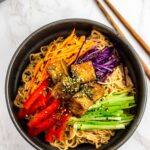
Non-spicy bibim guksu recipe with soy sauce and fresh vegetables. A light, refreshing Korean noodle dish for two ready in just 15 minutes.
- Prep Time: 10 minutes
- Cook Time: 5 minutes
- Total Time: 15 minutes
- Yield: 2 servings 1x
- Category: Main course
- Method: Mix
- Cuisine: Korean
- Diet: Vegan
Ingredients
-
6 to 7 ounces somen noodles (or soba noodles)
-
4 tablespoons soy sauce (I use low-sodium)
-
1 to 1½ tablespoons sugar
-
½ teaspoon salt (optional, especially if serving with lots of vegetables)
-
2 tablespoons sesame oil
-
½ to 1 teaspoon Korean red pepper flakes (gochugaru) (optional)
-
Fresh vegetables such as cucumber, carrots, cabbage, and/or kimchi (for serving)
-
Easy Teriyaki Tofu (for serving, optional but highly recommended)
Instructions
-
Bring a large pot of water to a boil. Add the noodles and cook according to package instructions. For somen noodles, once the water boils, add a splash of cold water and let it come back to a boil. Repeat this process 2–3 times to help maintain a chewy texture. Drain and rinse under cold water until completely cool.
-
While the noodles cook, whisk together soy sauce, sugar, salt (if using), sesame oil, and gochugaru (if using) in a small bowl until the sugar dissolves.
-
Add the cooled noodles to the bowl with the sauce and toss until evenly coated.
-
Divide into serving bowls and top with fresh vegetables and Easy Teriyaki Tofu, if desired.
-
Serve immediately.
Notes
-
For more flavor and umami, you can add 1–2 minced garlic cloves to the sauce.
-
If making ahead, toss the cooled noodles with a little sesame oil and store them separately from the sauce to prevent sticking. Combine just before serving.
-
Refer to the Pro Tips for Making Perfect Ganjang Bibim Guksu section in the post for more cooking and storage details.
-
Check out my Korean Recipe category for more dishes to serve alongside this.
Sally says
I found this recipe when I was looking for something to go with spicy Korean pork chops. This turned out amazing! The only thing I did different is I only had toasted sesame oil and 2 tbsps would be overkill. So I used 1 teaspoon toasted sesame and 1 1/2 tbsps. of canola oil. It turned out so good. This will be in our rotation going forward. It was a nice counterbalance to the spicy pork chops.
George says
Hi Sally, I'm so happy to hear that you enjoyed the recipe! A spicy pork chop combination sounds terrific. I really appreciate your kind review!
Lindsay says
SO YUMMY. I made your teriyaki tofu as well and the whole thing came together in a flash. Super delicious, I didn't change anything and won't change anything the next time I make it 🙂
George says
I'm so happy to hear that, Lindsay!! Yay!!!