
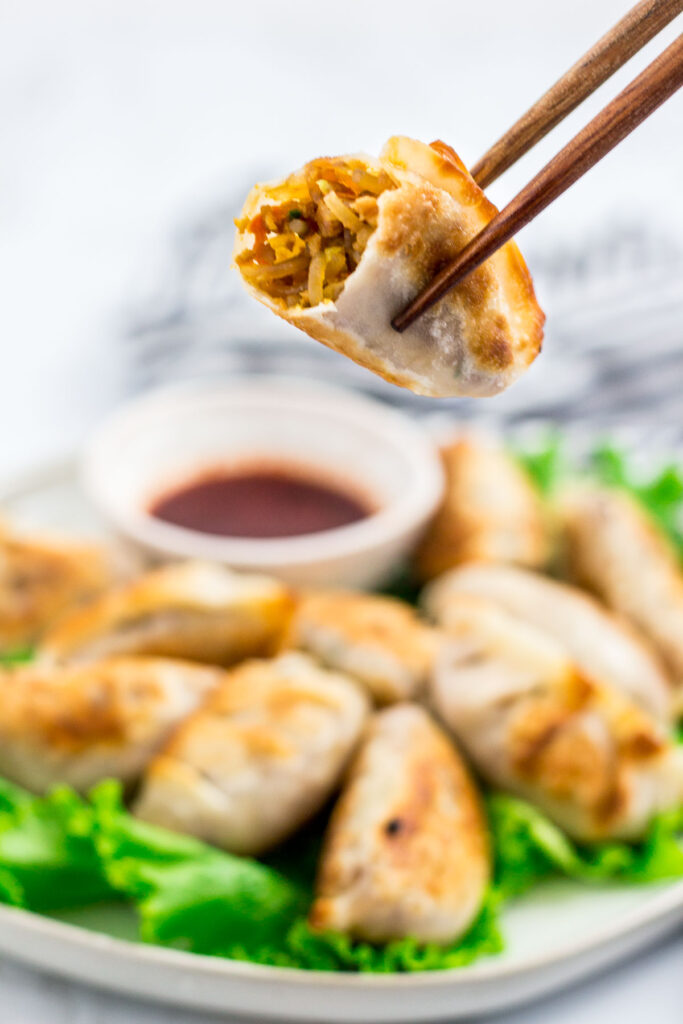
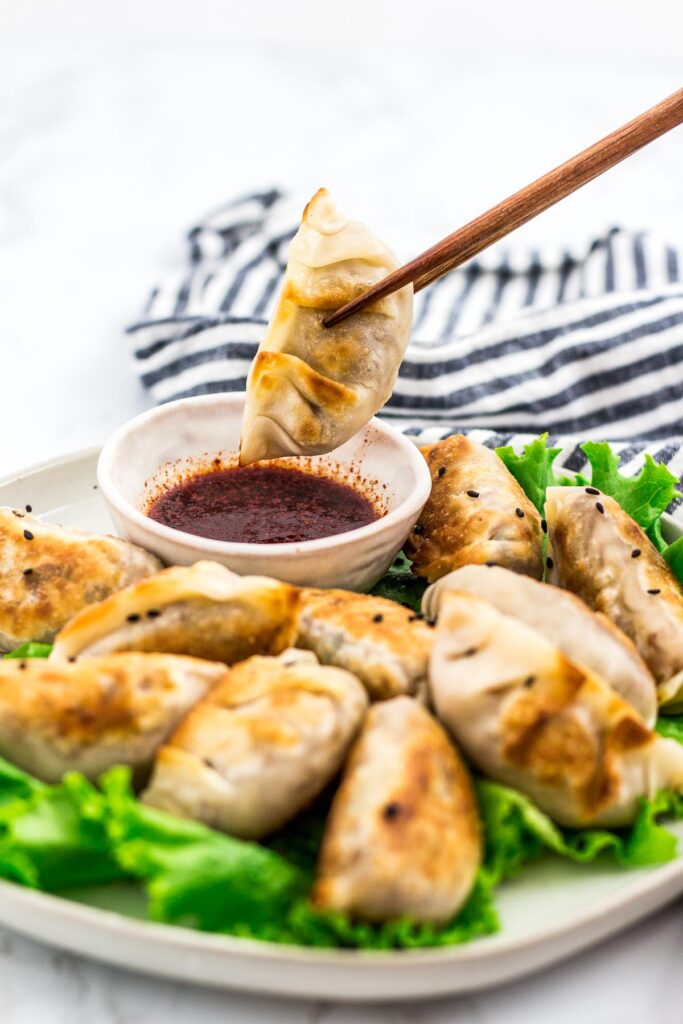
Make this easy Vegan Bulgogi Mandu inspired by Bibigo Beef Mandu! Savory, chewy dumplings filled with flavorful plant-based bulgogi goodness.
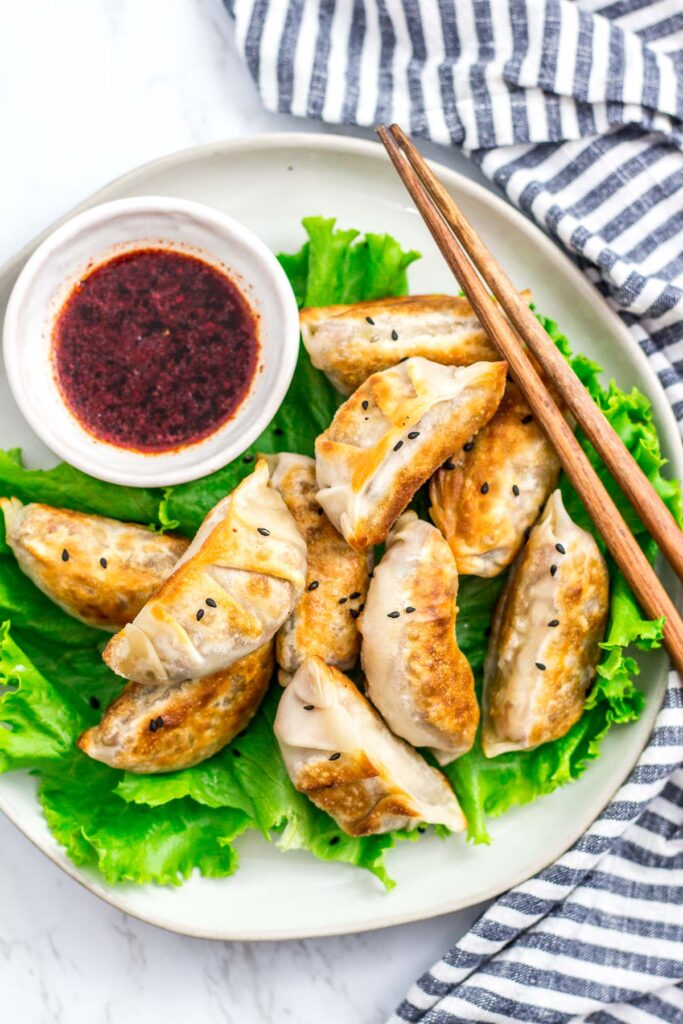
Mandu, or Korean dumplings, were once reserved for special holidays like Lunar New Year, but today they’re an everyday comfort food enjoyed all year round. If you’ve ever tried Bibigo Beef Mandu, this vegan version captures that same satisfying flavor and texture with a plant-based twist. The filling combines Gardein beefless ground, glass noodles, and vegetables for a perfectly balanced, savory bite. In this post, I’ll show you how to fold, cook, freeze, and serve your own vegan bulgogi mandu that are simple to make and full of cozy Korean flavor.
Jump to:
- Why You’ll Love This Recipe
- Ingredients You’ll Need (Plant-Based Bulgogi Filling)
- Vegan Bulgogi Filling
- How to Make Vegan Bulgogi Mandu
- How to Freeze, Store, and Reheat Mandu
- Helpful Tips for Perfect Vegan Mandu
- Frequently Asked Questions Answered
- Vegan Bulgogi Mandu (Korean Dumplings with Plant-Based Beef Filling)
Why You’ll Love This Recipe
- Savory bulgogi flavor, made vegan for rich, comforting taste
- Perfect texture with noodles, veggies, and plant-based meat
- Freezer-friendly for easy meal prep and quick weeknight dinners
- Cozy Korean comfort food you can make and enjoy at home
Ingredients You’ll Need (Plant-Based Bulgogi Filling)
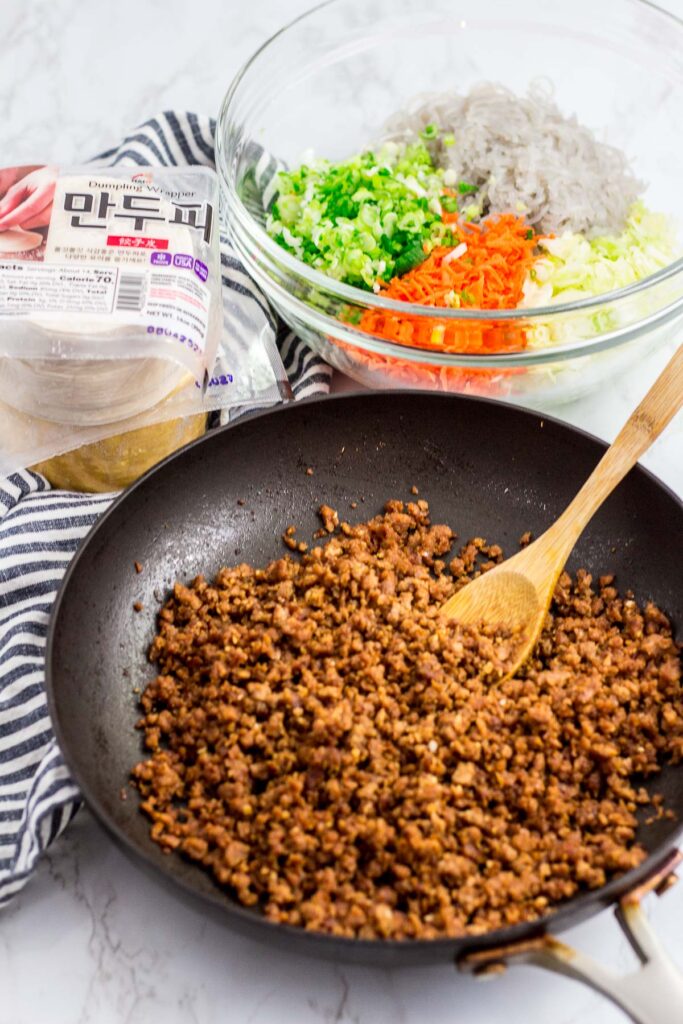
- Main ingredients: cabbage, Korean glass noodles (sweet potato noodles), Gardein beefless ground, green onion, carrot.
- Seasonings: garlic, soy sauce, sesame oil, black pepper, ginger powder, garlic powder, onion powder, sugar, liquid smoke.
- Wrappers: Korean or Chinese dumpling wrappers.
- Tip: Korean and Chinese wrappers are interchangeable, but gyoza wrappers are thinner and more delicate. Since this filling is hearty with plant-based meat and noodles, thicker wrappers work best for texture and durability.
Vegan Bulgogi Filling
Through testing different plant-based meats, I found that some can overpower the delicate bulgogi flavor. After several trials, I discovered the combination that gives the most balanced, savory taste for mandu.
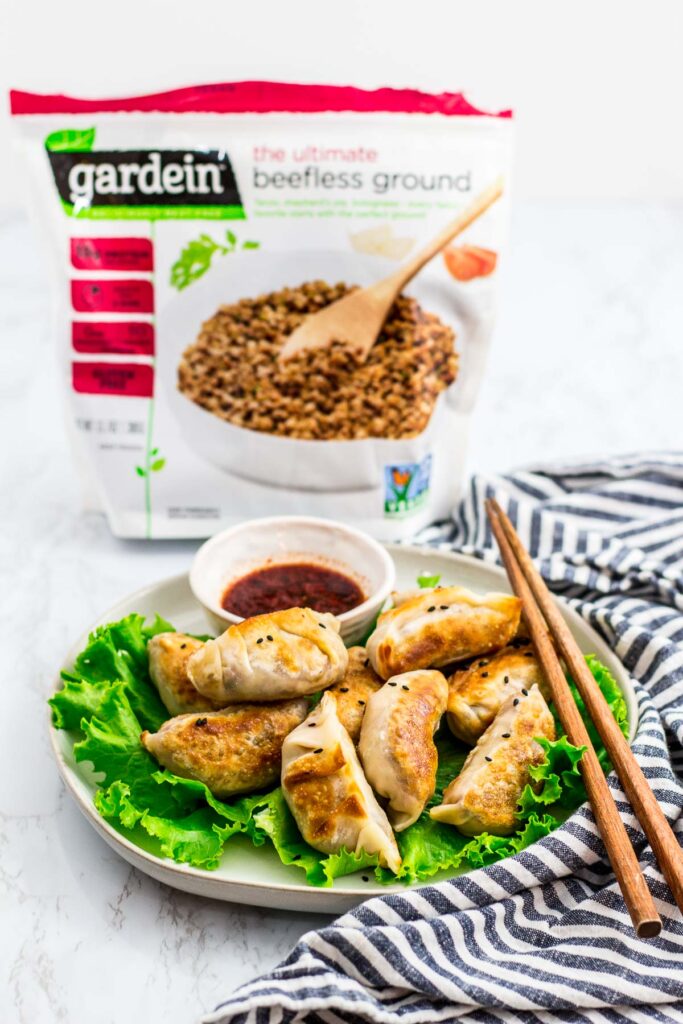
- Gardein beefless ground: Offers the best flavor and texture, closest to Bibigo’s beef mandu.
- Impossible & Beyond Meat: Their flavors turned out a bit too strong for this recipe.
- Tofu or mushrooms: Great options if you prefer not to use plant-based meat. Cook them first to remove excess moisture so the filling can soak up the bulgogi seasoning evenly.
How to Make Vegan Bulgogi Mandu
- Prepare the Filling
- Salt the shredded cabbage to remove excess moisture.
- Cook the Korean glass noodles according to the package instructions.
- Prepare the vegan bulgogi filling by cooking Gardein beefless ground with the seasoning mix.
- Mix everything together with carrots and green onions until evenly combined.
- How to Fold Vegan Dumplings
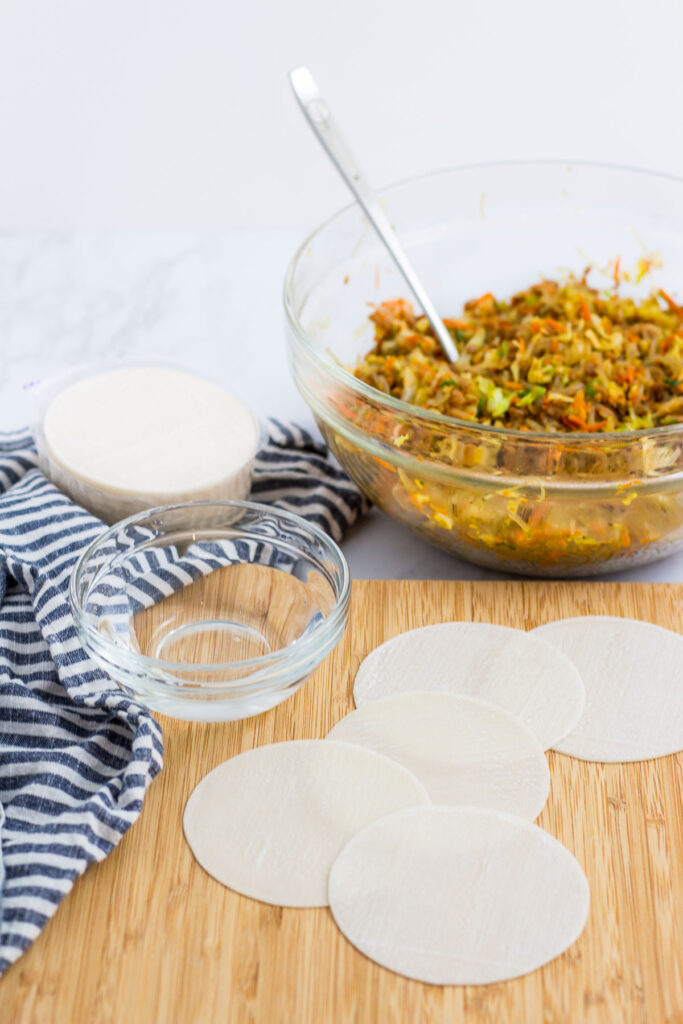
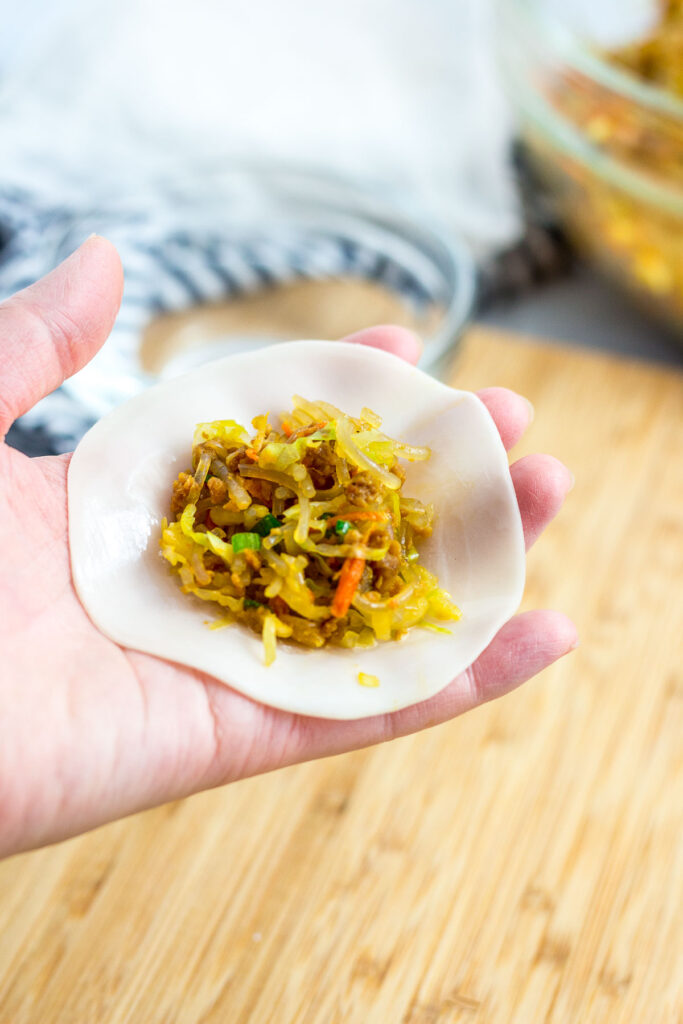
- Brush water around the edge of the wrapper and add about 1 tablespoon of filling in the center.
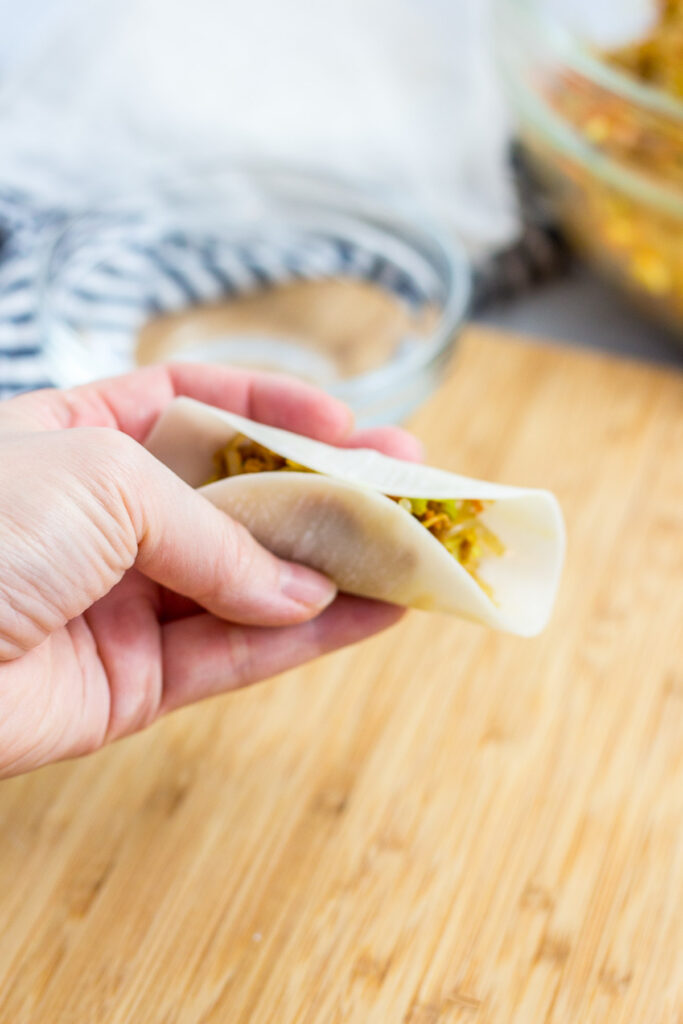
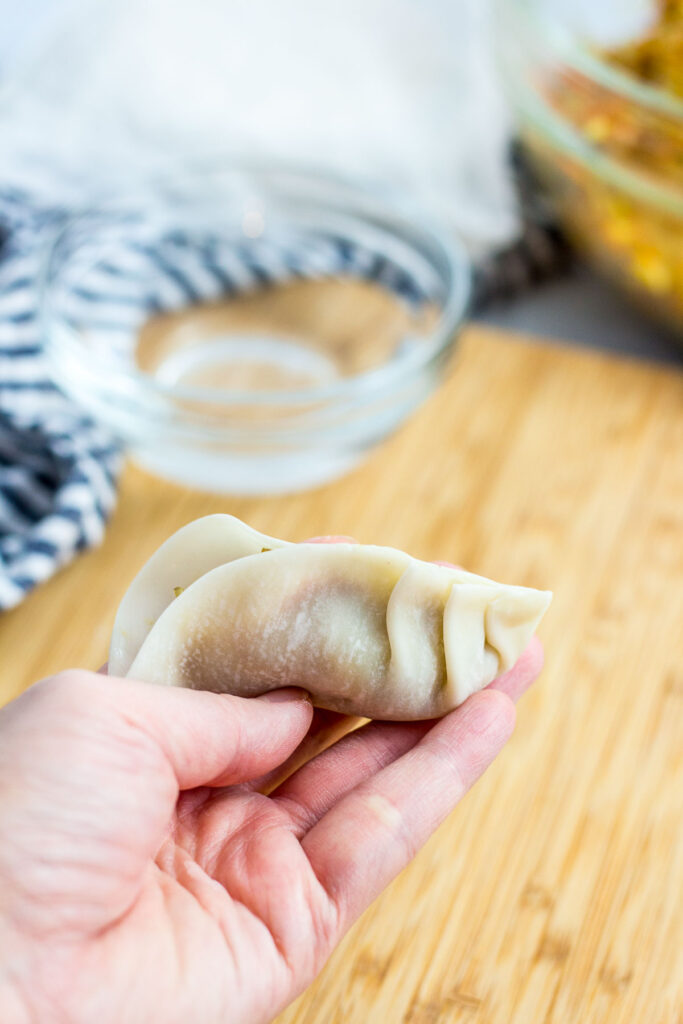
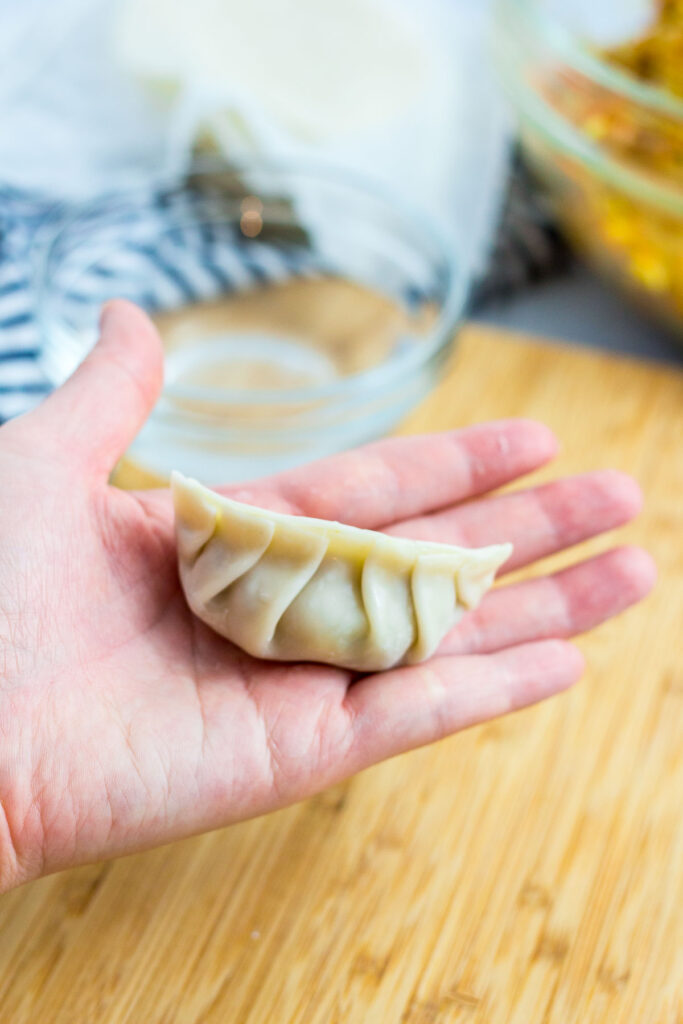
- Fold and seal one end, then pleat and seal toward the center. Repeat with the other side.
- Press along the entire edge to close any openings.
- Keep wrappers and prepared dumplings covered with a damp towel while folding to prevent drying.
- Cooking the Mandu
- Heat about 1 tablespoon of oil in a nonstick pan over medium heat.
- Add the mandu and cook for about 3 minutes per side, until golden and crisp.
- Make the dipping sauce: Mix soy sauce, vinegar, gochugaru, and sugar in a small bowl. Or serve with chili oil or sweet chili sauce.
- Serve hot with dipping sauce, kimchi, or your favorite Korean sides.
How to Freeze, Store, and Reheat Mandu
- To freeze: Arrange mandu in a single layer on a baking sheet and freeze until solid, about 1 to 2 hours. Transfer to a freezer-safe bag or airtight container and remove as much air as possible.
- To store: Frozen mandu keep for up to 3 months. Avoid refrigerating uncooked mandu since wrappers can absorb moisture and turn soggy. Cooked mandu can be stored in the fridge for 3 to 4 days.
- To reheat: Cook directly from frozen or refrigerated. Pan-fry, steam, or air-fry until heated through. If frozen and uncooked, add a few extra minutes to the cooking time.
Helpful Tips for Perfect Vegan Mandu
- Control moisture: Salt the cabbage and cook the filling until dry to prevent soggy dumplings.
- Boost flavor: Use your bulgogi seasoning mix and a touch of liquid smoke for that smoky, savory depth.
- Don’t overfill: A small spoonful is enough — overstuffed mandu can burst while cooking.
- Gently press out air pockets: When folding and sealing, push out trapped air for a smooth, even shape.
- Seal tightly: Press along the entire edge to prevent leaks during frying or steaming.
- Keep wrappers soft: Cover both unused wrappers and filled mandu with a damp towel so they don’t dry out and crack while folding.
Frequently Asked Questions Answered
Yes! Firm or extra-firm tofu works well. Crumble and cook it first to remove excess moisture before mixing with the seasonings so it can absorb all the flavors. You can also use minced mushrooms the same way or combine the two if you prefer not to use plant-based meat.
Korean or Chinese dumpling wrappers are ideal. They’re thicker than gyoza wrappers, so they hold up better with the hearty filling.
You can pan-fry, steam, or boil them. Pan-frying gives a crispy texture, while steaming or boiling creates a soft, tender bite.
It could be due to overfilling, trapped air pockets, or dried-out wrappers. Avoid overfilling and gently press out air pockets while folding. Keep wrappers and prepared mandu covered with a damp towel or plastic wrap to prevent them from drying out.
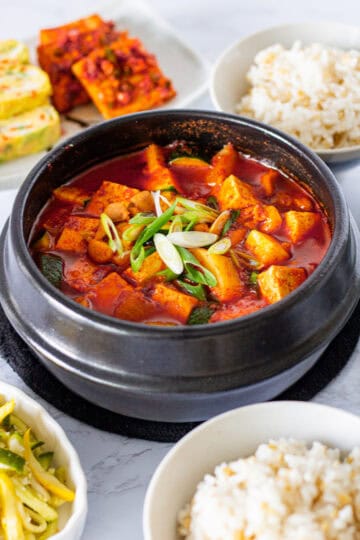
Serve your vegan bulgogi mandu with kimchi or a warm Korean soup or stew such as Doenjang Jjigae, Soondubu Jjigae, or Vegan Yukgaejang. If you want to re-create a Korean holiday table, pair them with Vegan Bulgogi, Japchae, and Korean Vegetable Pancake (or Kimchi Pancake). For more Korean pantry essentials and ingredients, check out my Vegan Korean Pantry Guide or Essential Korean Pantry Guide for more info.
These dumplings are cozy, flavorful, and deeply comforting - the kind of food that brings everyone to the table. Whether you’re celebrating something special or just enjoying a quiet night in, each bite feels like a warm hug from home.
Vegan Bulgogi Mandu (Korean Dumplings with Plant-Based Beef Filling)
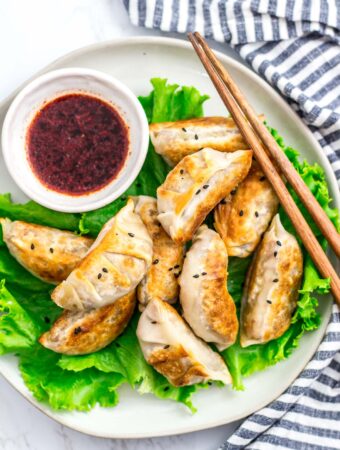
Make this easy Vegan Bulgogi Mandu inspired by Bibigo Beef Mandu! Savory, chewy dumplings filled with flavorful plant-based bulgogi goodness.
- Prep Time: 2 hours
- Cook Time: 8 minutes
- Total Time: 2 hours 8 minutes
- Yield: 50 mandu/dumplings 1x
- Category: Appetizer
- Method: Stovetop
- Cuisine: Korean
- Diet: Vegan
Ingredients
For the Mandu
- 2 cups of shredded cabbage
- ½ teaspoon salt
- 70g of Korean glass noodle/sweet potato noodle (dang-myeun 당면)
- ½ tablespoon oil
- 2 cups Gardein Beefless ground
- 1 clove garlic, minced
- 4 tablespoons soy sauce, divided
- 1 tablespoon sesame oil
- Dahs of white or black pepper
- ¼ teaspoon ginger powder
- ½ teaspoon garlic powder
- ½ teaspoon onion powder
- 1 tablespoon sugar
- ¼ teaspoon liquid smoke
- 3 green onions, minced
- 2 carrots, grated
- 1 package Mandu/dumpling wrappers (50 pieces)
For the Dipping Sauce
-
2 tablespoons soy sauce
-
1 tablespoon vinegar
-
¼ teaspoon gochugaru (Korean red pepper flakes)
-
½ teaspoon sugar
-
Optional: chili oil or sweet chili sauce for extra spice
Instructions
-
Salt the cabbage: Add shredded cabbage to a colander, sprinkle salt on top, and gently toss. Set aside while preparing other ingredients.
-
Cook the noodles: Boil the Korean glass noodles according to the package (about 8 minutes). Drain, rinse under cold water, squeeze out water, and cut into small pieces with kitchen scissors. Transfer to a large bowl.
-
Add vegetables: Add grated carrot and minced green onion to the bowl with noodles.
-
Make the bulgogi seasoning: In a small bowl, mix minced garlic, 1 tablespoon soy sauce, sesame oil, pepper, ginger powder, garlic powder, onion powder, sugar, and liquid smoke.
-
Cook the plant-based beef: Heat oil in a frying pan over medium heat. Add Gardein beefless ground and cook for a few minutes until no longer frozen. Add the bulgogi seasoning and cook until well combined.
-
Combine the filling: Turn off the heat and transfer the cooked beefless ground to the vegetable and noodle mixture. Squeeze out all the water from the salted cabbage, chop it finely, and mix it in. Add the remaining soy sauce and stir until evenly combined.
-
Fold the mandu: Wet the edge of each wrapper with water. Add a heaping tablespoon of filling to the center. Fold in half and pinch the middle to seal, then fold the edges toward the center on both sides. Press along the edge to secure and remove any air pockets.
-
Pan-fry the mandu: Heat 1 tablespoon of oil in a nonstick pan over medium heat. Add mandu and cook for about 3 minutes per side, until golden brown and crisp on all sides.
-
Make the dipping sauce: Mix soy sauce, vinegar, gochugaru, and sugar in a small bowl. Or serve with chili oil or sweet chili sauce.
-
Serve: Enjoy your mandu hot with dipping sauce, kimchi, or your favorite Korean sides.
Notes
-
If you don’t have liquid smoke, you can omit it. It simply adds a light smoky flavor that mimics traditional bulgogi.
-
You can freeze the uncooked mandu in a single layer, then transfer them to a freezer-safe bag once solid. Cook straight from frozen without thawing; just add a few extra minutes.
-
Make sure to squeeze out excess moisture from the cabbage and cook the filling until it’s not wet - this keeps your mandu crisp and prevents soggy wrappers.
-
When folding, gently press out air pockets before sealing to avoid bursting during cooking.
-
Keep both wrappers and folded dumplings covered with a damp towel while working to prevent them from drying out.
HC says
Hi George! Thank you so much for the recipe. I am Korean as well, and I sometimes found it challenging to share my love of Korean food with my vegetarian boyfriend since a lot of the dishes I grew up with were meat and fish-based. Your work means a lot to me. Super stoked to try your mandu and many other recipes!
George says
Hi HC,
Thank you so much for stopping by! Yes, traditional Korean food can be a little challenging for vegetarians and vegans but there are a lot of resources these days! Please do reach out if you have any questions! Hope you and your boyfriend enjoy the recipe!